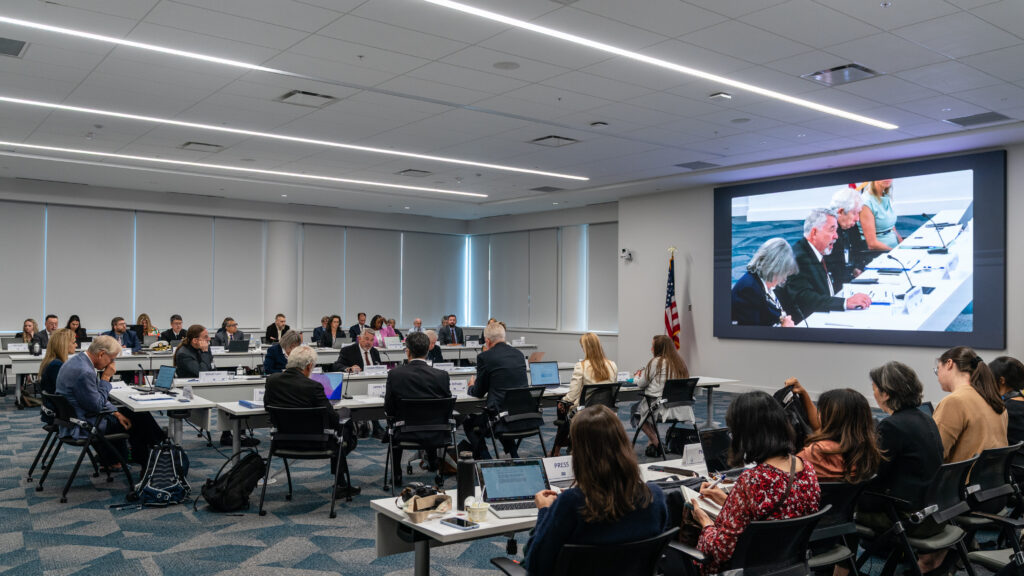
Health Secretary Robert F. Kennedy Jr. has appointed a new chair for the Advisory Committee on Immunization Practices (ACIP) just days before a scheduled meeting. Martin Kulldorff, who has led the committee since his appointment in June, will transition to a leadership role within the Department of Health and Human Services (HHS). The new chair, Kirk Milhoan, a pediatric cardiologist, was appointed to the committee in September. Milhoan is known for his controversial stance linking vaccines to cardiovascular disease.
The timing of this leadership change raises questions as the ACIP prepares to address critical vaccine-related topics. The upcoming meeting, expected to draw attention from health professionals and the public, will highlight the ongoing debates surrounding vaccination practices in the United States.
Controversy Surrounds World AIDS Day Silence
The absence of U.S. government recognition of World AIDS Day this year has sparked concern among health advocates. Established by the World Health Organization (WHO) in 1988, this day has been commemorated annually in the U.S. until now. According to journalist Emily Bass, federal agencies received directives not to observe the day or allocate funds for related activities.
Health care communications expert Gavin Hart expressed disappointment, stating that the decision is “a sad, though perhaps predictable, development.” A spokesperson from the State Department emphasized that “an awareness day is not a strategy,” yet critics argue that the day serves as a vital platform for raising awareness about the HIV/AIDS epidemic.
Former director of the National Institute of Allergy and Infectious Diseases Anthony Fauci and his colleague Gregory K. Folkers warned in a recent article that neglecting awareness could have dire consequences. They cited studies estimating that previous cuts to foreign aid could lead to an additional 10 million HIV infections and 3 million AIDS-related deaths within five years.
Ebola Outbreak in Congo Declared Over
In a positive public health development, Congo’s health authorities announced the end of an Ebola outbreak in the southern province of Kasaï. The outbreak, which began in September, resulted in 43 deaths out of 53 confirmed cases. Officials stated that no new cases have been reported in the last 45 days, marking a significant milestone in the fight against this deadly virus.
Infectious disease physician Krutika Kuppalli highlighted the importance of maintaining robust global health defenses to prevent future outbreaks. She cautioned that complacency could lead to uncontrollable situations, emphasizing the need for vigilance in public health efforts.
Addressing Racial Bias in Health Care
Physician assistant Jahidah La Roche has shed light on the subtle manifestations of racial bias in healthcare, particularly regarding intravenous (IV) placement. In her recent essay, she describes how seemingly minor interactions can significantly impact patient trust.
La Roche cites numerous accounts from Black patients who have faced difficulties with IV placements, often being labeled as “hard sticks” or experiencing multiple attempts. These negative encounters can contribute to a broader sense of mistrust in the healthcare system, particularly among marginalized communities.
As discussions surrounding health equity continue, La Roche’s insights underscore the necessity for healthcare providers to reflect on their practices and ensure equitable treatment for all patients.
In addition to these pressing health topics, Marion Nestle, a prominent nutritionist, has released a revised edition of her book “What to Eat Now,” focusing on the complexities of the American food system. Nestle aims not only to guide consumers but also to advocate for systemic changes to improve food safety and health.
The developments in public health and nutrition reflect ongoing challenges and opportunities within the healthcare landscape. As authorities address these issues, the focus remains on improving outcomes for all communities.