








































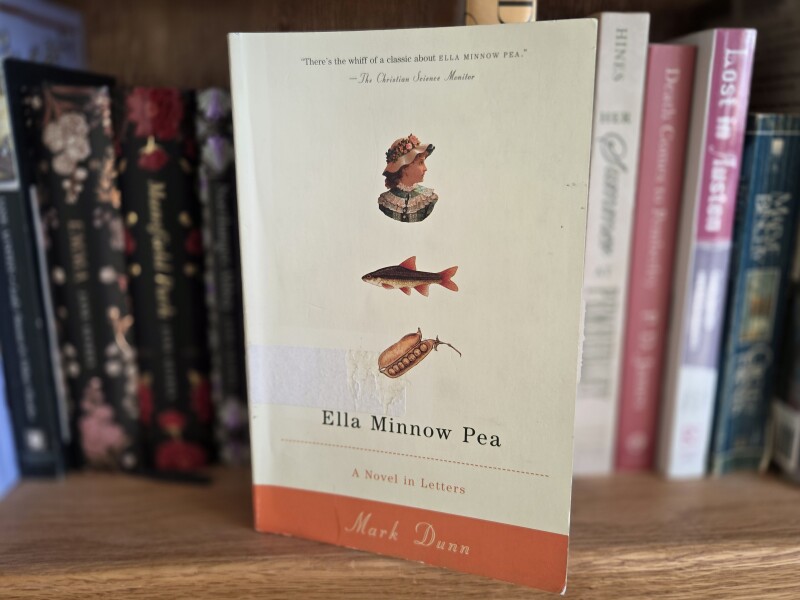
“Ella Minnow Pea,” a novel by Mark Dunn, offers readers a whimsical exploration of language and the consequences of censorship. Set on the fictional island of Nollop, located off the coast of South Carolina, the book is an epistolary tale that unfolds through letters exchanged among its characters. This engaging narrative provides a unique lens on how language shapes our lives and the challenges that arise when it is restricted.
The Island of Nollop: A Unique Setting
Nollop is celebrated as a sovereign nation named after Nevin Nollop, the fictional creator of the famous pangram, “The quick brown fox jumps over the lazy dog.” This sentence includes all 26 letters of the English alphabet, a source of pride for the island’s residents. The community prides itself on its intellectual pursuits and reliance on traditional communication methods, particularly letter writing, in a world devoid of modern technology.
The story takes a dramatic turn when the letter “z” falls from the monument honoring Nollop’s pangram. The town council interprets this event as a divine message, leading to the immediate outlawing of the letter “z.” Residents are forbidden from using it in speech or writing, with severe penalties for those who defy the new law, including the threat of banishment from the island.
Language Under Siege
The protagonist, Ella Minnow Pea, is an eighteen-year-old who initially dismisses the absurdity of the new decree. In her correspondence with her cousin Tassie, she even hosts a farewell party for the letter “z.” However, as more letters begin to fall from the monument, the council’s restrictions escalate, leading to significant challenges in communication. The novel illustrates how this increasingly absurd situation results in public humiliation and the breakdown of social order.
As letters continue to disappear, Ella strives to maintain her spirit and becomes a beacon of hope for the community. She takes on the challenge of creating a new pangram that is shorter than Nollop’s original. The council agrees to lift their restrictions if someone can achieve this feat, believing that no one can surpass Nollop’s brilliance.
Throughout the novel, Dunn employs clever literary techniques, such as removing letters from the text as they are banned from the island. This unique approach not only adds a layer of humor but also challenges readers to engage actively with the evolving narrative. The clever manipulation of language makes for a delightful reading experience that underscores the importance of words in our lives.
“Ella Minnow Pea,” published in 2001, is a captivating exploration of language, creativity, and the human spirit’s resilience in the face of arbitrary restrictions. Its charm lies in its quirky characters and the imaginative storytelling that draws readers into its world. This novel is a delightful escape for anyone seeking a lighthearted yet thought-provoking read.
For those interested in diving deeper into the world of literature, follow Bourke’s Bookshelf for weekly insights and interactive content related to books and entertainment.
























