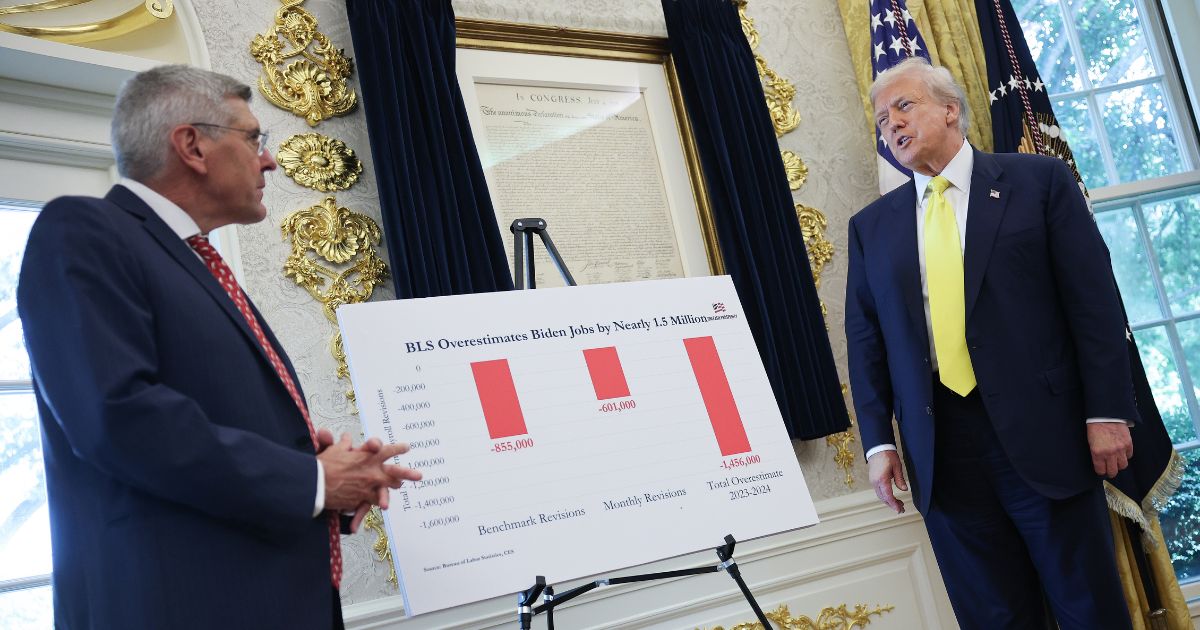
Donald Trump has once again challenged conventional economic forecasts, achieving significant growth in the U.S. economy contrary to predictions made by leading economists. For the third quarter of 2025, the Gross Domestic Product (GDP) grew by an impressive 4.3 percent, building on a strong 3.5 percent increase in the previous quarter. This performance has left approximately 90 percent of economic analysts revising their expectations, as many had anticipated a period of high inflation coupled with low growth.
The consensus among economists at the beginning of 2025 suggested that inflation would exceed 3 percent for the year. Current estimates, however, indicate a more favorable rate closer to 2.7 percent, with recent months trending towards the Federal Reserve’s target of 2 percent. Since the second quarter of this year, GDP growth has consistently outpaced earlier projections, raising questions about the accuracy of those forecasts.
Misjudgments by Economists
This situation is not isolated; it reflects a broader pattern of misjudgments by some of the most respected economists. Notably, Paul Krugman, a Nobel laureate, had previously warned of a potential stock market crash at the start of Trump’s initial term. Yet, the stock market has since reached record highs across all major indices. Krugman, along with others, also predicted that Trump’s trade policies, particularly tariffs, would lead to runaway inflation. While some commodities, such as aluminum, coffee, and beef, have seen price increases due to tariffs as high as 50 percent, the overall economic impact has been mitigated by pro-growth strategies including deregulation and tax cuts.
Economists have repeatedly underestimated the effects of these policies. It appears they failed to account for how such measures can counterbalance inflationary pressures. The current forecasts for economic growth in 2026 remain modest, with some estimates suggesting a mere 1.9 percent increase, despite evidence that the economy has been growing significantly faster.
Underlying Factors and Future Outlook
The persistent inaccuracies in these predictions raise important questions. One theory posits that a bias against Trump may cloud the judgment of some economists, impacting their ability to assess economic conditions objectively. The term “Trump Derangement Syndrome” has been used to describe this phenomenon, implying that personal beliefs may interfere with professional analysis.
The ongoing cycle of pessimistic forecasts continues to tarnish the reputation of the economics profession, often referred to as “the dismal science.” Critics argue that economists who consistently miscalculate should acknowledge their limitations rather than maintain a façade of certainty.
It remains to be seen how these dynamics will play out as the economic landscape evolves. As Trump continues to implement his policies, the gap between economic reality and professional predictions may only widen, further challenging the credibility of established economic theories.