








































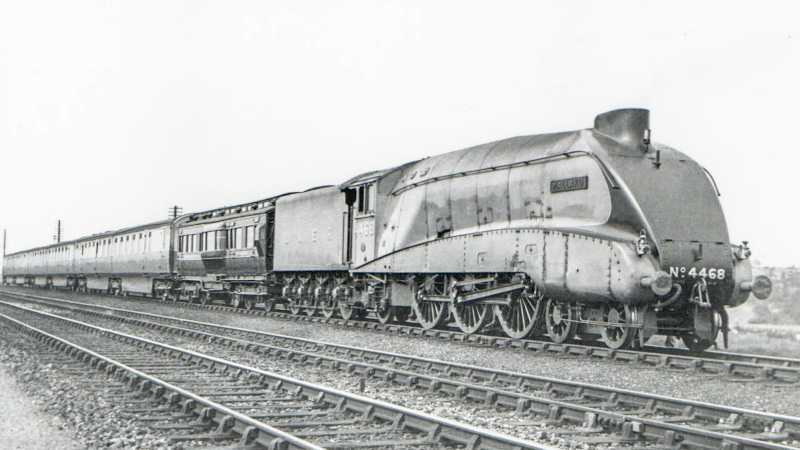
The enduring speed record for steam locomotives, held by the A4 Pacific locomotive known as **Mallard**, has sparked renewed discussion regarding its accuracy. In **1938**, Mallard allegedly reached a remarkable speed of **126 miles per hour** on the London & North Eastern Railway’s mainline in northern England. This record has remained unchallenged for decades, but a recent investigation raises questions about its reliability.
Analyzing the Record
A video produced by the **Institute of Mechanical Engineers** delves into the historical context and methodology behind the speed measurement. The analysis examines the mechanics of railway speed measurement as it existed in the late 1930s, focusing particularly on the paper dynamometer roll that recorded Mallard’s speed. The findings suggest that while the locomotive did achieve significant speed, a more conservative figure of **124 miles per hour** may be more accurate.
The controversy surrounding this record highlights the competitive nature of railway companies at the time. The London & North Eastern Railway (LNER) sought to outshine its rivals, notably the **London Midland and Scottish Railway**, and the desire for publicity likely influenced the reported speed. The use of the highest momentary figure in their promotional materials appears strategically calculated to enhance their reputation.
Challenges of 1930s Measurement Techniques
The challenges faced in measuring speed during this era were considerable. **1930s** track technology, with its jointed rails, would have been less stable than the modern continuous rail systems used today. Furthermore, the clerestory dynamometer car, which played a crucial role in recording the speed, would not have provided the smooth ride that contemporary equipment offers. This reality raises legitimate concerns about the precision of measurements taken under such conditions.
Questions also emerge regarding the potential for more advanced measurement techniques at the time. Although electronic devices were developing rapidly, it seems the LNER relied on their mechanical instruments, perhaps due to a lack of trust in nascent electronic technology. The comparison with practices from the **Pennsylvania Railroad** suggests a broader reluctance within railway companies to embrace new methods, leading to reliance on established mechanical means of measurement.
As enthusiasts and historians continue to dissect this legendary record, the story of Mallard serves as a reminder of the complexities involved in historical speed records. The combination of technological limitations and competitive pressures in the railway industry of the 1930s presents a fascinating narrative that transcends mere numbers.
























