








































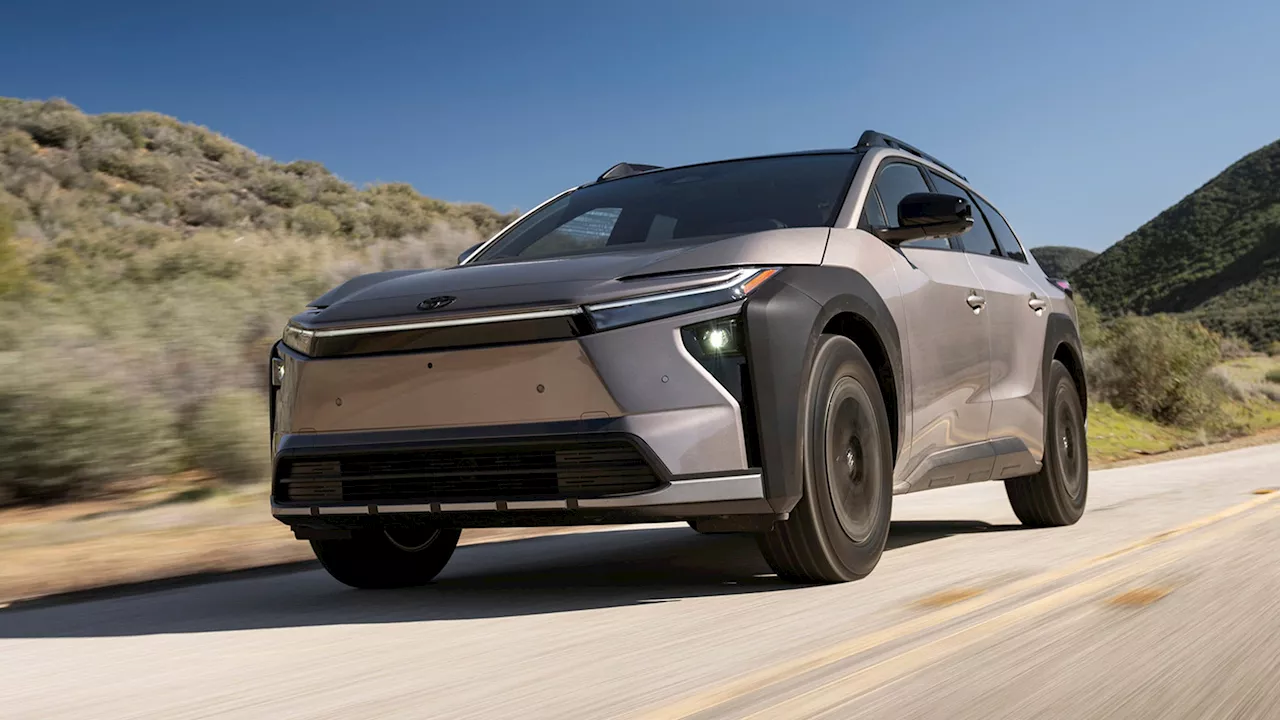
Toyota has unveiled the new 2026 bZ Woodland, an electric SUV that boasts a robust 375 horsepower and enhanced all-wheel-drive capabilities. This latest addition to the bZ lineup aims to capture both adventure enthusiasts and everyday drivers. During a recent drive event in Ojai, California, the SUV demonstrated its potential, while also revealing some persistent challenges related to range and charging.
The bZ Woodland distinguishes itself from its predecessor, the bZ4X, which faced criticism for its underwhelming range and charging performance. Toyota’s first fully electric vehicle for the U.S. market struggled to compete with similar models from other manufacturers. In contrast, the Woodland offers improved acceleration, a more spacious interior, and a design tailored for outdoor adventures. Despite these advancements, some drawbacks from earlier models remain.
With a powerful dual-motor all-wheel-drive system, the Woodland accelerates from 0 to 60 mph in approximately 4.4 seconds. The smooth, linear power delivery is characteristic of Toyota’s electric vehicles. However, while it excels in straight-line speed, the Woodland exhibits noticeable understeer in corners, which may limit its performance on winding roads. The SUV’s 8.4 inches of ground clearance and low battery placement contribute to a stable driving experience, though it is not designed for extreme off-road conditions.
During the drive event, participants navigated various terrains, including steep gravel roads and muddy surfaces. The Woodland’s X-Mode system optimizes power delivery and braking to enhance traction on challenging paths. Developed in collaboration with Subaru, this feature allows the driver to focus on steering while maintaining a consistent speed over obstacles. Yet, some drivers might find the mechanical sounds from the motors and brake systems disconcerting, as the absence of engine noise amplifies these noises.
Equipped with a 74.7-kWh battery, the Woodland offers an EPA-estimated range of up to 281 miles with standard all-season tires. That number drops to 260 miles with all-terrain tires. However, during testing, real-world driving resulted in a range of just 222 miles, raising concerns about whether the Woodland can meet the expectations set by its competitors, such as the Ford Mustang Mach-E Rally and the Hyundai Ioniq 5 XRT.
Charging capabilities have seen improvements, as the Woodland features a Tesla Supercharger-compatible NACS port with a peak DC fast-charging rate of 150 kW. An upgraded 11-kW onboard charger enhances Level 2 AC charging speed, making home and public charging more efficient.
Inside, the Woodland’s extended length offers ample legroom and cargo space. Front legroom measures 42.1 inches, while rear legroom is 35.3 inches. Cargo capacity is also impressive, ranging from 33.3 to 33.8 cubic feet behind the rear seats, with a maximum of up to 74.3 cubic feet available. Standard features include a 14.0-inch touchscreen, wireless smartphone connectivity, and a comprehensive suite of driver assistance technologies.
Despite its advancements, some quirks remain, such as the absence of a traditional glove box and the placement of the 7.0-inch multi-information display, which sits far forward at the base of the windshield. While the 2026 bZ Woodland may not completely redefine Toyota’s electric SUV strategy, it certainly enhances it, providing a powerful, spacious, and adventure-ready option for consumers.
As Toyota continues to refine its electric offerings, the bZ Woodland represents a significant step forward, though questions about its real-world range and charging efficiency linger. The company aims to compete more effectively in the growing electric vehicle market, offering a well-rounded package that appeals to a broad audience. Further testing will be needed to fully assess its capabilities, but initial impressions suggest that the Woodland is an encouraging development for Toyota’s electric future.
























