








































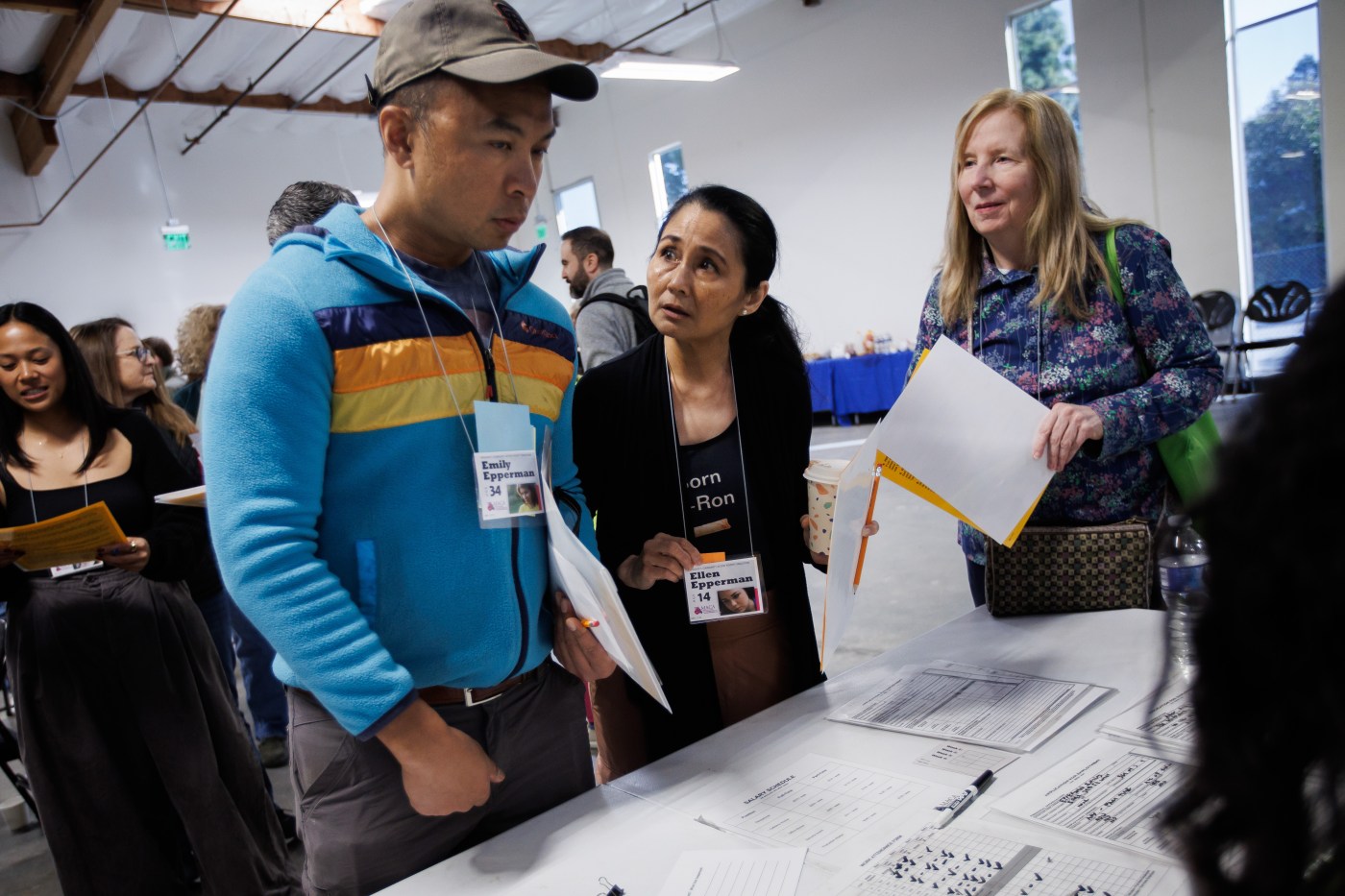
UPDATE: Silicon Valley leaders faced an urgent reality check on February 9, 2026, as they participated in a gripping poverty simulation at a food bank in Sunnyvale, California. This immersive experience had attendees scrambling to secure jobs, negotiate for groceries, and seek housing, all designed to shed light on the day-to-day struggles of those living in poverty.
The simulation, which took place in a bustling warehouse, aimed to highlight the stark contrasts within Silicon Valley, where 30% of households reportedly cannot afford basic necessities without assistance. Participants, embodying various family roles, navigated the challenges of survival in a community where wealth is concentrated among a select few. Just nine individuals control 15% of the region’s wealth, according to the latest Silicon Valley Index report.
“It’s an eye-opening experience,” stated Eric Rodriguez of Leadership Sunnyvale. “It illuminates what happens invisibly here in our county. More organizations need to engage in this kind of awareness.”
The simulation runs participants through a series of scenarios representing a month’s worth of challenges, divided into four intense 15-minute rounds. Families grappled with paying rent, managing loans, and seeking out social services—often facing rejection and frustration. As the rounds progressed, many families faced dire situations, with some being “evicted” and forced to abandon their simulated homes.
Among those facilitating the simulation was Debrina Tenorio, who once experienced homelessness for nearly a decade. “It was like a job in itself,” she shared, reflecting on the constant hurdles faced in accessing aid. Tenorio’s firsthand insights resonated deeply with participants, many of whom felt powerless and frustrated during the exercise.
The urgency of this simulation is heightened by current political changes that threaten to exacerbate poverty levels. Recent federal tax reforms could jeopardize SNAP benefits for thousands, further complicating the lives of those already struggling.
In the wake of this immersive experience, Scott Myers-Lipton, a sociology professor at San Jose State University, emphasizes the need for structured solutions beyond awareness. “We must ask ourselves what kinds of systems we can create to alleviate poverty,” he stated. Advocating for actions such as raising the minimum wage, Myers-Lipton calls for a deeper conversation on the systemic issues that perpetuate poverty.
As discussions around wealth inequality continue to gain momentum, this poverty simulation serves as a critical tool for leaders in Silicon Valley to confront the hidden realities that exist alongside their affluence. The hope is that through such experiences, a broader understanding and commitment to actionable change will emerge.
Stay tuned for more updates on how local leaders plan to address these pressing issues and make a sustainable impact on poverty in Silicon Valley.
























