








































Wildlife populations that lack strong social connections may face heightened risks of extinction, according to a study published in Trends in Ecology & Evolution. Researchers argue that even species which do not form stable social groups, such as deer, squirrels, and various invertebrates, depend on social interactions for survival. As these populations dwindle due to factors like climate change and habitat loss, the important social encounters that facilitate survival could disappear.
The study’s senior author, Michael Gil, highlighted the urgency of this finding, stating, “This comes at a moment when many wildlife populations are shrinking or fragmenting due to climate change, habitat loss, and exploitation.” The research aims to provide a framework for predicting which species are most vulnerable to population collapse, thus enabling better risk assessment.
Understanding the Allee Effect
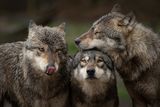
Nearly a century ago, ecologist Warder Clyde Allee noted that animals tend to thrive in larger groups, a phenomenon now recognized as the Allee effect. Initially, researchers believed that species with the tightest social bonds would be most at risk of extinction. Animals such as wolves and meerkats, which live in stable groups, exemplified this theory as their cooperative behavior is crucial for survival.
Yet, the study challenges this assumption. Highly social species can sometimes adapt to population declines by reorganizing into new social structures. For instance, African wild dogs can form new packs when members are lost, allowing them to maintain stable pack sizes despite overall population decreases.
The Role of Experienced Density
The research introduces a concept known as “experienced density,” which refers to how frequently animals interact within their populations. Samantha Rothberg, the paper’s first author, explained that in species without fixed social groups, experienced density correlates with overall population size. When animal numbers decline, the frequency of interactions does as well, leading to a feedback loop that can further exacerbate population declines.
“Removing individuals not only depletes the population but also eliminates the benefits they provided to those that remain,” Rothberg stated. This dynamic can reduce access to crucial shared information, collective vigilance against predators, and mating opportunities, compounding the risk of extinction.
Research has shown that loose forms of sociality are common across various species, including invertebrates, fish, birds, and mammals. Many animals come together for seasonal gatherings, forage collaboratively, or inhabit shared environments, even if they do not form permanent groups.
Gil emphasized the importance of recognizing these interactions: “Those moment-to-moment interactions are easy to take for granted. We now realize that, in aggregate, they can determine whether a population survives or collapses.”
In the context of what some scientists are calling the sixth mass extinction, understanding the decline of species has become urgent. The findings suggest that resilience may depend not only on the number of individuals remaining but also on the frequency of their interactions. For conservationists, creating opportunities for social engagement could be as essential as protecting their habitats.
As wildlife continues to face mounting pressures from human activities, the insights from this study may help inform strategies that bolster animal populations and improve their chances of survival in an increasingly fragmented world.
























