








































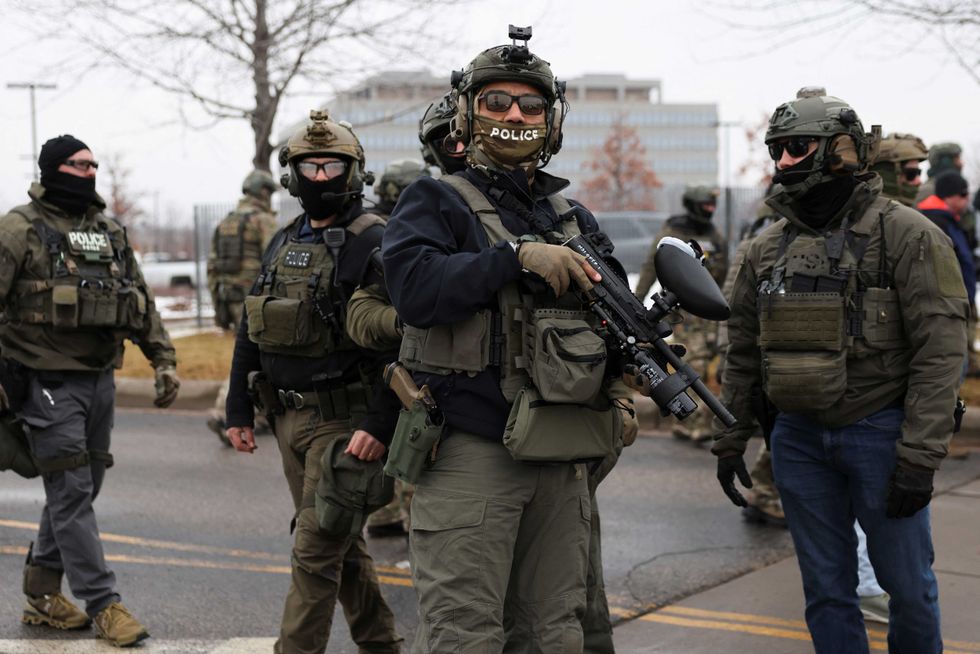
Republicans in the U.S. Senate are advancing legislation that includes a substantial allocation of **$10 billion** for the Immigration and Customs Enforcement (ICE) agency, following the recent fatal shooting of intensive-care nurse **Alex Pretti** in Minneapolis. This incident, which was captured on video, has sparked outrage and calls for accountability.
Senator **Pete Ricketts** (R-NE) reaffirmed his support for ICE funding, stating, “My support for funding ICE remains the same.” Senator **Mike Lee** (R-UT) echoed this sentiment, insisting, “We’re not defunding ICE. Live with it.” Their comments come as Congress prepares to vote on a package of six government appropriations bills, including significant funding for the Department of Homeland Security (DHS).
Funding Details and Legislative Context
The proposed legislation would allocate **$64.4 billion** to the DHS, which includes the **$10 billion** earmarked for ICE. Critics argue that ICE is already funded at levels surpassing many national militaries, raising concerns about the agency’s operational transparency and accountability. Last summer, a bipartisan agreement led by congressional Republicans and former President **Donald Trump** resulted in an additional **$170 billion** for immigration enforcement, which has contributed to increased spending on weapons and enforcement activities.
Senate Minority Leader **Chuck Schumer** (D-NY) has indicated that he has sufficient support from his caucus to block the DHS funding bill. Senate Democrats are advocating for the separation of the DHS legislation from other appropriations bills. This strategy aims to facilitate discussions on potential reforms to ICE and address the growing concerns regarding its conduct.
Senator **Patty Murray** (D-WA), the Democrats’ lead appropriator, emphasized the need for accountability, stating, “Federal agents cannot murder people in broad daylight and face zero consequences.” She has also called for an end to arrest quotas and for ICE agents to stop wearing masks to obscure their identities.
Murray further noted, “Blocking the DHS funding bill will not shut down ICE. ICE is now sitting on a massive slush fund it can tap, whether or not we pass a funding bill.” This statement underscores the contentious nature of the funding debate, with implications for both agency operations and public safety.
Responses from Advocacy Groups
Advocacy organizations have expressed strong opposition to the proposed funding increase. **Lisa Gilbert**, co-president of the watchdog group **Public Citizen**, criticized ICE’s budget, asserting that it dwarfs the military expenditures of many nations. She stated, “The Department of Homeland Security must get ICE off our streets now, and the Senate must immediately take out any additional funding for the Department of Homeland Security in the current spending bill.”
**Amy Fischer**, director for refugee and migrant rights at **Amnesty International USA**, posed a poignant question: “How many more people must die before U.S. leaders act?” She emphasized the urgency of the Senate’s decision, urging lawmakers to reconsider the funding for an agency that has faced significant scrutiny for its enforcement practices.
With the deadline for government funding looming at the end of the week, Senate Republicans are determined to avoid a government shutdown. An unnamed Senate Republican aide stated, “We will move forward as planned and hope Democrats can find a path forward to join us.”
As the Senate prepares for critical votes, the tension between funding immigration enforcement and addressing public safety concerns remains a contentious issue. The outcome of this legislative battle will have significant ramifications for both ICE operations and the broader discussion surrounding immigration policy in the United States.
























