








































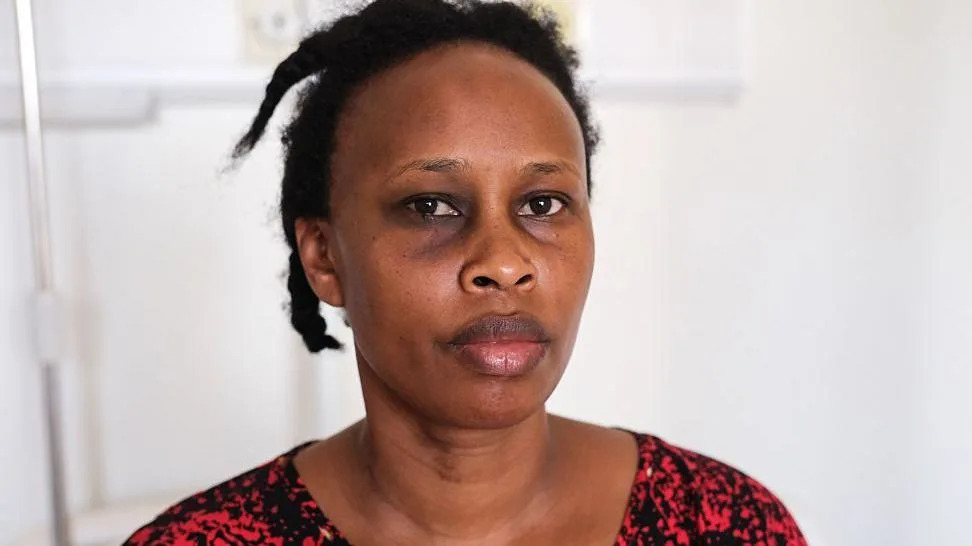
The military chief of Uganda, Muhoozi Kainerugaba, has rejected allegations that soldiers assaulted Barbara Kyagulanyi, the wife of opposition leader Bobi Wine, during a recent raid at their home. These claims surfaced after Wine, currently in hiding, accused military officers of holding his wife at gunpoint and stealing personal items, including documents and electronics.
The incident reportedly took place shortly after the announcement of President Yoweri Museveni‘s victory in the January 15, 2021, elections, which Wine has condemned as fraudulent. Following the raid, Barbara Kyagulanyi spoke from her hospital bed, stating that she was physically assaulted by soldiers who demanded to know her husband’s whereabouts. She described an alarming scene where military personnel invaded her home, leading to her being physically attacked and emotionally traumatized.
Kainerugaba responded to the accusations through a post on X, asserting, “my soldiers did not beat up Barbie [Bobi Wine’s] wife.” He further emphasized, “We do not beat up women. They are not worth our time. We are looking for her cowardly husband, not her.” This statement follows a series of threats issued by the military chief against Wine, who has been vocal about the alleged injustices faced by his supporters.
In a follow-up message, Wine expressed gratitude for the continued support from the public while detailing the ongoing threat he faces. He mentioned that his wife is recovering from the trauma of the raid and that their home remains surrounded by military personnel.
Barbara Kyagulanyi recounted the distressing details of the assault, alleging that she was struck in the face, resulting in a torn lip, and that she was subjected to physical aggression that left her partially undressed. She stated that the ordeal caused her to lose consciousness, and Wine reported that she was subsequently hospitalized due to both physical injuries and psychological distress.
The situation escalates amid claims from the opposition that security forces have targeted their supporters since the election results were announced. Kainerugaba alleged that security officers killed 30 members of the National Unity Party (NUP) and detained around 2,000 others. Additionally, Muwanga Kivumbi, a lawmaker allied with Wine, was arrested for alleged involvement in election-related violence, which the NUP has denied.
The Uganda Law Society condemned the ongoing violence against opposition members, stating that “no one should be subjected to violence by security forces under the pretext of national security.” This statement highlights the growing concern over the treatment of political opposition in Uganda.
Uganda has a long history of political unrest, particularly surrounding electoral processes. Since gaining independence, the country has not seen a peaceful transfer of presidential power. Museveni has been in power since 1986, and his administration is characterized by allegations of suppression and violence against dissenting voices.
As the situation continues to unfold, the international community is watching closely, and calls for accountability and transparency in Uganda’s political landscape grow louder.
























