








































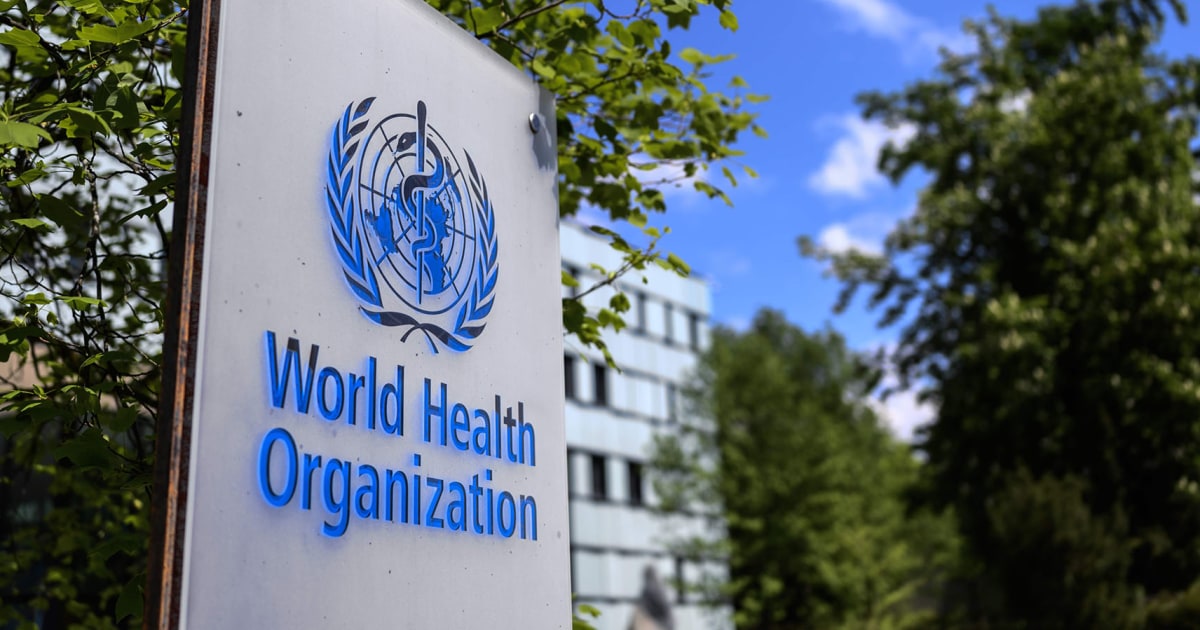
The United States has officially severed its partnership with the World Health Organization (WHO), opting to collaborate directly with other nations and non-governmental organizations on global health issues. This decision was announced by administration officials on Thursday, marking a significant shift in the U.S. approach to international health cooperation.
A representative from the Department of Health and Human Services stated, “The U.S. will continue to lead on global health, but it will not be done through the WHO.” The official did not allow for further comments on the record, leaving the details of the transition somewhat unclear. The administration is expected to depend on relationships with other countries and partnerships with various organizations, including faith-based groups. However, it remains uncertain whether these entities possess the necessary laboratory credentials for effective disease surveillance.
Concerns have been raised by infectious disease experts regarding the repercussions of this withdrawal. They warn that the U.S. may face increased risks in disease surveillance and preparedness, particularly concerning influenza. The timing of this decision is critical as the annual WHO meeting on flu vaccine strains is set for February 27, 2024, a gathering in which the U.S. has historically played a pivotal role.
As the nation grapples with a severe flu season, the Centers for Disease Control and Prevention (CDC) reports that approximately 18 million people have fallen ill, with nearly 10,000 deaths, including 32 children. Experts emphasize that the U.S. risks losing vital insights into flu strains without the WHO’s extensive network of laboratories dedicated to monitoring and sequencing influenza viruses.
Dr. Jesse Bump, a global public health expert at the Harvard T.H. Chan School of Public Health, criticized the administration’s decision, stating, “WHO has a network of 127 laboratories around the world that detect and sequence flu strains.” He likened the organization to a library where the U.S. previously had easy access to critical information. “We no longer have that library card,” Bump added.
Dr. Judd Walson, chair of the department of international health at the Johns Hopkins Bloomberg School of Public Health, noted the difficulties of comparing infectious disease data between countries without a coordinating body like the WHO. “If you have a big surge in a particular disease like flu in country A and you don’t see it in country B, it’s impossible to make those comparisons,” Walson explained.
The U.S. withdrawal from the WHO has roots that trace back to the first term of former President Donald Trump. In April 2020, amid the coronavirus pandemic, Trump accused the WHO of mismanaging the health crisis, particularly the initial outbreak in Wuhan, China. On his first day in office in January 2025, Trump formally notified the WHO of the U.S.’s intent to withdraw within a year. An HHS official remarked, “Today, we are fulfilling that promise,” citing a lack of accountability from the WHO for its perceived failures.
Stephanie Psaki, a senior fellow at the Brown University School of Public Health and former coordinator for global health security during the Biden administration, expressed concern that this decision could increase the vulnerability of the U.S. to health crises. “These decisions are not being made based on a strategy or a plan to protect Americans,” Psaki said. “They’re being made, it seems to me, based on frustrations or vendettas from six years ago. That is scary.”
As the U.S. navigates this new chapter in global health, the implications of its departure from the WHO remain to be seen. The effectiveness of alternative partnerships and the potential impact on public health surveillance will play a crucial role in determining the country’s ability to respond to emerging health threats, particularly in light of ongoing flu-related challenges.
























