








































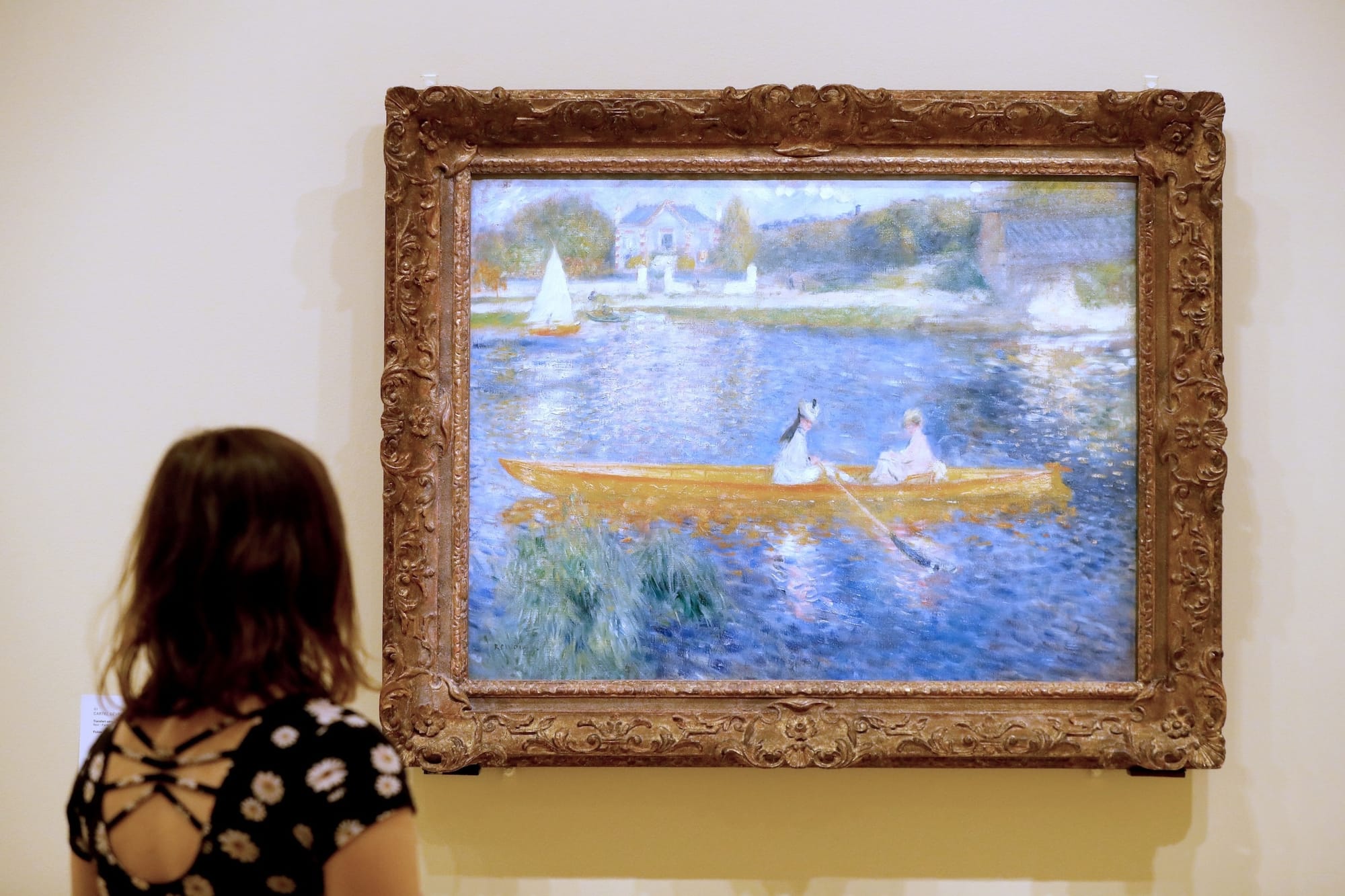
A recent study has found that viewing original artwork can significantly benefit the nervous system by lowering stress hormone levels. Conducted by researchers from the Department of Psychological Medicine at King’s College London in collaboration with the Courtauld Institute of Art, the study supports previous research highlighting the advantages of authentic art experiences over reproductions.
The study, titled “The Physiological Impact of Viewing Original Artworks vs. Reprints: a Comparative Study,” remains in pre-print since its submission in October 2023. It involved 50 adults aged between 18 and 40, who were divided into two groups. One group viewed five original paintings in a gallery setting for a duration of 20 minutes, while the other group was shown high-quality reproductions of the same artworks in a similarly curated environment.
Among the selected pieces were notable works such as “Jane Avril in the Entrance to the Moulin Rouge” (c. 1892) by Henri de Toulouse-Lautrec, “A Bar at the Folies-Bergère” (1882) by Édouard Manet, and “Self-Portrait with Bandaged Ear” (1889) by Vincent van Gogh. The research aimed to measure physiological responses, including heart rate variability and cortisol levels, providing insights into the impact of authentic art viewing.
Participants underwent monitoring of their heart rates and skin temperatures, while saliva samples were collected before and after they viewed the artworks. The findings revealed that individuals who experienced original artwork exhibited higher heart rate variability compared to those who viewed reproductions. This pattern suggests that authentic art experiences contribute positively to a more adaptable and responsive nervous system.
More notably, the post-viewing saliva samples indicated a remarkable 22% decrease in cortisol levels among the group that viewed original art. Additionally, there was a measurable reduction in two of four inflammatory proteins, underscoring the physiological benefits of engaging with genuine art.
While existing research has established that museum visits and authentic aesthetic experiences can alleviate anxiety and enhance cognitive and emotional responses, the study by King’s College researchers is the first to explore the integration of these responses across autonomic, endocrine, and immune systems. They emphasized the importance of authenticity in art viewing, stating, “By identifying art viewing as a natural means of promoting vagal tone and reducing inflammatory load, this work highlights museums and galleries as accessible, non-clinical spaces for preventive health promotion.”
The researchers likened the calming yet stimulating effects elicited by viewing original art to those experienced during exercise or meditation. Their findings advocate for the role of art institutions in contributing to public health, suggesting that engaging with original artworks is not just an aesthetic experience but a valuable practice for well-being.
This study adds to the growing body of evidence that underscores the importance of art in promoting mental health. As galleries and museums continue to adapt to post-pandemic realities, the findings may encourage more individuals to explore the benefits of authentic art experiences as a form of holistic wellness.
























