








































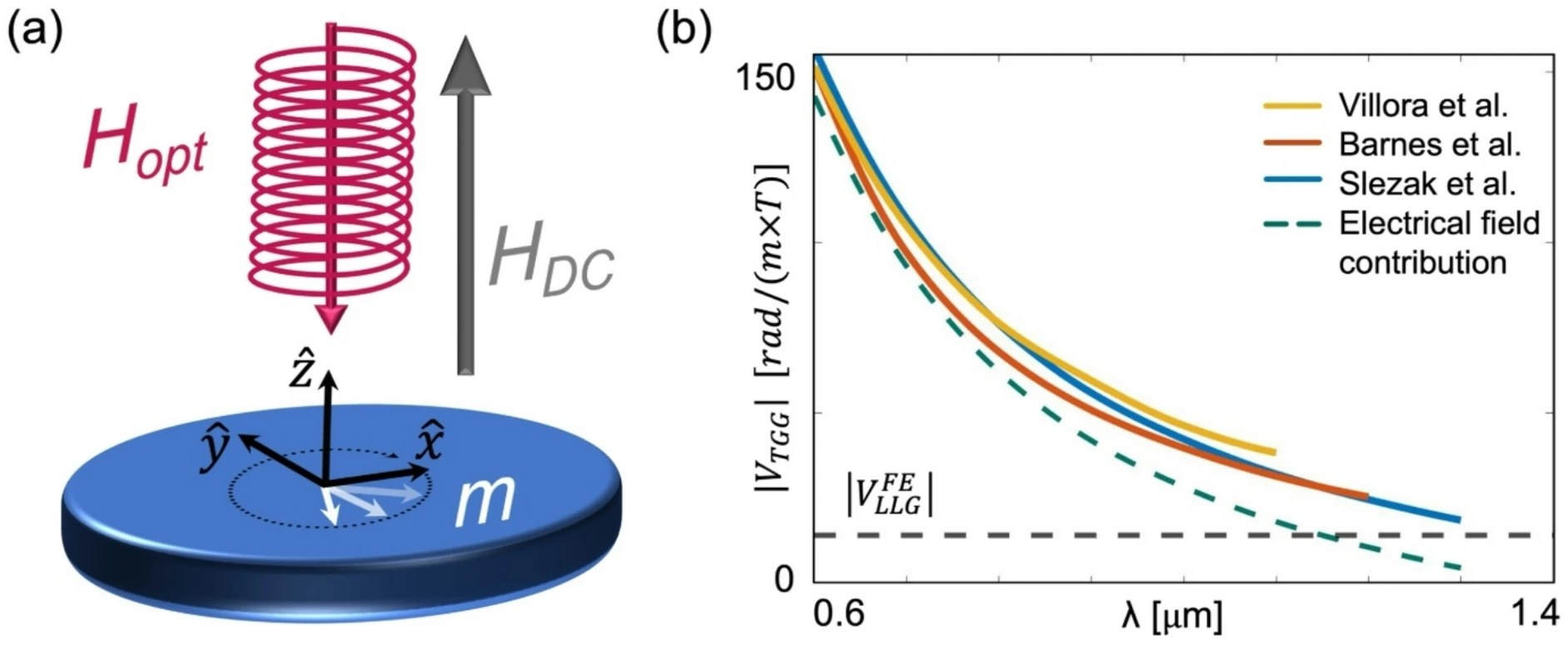
Recent research has introduced a new perspective on the well-established Faraday effect (FE), a phenomenon first discovered by Michael Faraday in 1845. Traditionally understood as the interaction between light and a magnetic field, this effect has numerous applications in optics, remote sensing, and spintronics. The study, conducted by a team of physicists, proposes that the optical magnetic field plays a more significant role in the FE than previously recognized.
The researchers assert that the magnetic component, influenced by Zeeman energy, contributes to the Faraday effect, leading to what they describe as an inverse Faraday effect. Their experimental findings suggest that this magnetic influence accounts for approximately 17% of the total measured Faraday effect at a wavelength of 800 nm. This revelation challenges the conventional understanding of electromagnetic radiation and could potentially enhance the manipulation of light for various technological advancements.
Understanding the Faraday effect has crucial implications for the future of optics and related technologies. Although the study is currently considered niche within the field of physics, its findings could pave the way for deeper insights into light manipulation. If these results are independently verified, they may lead to innovative applications in areas such as telecommunications and quantum computing.
The research highlights the importance of continued exploration within established scientific frameworks. By examining the interplay between light and magnetic fields, scientists are opening new avenues for understanding the fundamental principles governing electromagnetic phenomena. As the scientific community assesses the validity of these claims, the potential for future advancements in technology remains an exciting prospect.
In conclusion, the study not only enriches the discourse surrounding the Faraday effect but also emphasizes the evolving nature of scientific inquiry. As researchers delve deeper into the complexities of light and magnetism, the implications for technology and understanding of the universe could be profound.
























