








































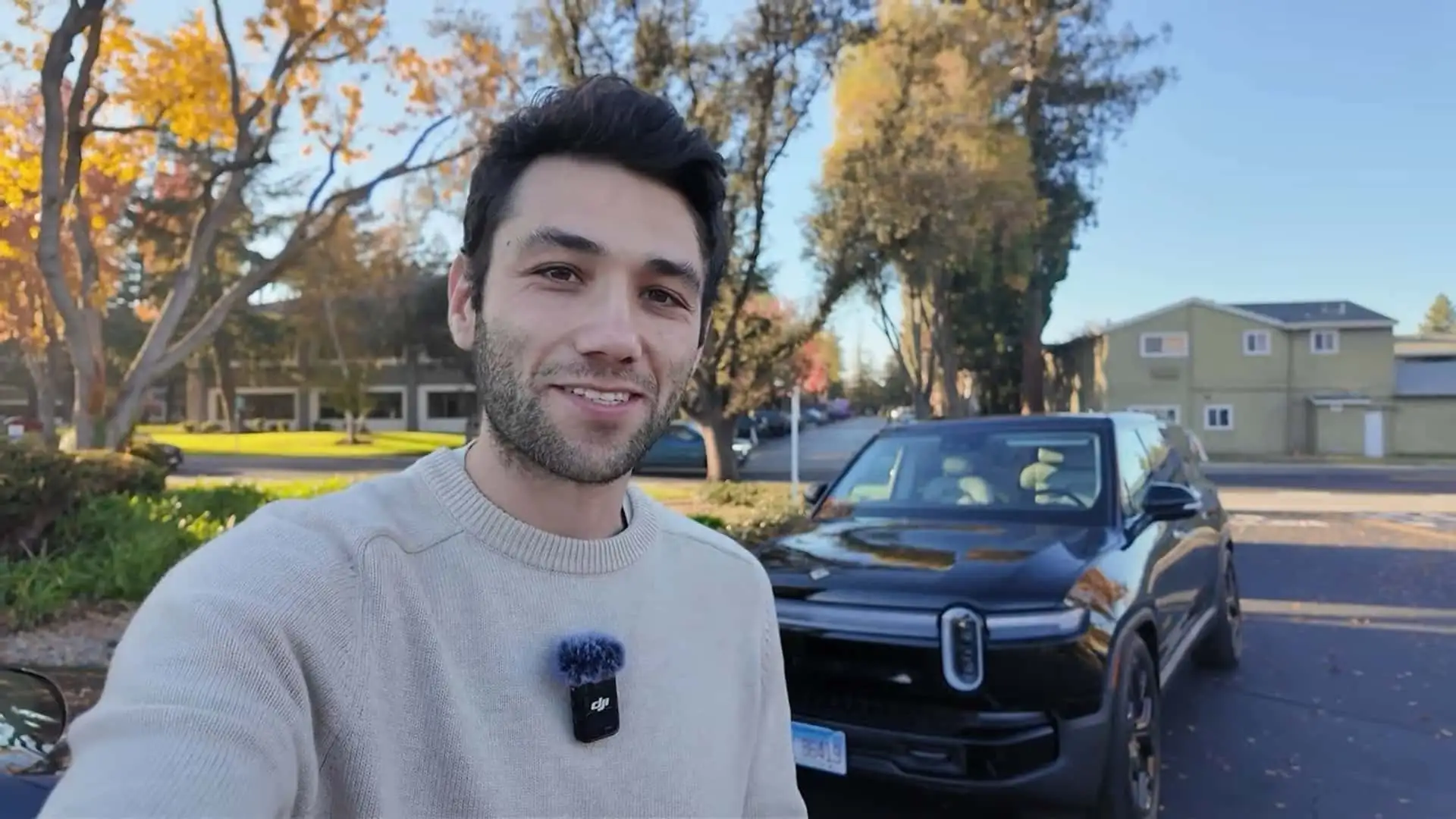
Rivian has unveiled its plans to develop a full self-driving system aimed at competing with Tesla’s Full Self-Driving (FSD) feature, which has remained unique in the U.S. since its launch years ago. During Rivian’s Autonomy and AI Day earlier this month, CEO and founder RJ Scaringe announced that point-to-point automated driving is set to arrive in Rivian vehicles by 2026. The company is making strides in advanced driver-assistance technologies, highlighted by a recent demonstration of its unreleased software in the R1S model.
While Tesla’s FSD tackles the complexities of various driving scenarios, including traffic lights and roundabouts, Rivian’s upcoming feature aims to deliver a similar experience. At the demonstration event, attendees experienced a 20-minute ride in the R1S equipped with the new driver-assistance technology. The journey was largely smooth, showcasing the vehicle’s ability to stop behind other cars, respect traffic signals, and change lanes in a manner reminiscent of a human driver.
Despite the controlled environment of the demonstration, which limits the potential for unexpected challenges, there were minor incidents. For instance, the vehicle hesitated following a speed bump and at certain green lights, prompting the human operator to gently nudge the accelerator. These moments highlighted areas where the system’s responsiveness could improve as development continues.
The Rivian team, including Nick Carlevaris-Bianco, the senior director of perception, explained the workings of their new “Large Driving Model.” This model relies on extensive real-world driving data collected primarily from Rivian customers to replicate effective driving behaviors. Unlike earlier self-driving systems that relied on strict rules, Rivian’s model is designed to learn from a broader array of driving experiences, adapting to various situations without explicit programming for each scenario.
For example, Carlevaris-Bianco noted that the system does not contain specific instructions for responding to speed bumps or traffic signals. Instead, it learns these actions from the data it processes, a method also employed by Tesla in its FSD system. This approach allows for a more versatile and adaptable system but does come with challenges, particularly when dealing with the less-than-ideal driving habits often found in human drivers.
As Rivian continues to refine its technology, the company anticipates that the addition of lidar-equipped R2 crossovers, expected to launch in late 2026, will enhance both the vehicle’s perception capabilities and data quality. This advancement is crucial for the success of Rivian’s self-driving ambitions, which extend beyond mere point-to-point navigation. The company aims to achieve eyes-off driving in specific scenarios and ultimately reach full Level 4 autonomy.
Overall, Rivian’s demonstration indicates promising developments in autonomous driving technology. While the company faces a competitive landscape, its innovative approaches and commitment to learning from real-world data position it as a strong contender in the evolving electric vehicle market. Observers remain optimistic that, with continued progress, Rivian could significantly impact the future of self-driving vehicles.
























