








































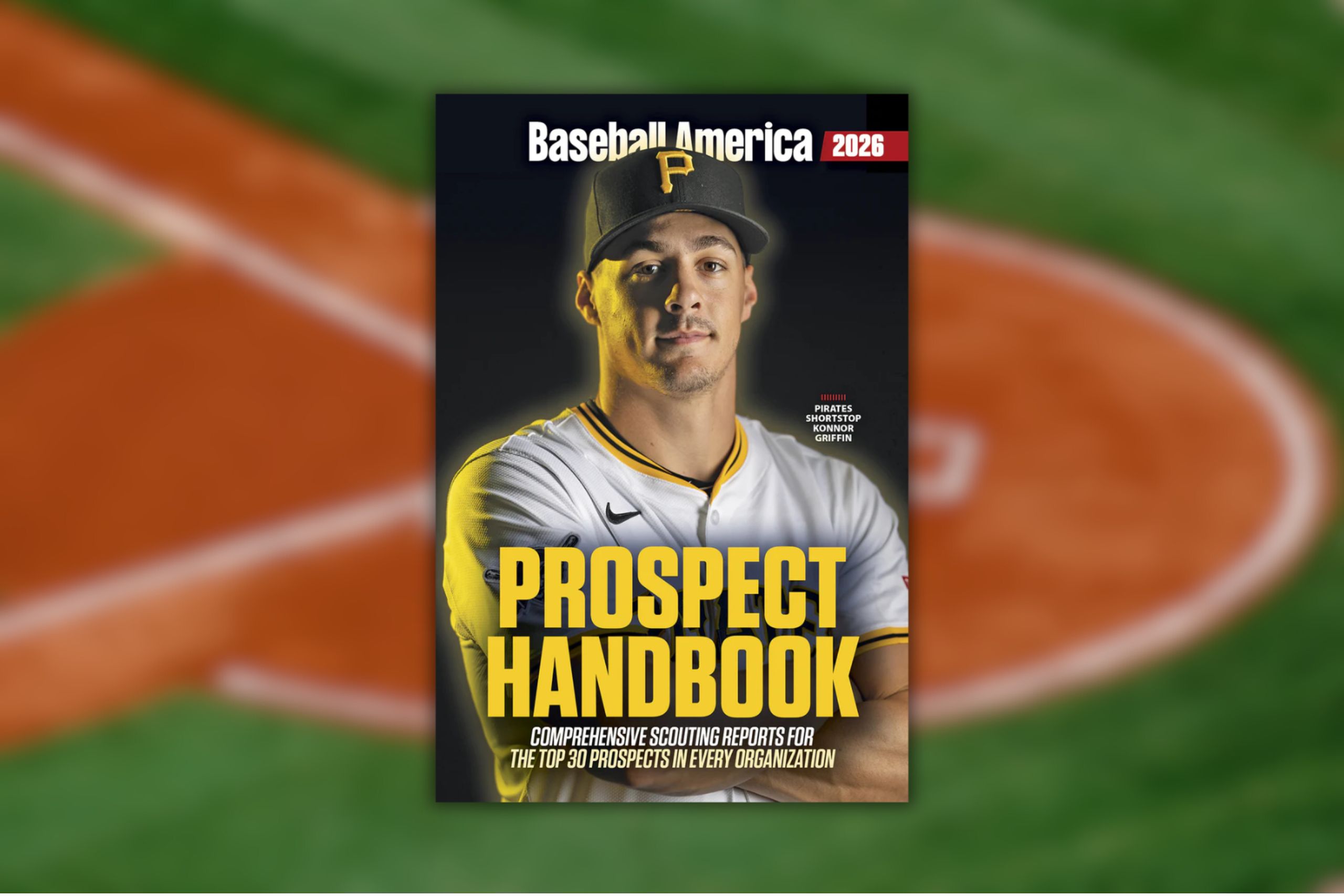
Baseball America has unveiled crucial details about its upcoming 2026 Prospect Handbook, which will feature over 900 prospects. In a recent podcast, J.J. Cooper and Geoff Pontes provided an in-depth discussion on the methodologies used to evaluate these players, including tools grades, risk assessments, and adjusted grades.
The Prospect Handbook serves as a comprehensive guide for fans, scouts, and teams alike. It highlights individual player evaluations, offering insights into their potential and readiness for professional baseball. The 2026 edition will prominently feature Konnor Griffin on its cover, who is generating considerable buzz in the baseball community.
Understanding the Scouting Process
Cooper and Pontes explained the 20-to-80 scouting scale, a widely used system for grading player abilities. This scale helps quantify a player’s talents in various areas, such as hitting, fielding, and pitching. A score of 50 represents the major league average, while scores above or below indicate varying levels of skill.
For instance, they discussed the tools grades for Konnor Griffin, who is currently ranked as the number one prospect. His skills were compared to those of Bobby Witt Jr., a top player in the league. This comparison provides context for Griffin’s potential within the sport.
Cooper highlighted the significance of BA grades and the associated risk levels. These grades not only evaluate a player’s current abilities but also consider their likelihood of success at higher levels of competition. The inclusion of risk factors is critical for teams looking to make informed decisions during drafts and trades.
Noteworthy Prospects and Their Evaluations
The podcast also delved into specific player evaluations, including an exploration of why Kevin McGonigle has been assigned an impressive 80 hit tool. This score places him among the elite hitters in the prospect pool, indicating a high probability of success.
Cooper and Pontes shared insights into the concept of adjusted grades, which take into account various factors that may affect a player’s performance, such as league quality and player development environments. This nuanced approach enables scouts and teams to better understand each prospect’s true potential.
The discussion also featured a segment on the evaluation of Lucas Spence, an outfielder for the Houston Astros, as well as John Peck, a shortstop for the Detroit Tigers. Both players are garnering attention for their unique skill sets and potential contributions to their respective teams.
Fans and stakeholders interested in accessing the 2026 Prospect Handbook can still place preorders to secure their copy. The publication promises to be an essential resource, providing extensive evaluations and insights that will shape the future of baseball.
For those eager to keep up with the latest developments in baseball, subscribing to Baseball America’s podcast offers ongoing updates and discussions on prospects, player evaluations, and industry trends.
























