








































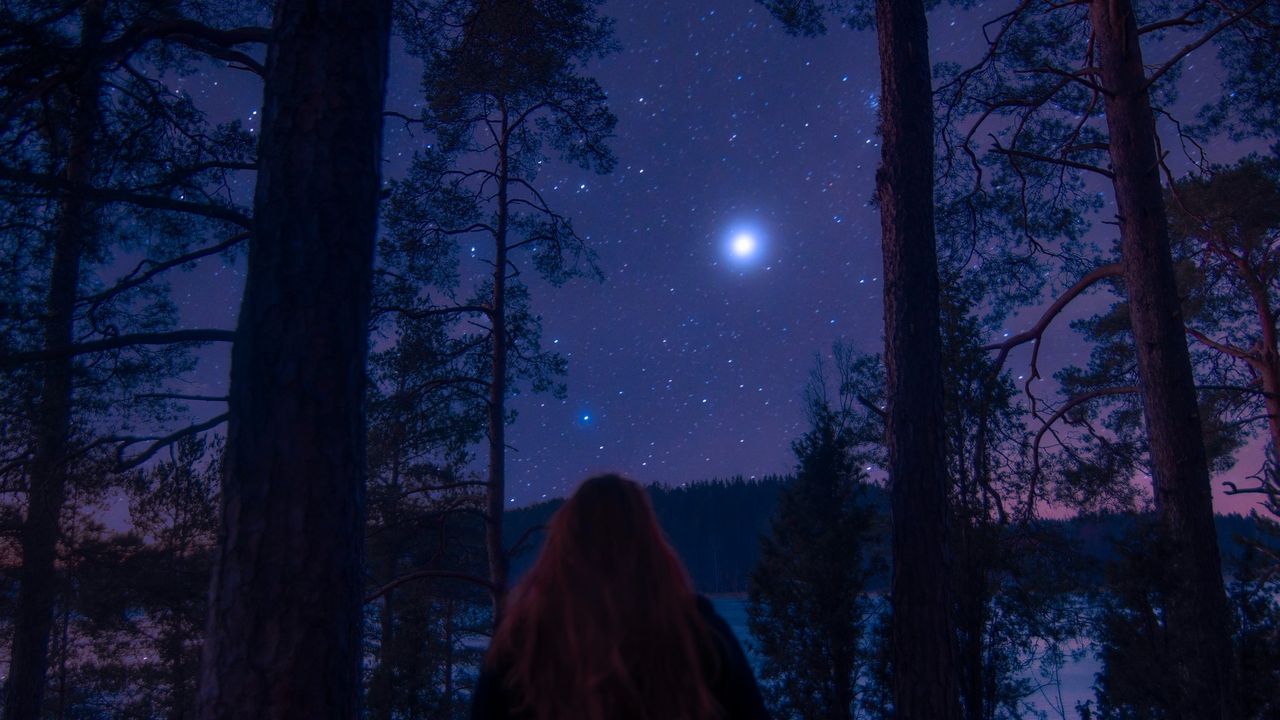
UPDATE: The planet Jupiter is making headlines this December as it shines brightly in the night sky, captivating skywatchers and sparking discussions about its connection to the biblical “Star of Bethlehem.” As the holiday season approaches, this celestial event could hold significant meaning for many.
Starting this month, Jupiter will become increasingly visible, rising in the eastern sky shortly after sunset. With a brightness of magnitude -2.4 at the beginning of December, it is expected to reach -2.5 by month’s end, making it one of the brightest objects in the night sky. This phenomenon coincides with the festive period, leading many to wonder if Jupiter could represent the long-debated “Christmas Star.”
Historically, the “Star of Bethlehem” has been linked to various astronomical events. Theories range from a close conjunction of Venus and Jupiter in 2 B.C. to a rare triple conjunction of Jupiter and Saturn observed in 7 B.C. Some experts suggest it may even have been a bright stellar explosion. However, no major astronomical conjunctions are expected this December, placing Jupiter in the spotlight instead.
The excitement around this event is heightened as Jupiter comes into opposition on January 10, 2026, when Earth will align between Jupiter and the Sun, rendering the giant planet at its closest and brightest. During this time, Jupiter will rise in the east at sunset and reach its peak in the sky around midnight. This cycle occurs every 13 months, making the current visibility particularly noteworthy.
In the Northern Hemisphere, December’s early sunsets mean that Jupiter will dominate the night sky for most of the evening, particularly after 8 p.m. local time. This visibility transforms Jupiter into a dazzling “Christmas Star,” captivating viewers and invoking the story of the Nativity.
As skywatchers gaze at this brilliant planet, questions linger: Was Jupiter the original “Star of Bethlehem”? While the answer may remain elusive, its stunning presence this month offers a beautiful reminder of the stories and traditions that surround the festive season.
Don’t miss out on this celestial display! Grab your telescopes and head outside to witness this spectacular event. As always, astronomy enthusiasts and casual stargazers alike are encouraged to share their experiences and observations on social media, making this December an unforgettable month for skywatching.
Stay tuned for updates and continue to follow the sky—who knows what other wonders await us in the cosmos!
























