


































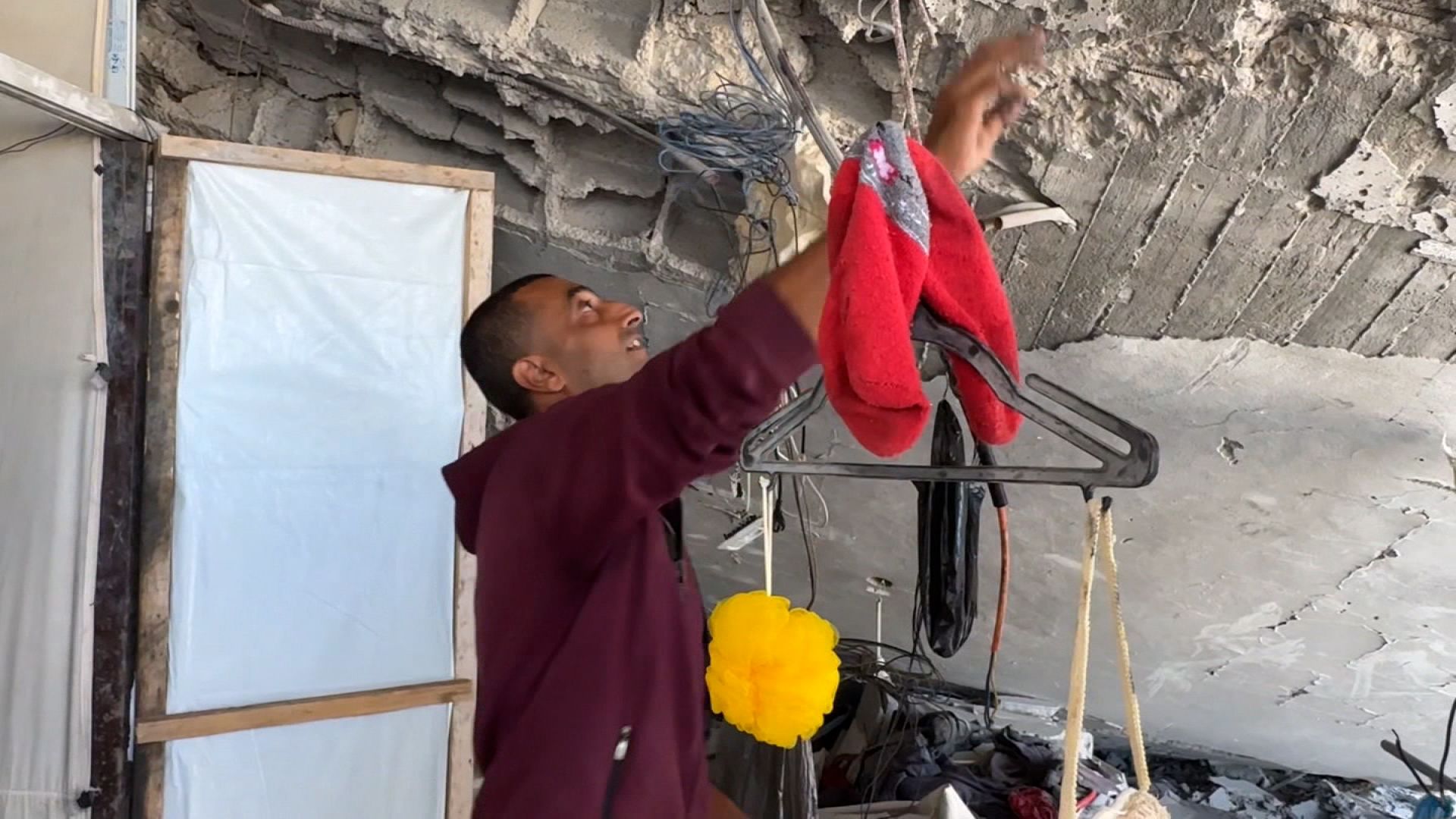
As winter descends on Gaza, residents face a stark dilemma: live in tents exposed to harsh elements or risk their lives in the ruins of buildings that could collapse. Over 400,000 homes have been destroyed due to the ongoing conflict, leaving many families with no safe option. Hiyam Abu Nabah and her family reside in a partially collapsed structure in Khan Younis, where they are vulnerable to the weather and the dangers of the crumbling building around them.
In recent days, torrential rains and floods have claimed the lives of at least 17 individuals, including children, according to Palestinian Civil Defense Spokesperson Mahmoud Basal. The adverse weather has affected more than 90 residential buildings, with approximately 90% of shelters for displaced individuals completely flooded. “On the first day of the storm, we could hear the stones cracking above our heads,” Abu Nabah recounted. “Sand was falling into our eyes… this is not a life.”
Abu Nabah’s five-year-old child navigates through the precarious environment, where exposed electrical wires hang dangerously low. With no access to electricity, they have resorted to using these wires to hang clothes off the damp floor. Her hopes of returning to what remains of her home in Shujaiya are dashed, as it lies within an area occupied by the Israeli military, making it inaccessible.
In a nearby building, Awn Al Haj demonstrates the precarious state of his shelter by poking at the roof with a stick, causing debris to crumble. He describes the recent storm as reminiscent of the war’s early days, filled with uncertainty and fear. “You did not know what would happen to you while you are sitting here,” he said, highlighting the ongoing risks of living in damaged structures.
The situation worsens as winter storms continue to batter the region. The Gaza Civil Defense, which operates as an emergency service, struggles to respond effectively due to a lack of heavy machinery. “With every winter storm, many families and many children will die,” warned Mohammad Fathi of the Gaza Civil Defense. Although officials urge residents to evacuate damaged buildings during heavy rain, many have no alternative but to remain in their precarious living conditions.
In the al-Shati camp, the situation is similarly dire. A recent building collapse resulted in the death of a man and injuries to two others, attributed to prior damage from an Israeli airstrike. Local residents voiced their frustration, pleading for urgent action to address the ongoing danger. “Houses keep collapsing. Someone do something about how we are living,” a neighbor lamented.
The United Nations reports that 1.3 million Palestinians urgently need shelter this winter. Recent figures from COGAT, the Israeli agency responsible for goods entering Gaza, indicate that nearly 310,000 tents and tarpaulins, along with over 1,800 trucks of warm blankets and clothing, have been brought into the region. Despite these efforts, the UN and international NGOs are calling for increased aid access to support those in need.
As winter storms continue to wreak havoc, the humanitarian crisis deepens. Recent reports indicate that among those who died from the cold were a two-week-old baby and an eight-month-old infant, both victims of hypothermia. With around 90% of shelters flooded, the plight of families is becoming increasingly desperate.
Bakr Mahmoud al-Sheikh Ali, a resident of Khan Younis, echoed the sentiments of many who find themselves in similarly precarious situations. “People are afraid, but they tell you, brother, I need shelter,” he said. “I do not want a tent and water in the winter, in this cold weather… whatever happens, happens.”
The stories emerging from Gaza illustrate a tragic reality faced by countless individuals struggling to survive amidst the ruins of their homes. For many, the absence of viable options underscores the urgent need for international support and intervention.