


































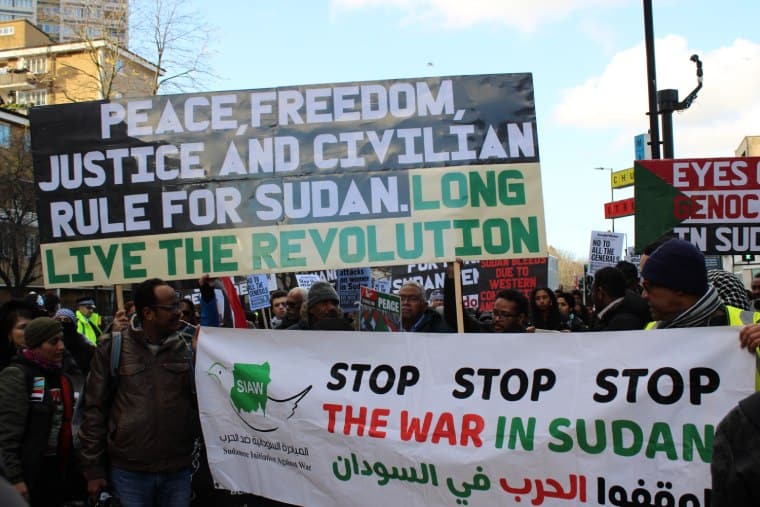
URGENT UPDATE: Up to 400 Sudanese activists and supporters marched through central London today, demanding an end to British complicity in the ongoing violence in Sudan. The demonstration commemorates the anniversary of the revolution that began on December 19, 2018, as the people of Sudan continue to endure unimaginable suffering amid a brutal civil war.
The march coincides with rising tensions in Sudan, where nearly 400,000 people have lost their lives since the outbreak of conflict in April 2023. With millions displaced and in desperate need of humanitarian aid, protesters urged the international community to remember Sudan and take immediate action to halt the violence.
According to a briefing provided to British MPs earlier this month, 150,000 residents of El Fasher in the Darfur region remain unaccounted for since the RSF militia’s siege on the city. Reports indicate that the RSF has killed at least 60,000 people, transforming a once vibrant city of 1.5 million into a mass graveyard. Militias are systematically using violence against women as a tactic of war, adding to the humanitarian crisis.
Demonstrators called on the UK government to stop arming the United Arab Emirates, as British weapons have reportedly ended up with the RSF in exchange for Sudan’s gold. They also urged fellow Sudanese not to place their trust in the Sudanese Armed Forces (SAF), which has previously collaborated with the RSF to suppress the revolution.
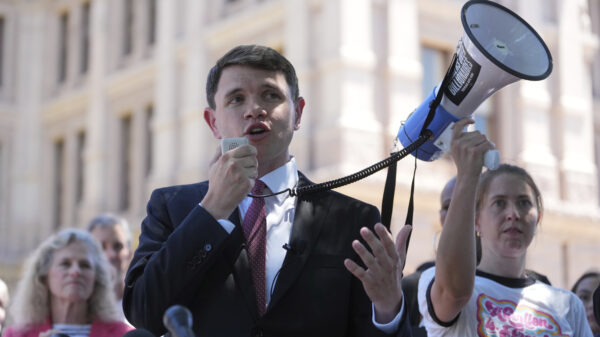
Speaker Tasneem addressed the crowd, praising the courage of the Sudanese people who rose up against oppression seven years ago. “The Sudanese revolution stands as a symbol of resistance,” she declared, emphasizing the grassroots efforts for freedom and democratic transition. She acknowledged the complex role of the SAF, stating, “For many in Sudan, the Sudanese Armed Forces seem to represent the last line of defense against the RSF’s brutality. Yet we must also face the truth that the SAF has committed grave violations too.”
Elbashir from the Sudan Revolution Support Group in Cardiff highlighted the resilience of ordinary Sudanese citizens, who have organized resistance committees to protect themselves against counter-revolutionary violence. “The Sudanese have shown you how community works, how resilience works,” he stated. “The people are only kept alive by ordinary folk like you and me.”
Union member Miriam shared insights on the critical role of organized workers in the revolution, noting that 35,000 teachers across Sudan participated in strikes last year, showcasing remarkable organization and unity.
The demonstration also echoed sentiments from the Palestine solidarity movement, with chants of “From Gaza to Darfur, stop the killing, stop the war” resounding through the streets. A significant banner displayed the demands of prisoners associated with Palestine Action who are currently on hunger strike in British prisons.
As this urgent situation continues to unfold, the world watches closely. The call for action from the Sudanese community in London represents a pivotal moment in the struggle for justice and peace in Sudan.
NEXT STEPS: Observers are urged to monitor responses from British officials and the international community as the plight of Sudan remains critical. This march is a powerful reminder of the ongoing humanitarian crisis and the urgent need for global attention and action.