






































UPDATE: A significant outbreak of H5 avian influenza has been confirmed in 60 dead geese at Green Valley State Park in Iowa. The Iowa Department of Natural Resources (DNR) announced this alarming news following the collection of deceased birds since December 11, 2023. The public is urged to remain vigilant and avoid interactions with sick wildlife.
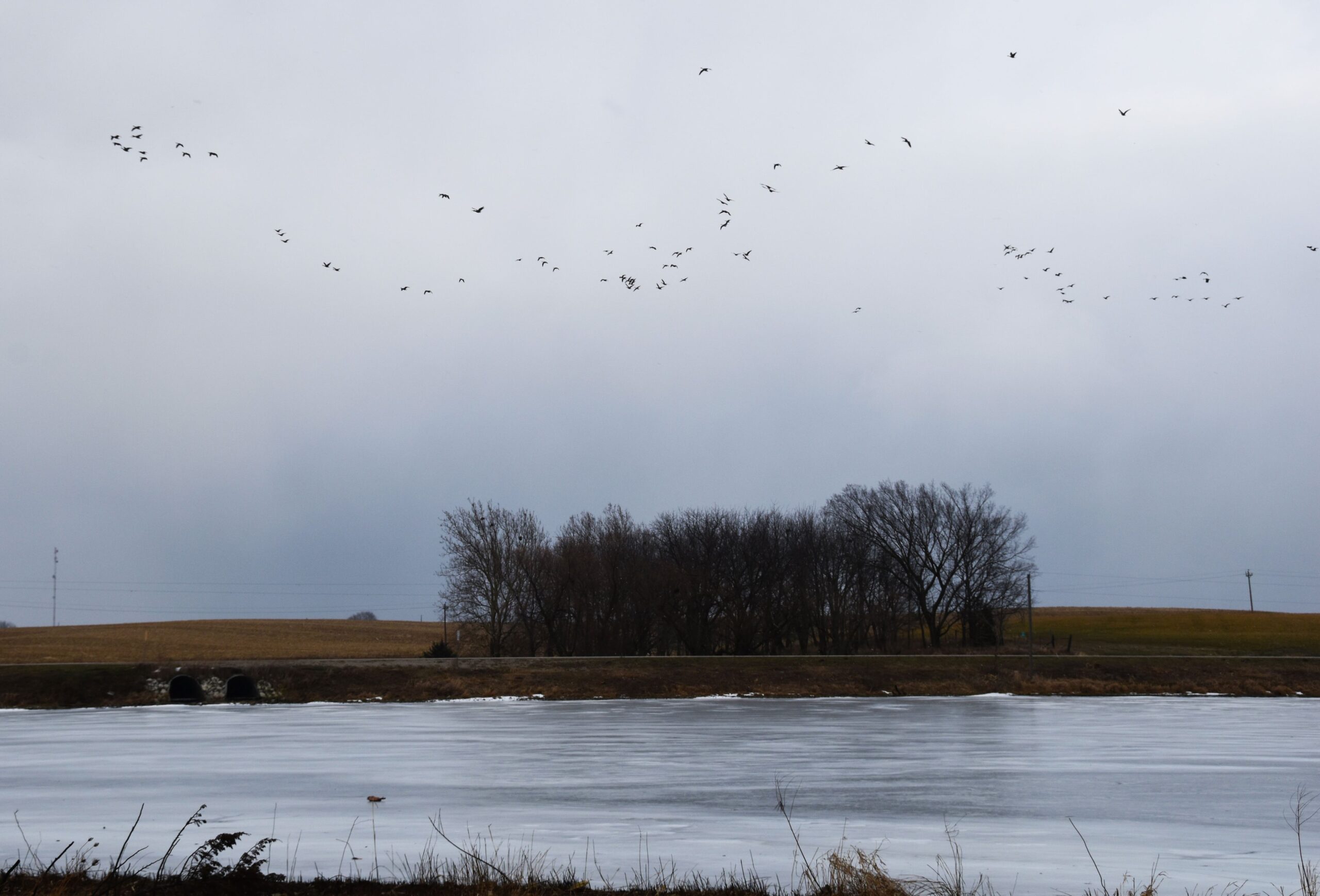
Authorities report that local staff began retrieving the carcasses from the ice but had to pause due to changing weather conditions. As milder weather returned, collection efforts resumed, revealing the full extent of this troubling outbreak. The deceased birds were tested at Iowa State University’s Veterinary Diagnostic Lab, with results confirming the presence of the highly pathogenic H5 strain on Wednesday evening.
The implications of this outbreak are profound as thousands of geese are currently migrating to Green Valley Lake. The latest waterfowl survey on December 12 showed a dramatic 30% increase in the Canada goose population across Iowa, driven by cold temperatures that caused northern lakes and marshes to freeze.
Dr. Rachel Ruden, state wildlife veterinarian with the Iowa DNR, states, “We are getting reports of influenza activity across the western half of the state, and, for the first time, mass mortality events impacting Southwest Iowa.” This development raises concerns about the spread of the virus as waterfowl begin to disperse to find new feeding and roosting locations.
Residents are strongly advised to keep their distance from sick or dead birds, as well as to prevent pets from interacting with them. While no human cases of H5 avian influenza have been linked to wild birds in the U.S., officials warn that close contact with infected poultry can pose severe health risks. Sick birds should not be handled or brought into living spaces, and anyone who spots a cluster of 20 or more carcasses is encouraged to report it to local wildlife authorities.
In addition, the outbreak is not isolated to Green Valley. Lake of Three Fires has also reported cases of avian influenza in its Canadian geese population.
Next Steps: The situation is developing, and officials are monitoring the spread closely. As weather patterns shift, increasing opportunities for waterfowl to access food sources may help reduce the transmission risk. The public’s role in reporting sick birds is critical for tracking the disease’s impact on wildlife health in Iowa.
Dr. Ruden emphasizes the importance of community involvement: “We encourage the public to report sick birds or other wildlife to your local wildlife biologist or conservation officer. We all have a part to play in keeping Iowa’s wildlife healthy.”
As this situation evolves, residents should stay informed and take appropriate precautions to protect both wildlife and public health. Share this urgent update with your community to help spread awareness and ensure safety.