







































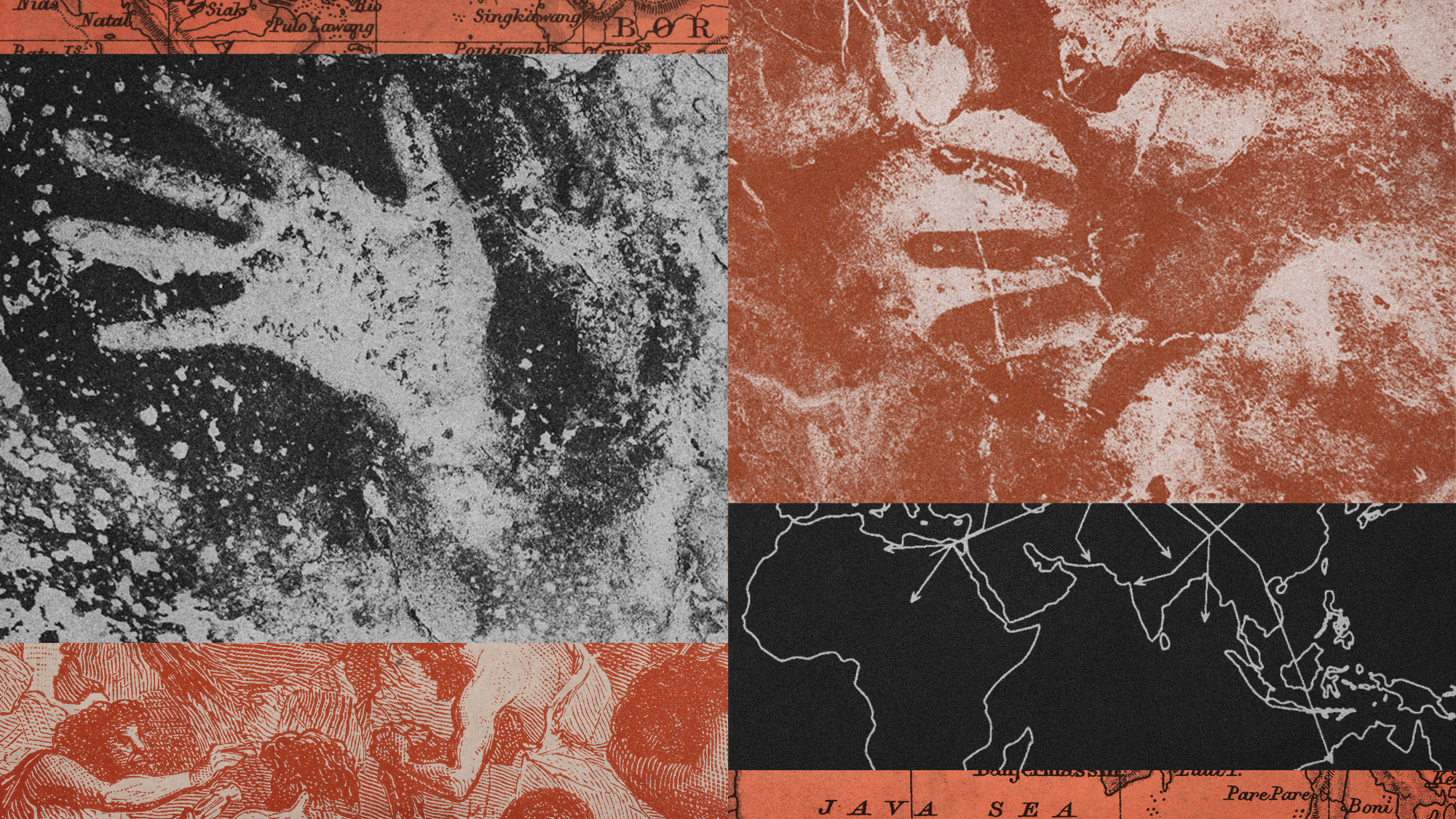
The discovery of ancient rock art in caves on the Indonesian islands of Sulawesi and Borneo may provide crucial insights into early human migration patterns. These paintings, believed to be over 67,000 years old, are thought to be among the oldest rock art ever found. Researchers suggest that this art could reflect not just the artistic skills of our ancestors but also their movement across regions during a significant period of human history.
The figurative art and stencils of human hands were uncovered in the Wallacea region. Findings published in the journal Nature indicate that the Sulawesi artwork dates back at least 67,800 years, predating earlier discoveries in the same region by as much as 15,000 years. This discovery aligns with Indonesia’s reputation for hosting some of the world’s earliest cave drawings, adding to the existing body of knowledge about early human creativity.
The method used to create this rock art involved blowing pigment over hands placed against cave walls, resulting in striking outlines. Some images reveal alterations to the fingertips, making them appear more pointed. This technique showcases the sophisticated means through which early humans expressed themselves artistically, suggesting a level of cognitive development previously underestimated.
Insights into Human Migration
Research indicates that modern humans likely began migrating out of Africa between 60,000 and 90,000 years ago, moving through the Middle East and South Asia before reaching Australia. The findings from Indonesia provide significant evidence that early humans possessed seafaring technology, enabling them to navigate open waters and travel between Wallacea and Australia by approximately 65,000 years ago.
Helen Farr, a maritime archaeologist from the University of Southampton, expressed enthusiasm about the findings, stating, “It is great to see the art preserved and dated, providing a small window to a wide range of activities that’s often missing in the archaeology of this time depth.” The discovery also sheds light on how early humans might have island-hopped across the archipelago, aided by lower sea levels that created land bridges between some islands.
The implications of this rock art extend beyond migration. According to Adam Brumm, a professor of archaeology at Griffith University, the discovery challenges previous notions about the origins of artistic culture. He remarked that this ancient art was created “before our species ever even set foot in that part of the world,” highlighting the sophistication of early human creativity.
Broader Context and Considerations
Maxime Aubert, also from Griffith University, suggests that these findings are not isolated instances but part of a broader cultural tradition that has remained largely hidden until recently. This revelation prompts a reevaluation of how we understand early human societies and their capabilities.
Despite the excitement surrounding these discoveries, some experts urge caution. Paul Pettitt, a professor of palaeolithic archaeology at the University of Durham, cautioned against drawing sweeping conclusions about the complexities of Homo sapiens based solely on these findings. He emphasized the importance of considering other human-like species that may have inhabited the region during this time, suggesting that a more nuanced perspective is necessary to appreciate the full picture of human evolution and migration.
The discovery of this ancient artwork in Indonesia not only enriches our understanding of early human history but also invites further exploration into the lives of our ancestors. As research continues, these findings may reveal even more about the remarkable journey of human migration and the development of culture.