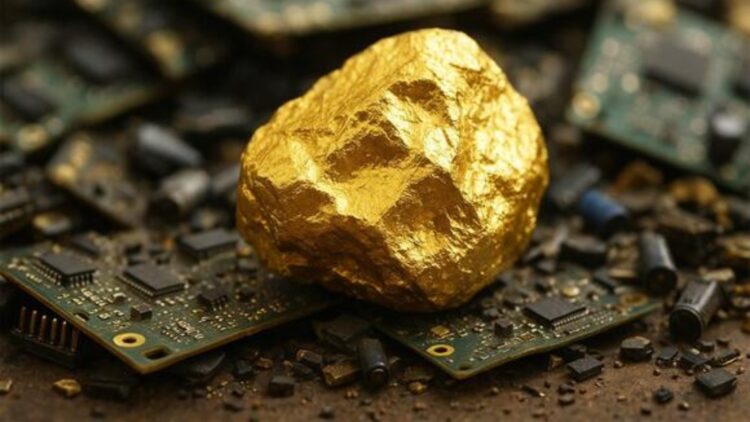
A team of researchers from ETH Zurich in Switzerland has developed an innovative method for recovering gold from electronic waste, a discovery that could reshape the recycling industry and create new job opportunities. This technique uncovers the potential hidden within discarded electronic devices, revealing that even small products, weighing as little as 25 grams, can contain up to 450 milligrams of 22-karat gold.
The researchers assert that everyday electronic products—such as motherboards, chips, and small circuits—often overlooked during disposal, can be effectively recycled. This method not only promotes environmental sustainability but also highlights the economic value of electronic waste, which is rapidly accumulating as technological consumption continues to rise.
Innovative Extraction Process
The extraction process involves a unique technique utilizing sponges made from protein fibrils derived from the cheese industry. According to the website Talen24h, these sponges, when immersed in solutions created from dissolved electronic devices, attract and retain gold ions. After treatment, these particles are transformed into small nuggets, demonstrating a practical and effective means of gold recovery.
This new approach necessitates skilled personnel, including trained chemists, technicians, and waste management experts. As a result, the technique not only addresses the recycling of precious metals but also opens up a specialized field of work focused on the collection, processing, and transformation of electronic waste.
Advantages of the New Method
The benefits of this method extend far beyond economic gains. Key advantages include:
– **Reduced Dependence on Mining**: By recovering metals from waste, reliance on traditional mining operations decreases.
– **Job Creation**: The demand for skilled workers in the recycling sector is likely to rise, fostering new employment opportunities.
– **Environmental Impact**: Lower waste levels contribute to decreased pollution and greater material reuse.
– **Sustainable Innovation**: This technique paves the way for further research and development in the field of sustainable practices.
As the volume of electronic waste grows, many consumers remain unaware of the significant value embedded in their old devices. The findings from ETH Zurich not only provide an environmental solution but also present an economic opportunity. This process establishes a circular economy that supports various sectors—economic growth, waste recycling, and reduced pollution—while also addressing the urgent need for qualified personnel in this expanding field.