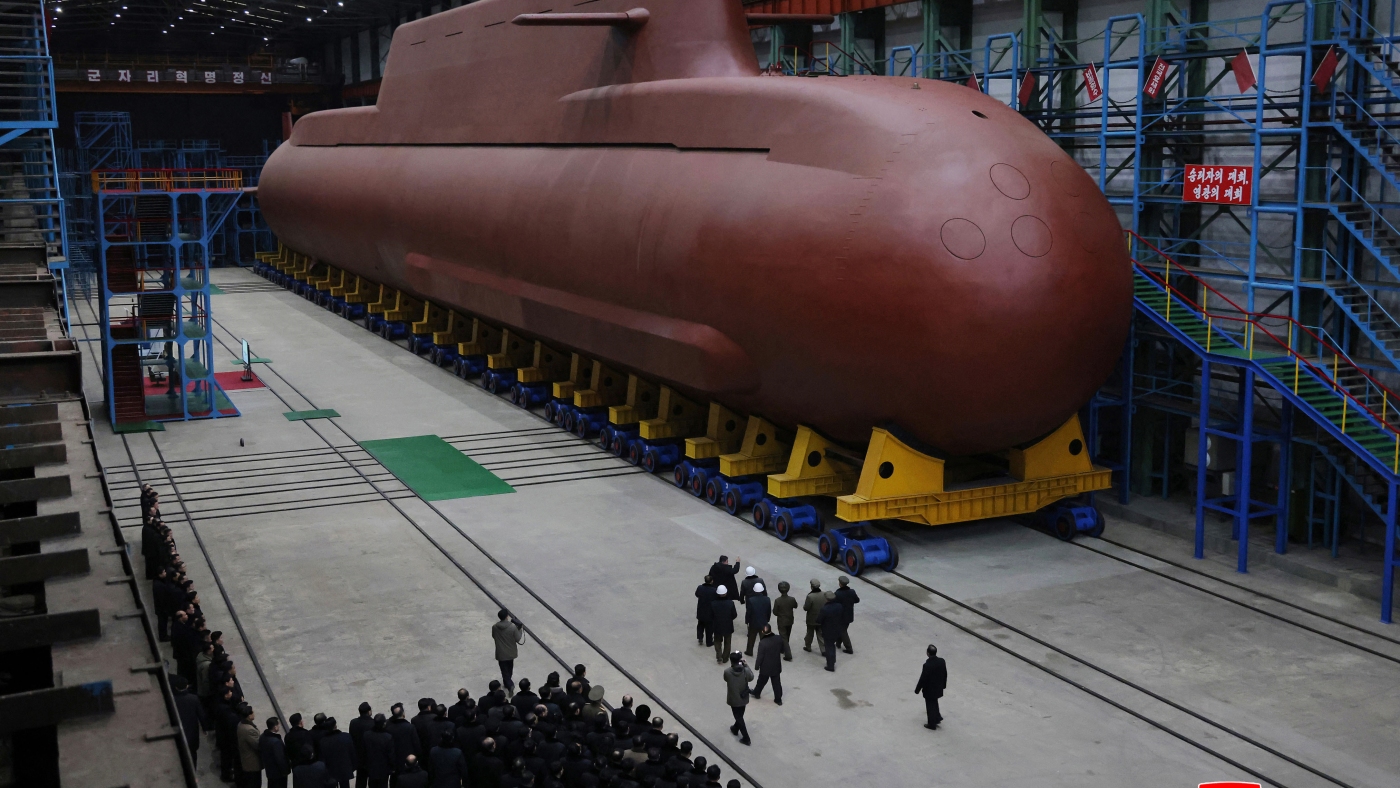
Tensions on the Korean Peninsula have intensified as both North and South Korea ramp up their nuclear submarine capabilities. This escalation follows a shift in the United States’ security strategy in the region, prompting concerns about military balance and regional stability.
North Korea’s state media announced on March 2, 2023, the unveiling of an “8,700-ton nuclear-powered strategic guided missile submarine.” This is the first time the country has disclosed the specifications of the submarine since it began pursuing nuclear submarine technology in 2021. North Korean leader Kim Jong Un asserted that this new vessel is crucial for defending the nation against evolving security threats, referring to South Korea’s military advancements as an “offensive act” that necessitates a strong response.
In response to the perceived threat from the North, South Korea has accelerated its own nuclear submarine program. Following an agreement with the Trump administration in October 2022, South Korea has established a pan-government task force aimed at developing nuclear capabilities. The country’s national security adviser, Wi Sung-lac, indicated plans for a pact with the U.S. to secure military-grade nuclear fuel, which is essential for its submarine program.
Strategic Implications for Regional Security
South Korea’s ambitions for nuclear submarines are driven by the need to counter North Korea’s expanding maritime capabilities, which now include submarine-launched nuclear missiles and claims of developing nuclear-capable torpedoes. Defense Minister Ahn Gyu-back noted in October 2022 that conventional, diesel-powered submarines cannot match the endurance and speed of the nuclear submarines being developed by the North.
The strategic implications of these developments extend beyond the Korean Peninsula. During a visit to Seoul in November 2022, Admiral Daryl Caudle, the chief of naval operations for the U.S. Navy, emphasized that South Korean nuclear submarines are expected to contribute to broader regional security goals, particularly concerning China. President Lee Jae Myung acknowledged the limitations of diesel submarines in tracking threats from both North Korea and China, noting the necessity for enhanced underwater capabilities.
Former South Korean navy captain Yoon Sukjoon explained that expanding South Korea’s nuclear submarine operations beyond the peninsula could provide strategic deterrence against China, particularly as the Chinese Navy continues to grow. Despite these considerations, South Korea remains cautious about openly suggesting military confrontation with China, its largest trading partner.
Public Sentiment and Future Direction
Public sentiment in South Korea reflects a desire for neutrality in the event of a conflict between the U.S. and China. A recent survey indicated that a majority of South Koreans prefer the country to maintain a neutral stance should tensions escalate. Nevertheless, there is significant support for nuclear armament, even at the risk of facing international sanctions or a reduction of U.S. troop presence.
Political scientist Kim Heungkyu from the China Policy Institute at Ajou University articulated that as the U.S. shifts its defense focus, South Korea and Japan are increasingly concerned about China’s growing influence. A poll conducted by the Asan Institute showed that less than half of South Koreans trust that the U.S. would respond with nuclear force if North Korea were to attack.
While the South Korean government denies aspirations for nuclear weapons, it is pursuing access to uranium enrichment and spent fuel reprocessing capabilities. Analysts suggest that the Trump administration’s policies are inadvertently steering South Korea and Japan toward nuclear armament. The development of nuclear-powered submarines could serve as a pivotal step toward achieving these broader military objectives.
In summary, the burgeoning arms race in nuclear submarines between North and South Korea highlights an urgent need for dialogue and diplomatic efforts to maintain stability in the region. As both nations pursue advanced military capabilities, the implications for regional security dynamics remain profound and complex.