The Confederation of African Football (CAF) has imposed significant fines and player bans following chaotic scenes during the African Cup final held on January 18, 2024. Senegal’s coach and several players from both Senegal and Morocco have faced sanctions after the match was marred by protests, crowd disturbances, and violent altercations among journalists. The total financial penalties exceed $1 million, underscoring the severity of the incidents.
The CAF announced fines of $615,000 for the Senegalese football federation and $315,000 for the Moroccan football federation. The infractions included unsporting behavior from players, coaching staff, and fans. Coach Pape Thiaw received a five-match ban and a fine of $100,000 for his role in bringing the game into disrepute.
The final, which took place in Rabat, saw Senegal walk off the field in protest after Morocco was awarded a late penalty. Following a brief pause, the game resumed, with Morocco ultimately missing the penalty. Senegal clinched the title with a 1-0 victory after extra time.
Widespread Disruptions and Fallout
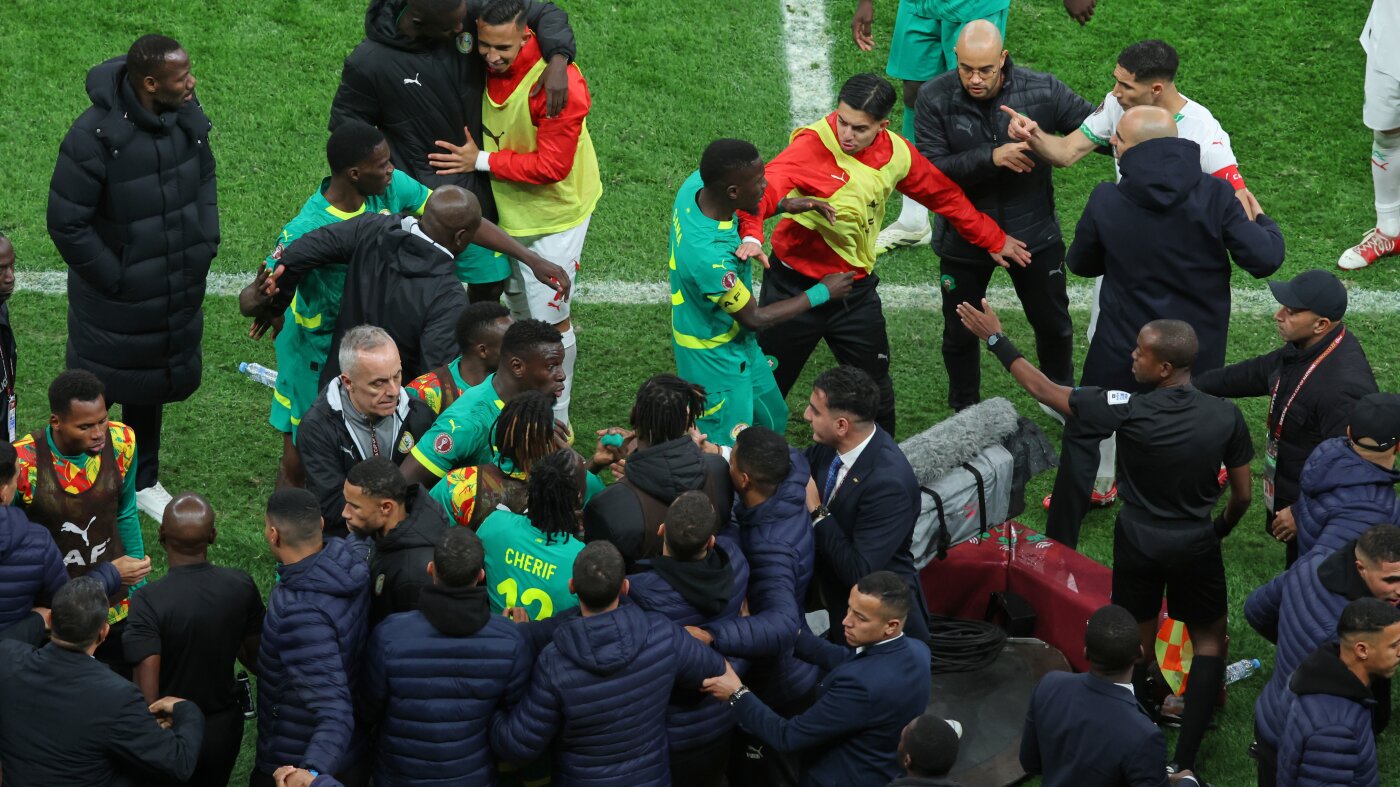
The match was characterized by numerous disturbances, including fans attempting to storm the field and players from both teams clashing on the sidelines. An incident involving Moroccan ball boys trying to distract Senegal goalkeeper Edouard Mendy also drew criticism. The behavior of these ball boys contributed to a $200,000 fine for the Moroccan federation, which is set to co-host the 2030 World Cup alongside Spain and Portugal.
Morocco’s head coach, Walid Regragui, expressed concern over the negative image portrayed by African football due to the events of the final. The fallout from the match extends beyond the pitch; it has strained diplomatic relations between Senegal and Morocco. Political leaders from both nations have emphasized the need to maintain friendly relations despite the tensions.
The CAF rejected an appeal from Morocco to overturn the match result, confirming Senegal’s victory. Players from both teams also faced disciplinary actions: Senegal’s Iliman Ndiaye and Ismaila Sarr were each banned for two matches, while Morocco’s Achraf Hakimi received a two-match ban (one suspended). Furthermore, Ismael Saibari of Morocco was banned for three matches and fined $100,000 due to unsporting conduct.
Broader Implications and Reactions
The aftermath of the final has ignited discussions about the treatment of sub-Saharan Africans in Morocco, with human rights groups condemning instances of hate speech following the match. On a diplomatic visit to Morocco shortly after the final, Senegalese Prime Minister Ousmane Sonko characterized the response to the events as “emotional outbursts” rather than significant political or cultural divisions.
Both nations are now tasked with addressing the repercussions of the final, both on and off the field. As they prepare for the upcoming 2026 World Cup, the focus will be on restoring the integrity and reputation of African football amidst these challenges.