








































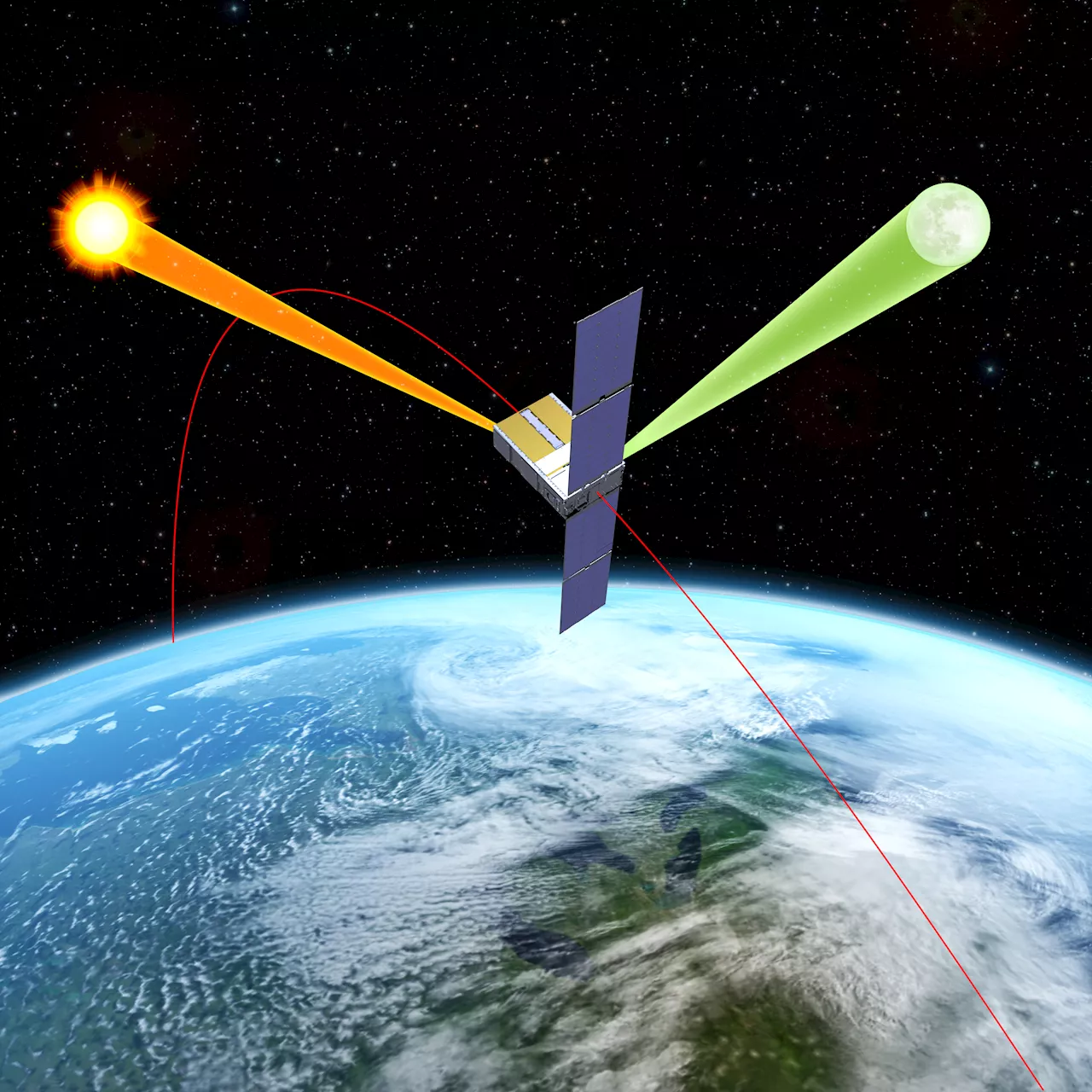
NASA’s Arcstone instrument has successfully completed its primary mission, marking a significant milestone in lunar calibration technology. Launched on June 23, 2023, from Vandenberg Space Force Base in California aboard a SpaceX Transporter-14, Arcstone embarked on a six-month mission aimed at measuring the light reflected by the Moon. This data is critical for enhancing the accuracy of satellite sensors that map the Earth’s surface, which is essential for various commercial and scientific applications.
The mission, spearheaded by NASA’s Langley Research Center in Hampton, Virginia, utilizes a specially designed spectrometer system. Arcstone is the first instrument in orbit dedicated entirely to improving lunar calibration accuracy. By measuring sunlight reflected from the Moon, the mission represents a foundational step toward developing a new lunar model that will assist in calibrating Earth-orbiting sensors, including those used in everyday devices like smartphones.
According to Cindy Young, principal investigator for the mission, the advantage of gathering measurements in space is significant. “The data collected does not contain atmospheric effects that increase error, and operations are not dependent on having good weather,” she explained. This capability allows for more consistent and frequent lunar sampling, which enhances the reliability of the data.
Since its deployment, Arcstone has already gathered over 240 lunar observations and has demonstrated its measurement concept while in orbit. The next phase for the science team involves processing and validating this raw data to ensure its accuracy and usefulness.
The Arcstone project is part of a low-cost mission funded by NASA’s Earth Science Technology Office through its In-space Validation of Earth Science Technologies Program. The project also collaborates with esteemed partners, including the University of Colorado Boulder’s Laboratory for Atmospheric and Space Physics, the U.S. Geological Survey, NASA’s Goddard Space Flight Center in Greenbelt, Maryland, as well as Resonon Inc., Blue Canyon Technologies, and Quartus Engineering.
This mission not only underscores NASA’s commitment to advancing space technology but also highlights the importance of lunar calibration in enhancing the precision of Earth observation tools. As the data continues to be processed, further insights into the Moon’s reflective properties will emerge, paving the way for improved satellite calibration efforts worldwide.