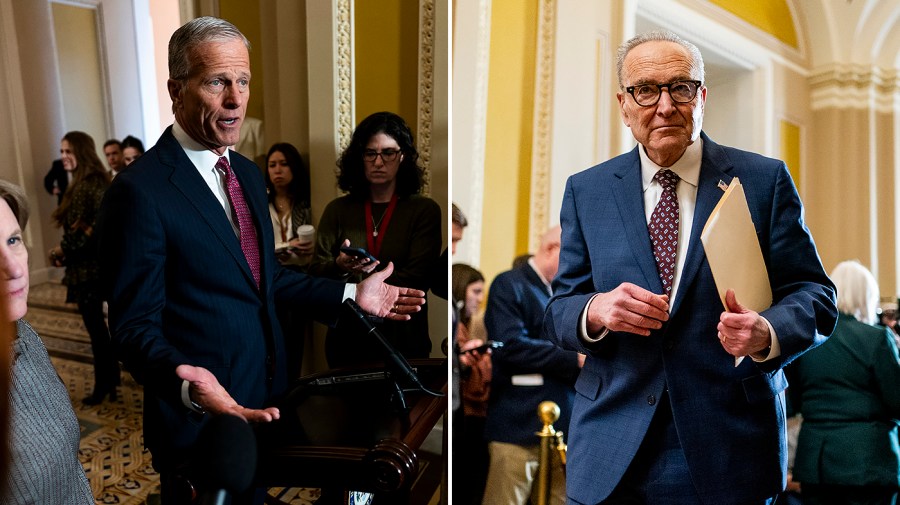
Congress is on the brink of a partial government shutdown as leaders exchange demands regarding funding measures. On September 27, 2023, Senate Democratic Leader Chuck Schumer (D-N.Y.) presented a series of significant reforms aimed at the Department of Homeland Security (DHS). These proposals are expected to face strong opposition from President Trump and his supporters, complicating negotiations as the September 30 deadline approaches.
As the deadline looms, the political landscape in Washington, D.C. becomes increasingly tense. Democrats have signaled that they will not support a six-bill funding package unless their proposed reforms are included. Schumer’s list includes various changes intended to enhance security and improve operational efficiency within DHS. He emphasized that these reforms are essential for addressing pressing issues, including immigration and border security.
In response, President Trump has criticized the Democrats’ proposals, labeling them as excessive and arguing that they would undermine national security. The administration is advocating for a more streamlined funding approach that maintains current operational levels without implementing the proposed changes.
The ongoing negotiations reflect broader partisan divides in Congress, with Democrats and Republicans struggling to find common ground. The potential shutdown threatens to impact various government services, affecting millions of Americans who rely on federal assistance and programs.
Political analysts warn that failure to reach an agreement could lead to significant disruptions. A shutdown could halt non-essential government functions, impacting everything from national parks to federal employee salaries. Both parties are keenly aware of the potential fallout, yet they remain entrenched in their positions.
While the immediate focus is on the DHS funding, broader budgetary issues are also at play. Lawmakers will need to address the overall federal budget, including defense spending and social programs, which remain contentious points of discussion. The complexity of these negotiations adds to the urgency as the deadline approaches.
As Congress grapples with these challenges, public scrutiny intensifies. Citizens are expressing concern over the potential repercussions of a government shutdown. With essential services hanging in the balance, the coming days will be crucial for determining whether a compromise can be reached.
In summary, Congress stands at a pivotal moment as it navigates the intricate dynamics of government funding. The outcome of these discussions will have lasting implications for both the federal government and the American public. As leaders continue to trade demands, the pressure mounts to avert a shutdown and ensure the continuity of essential services.