



































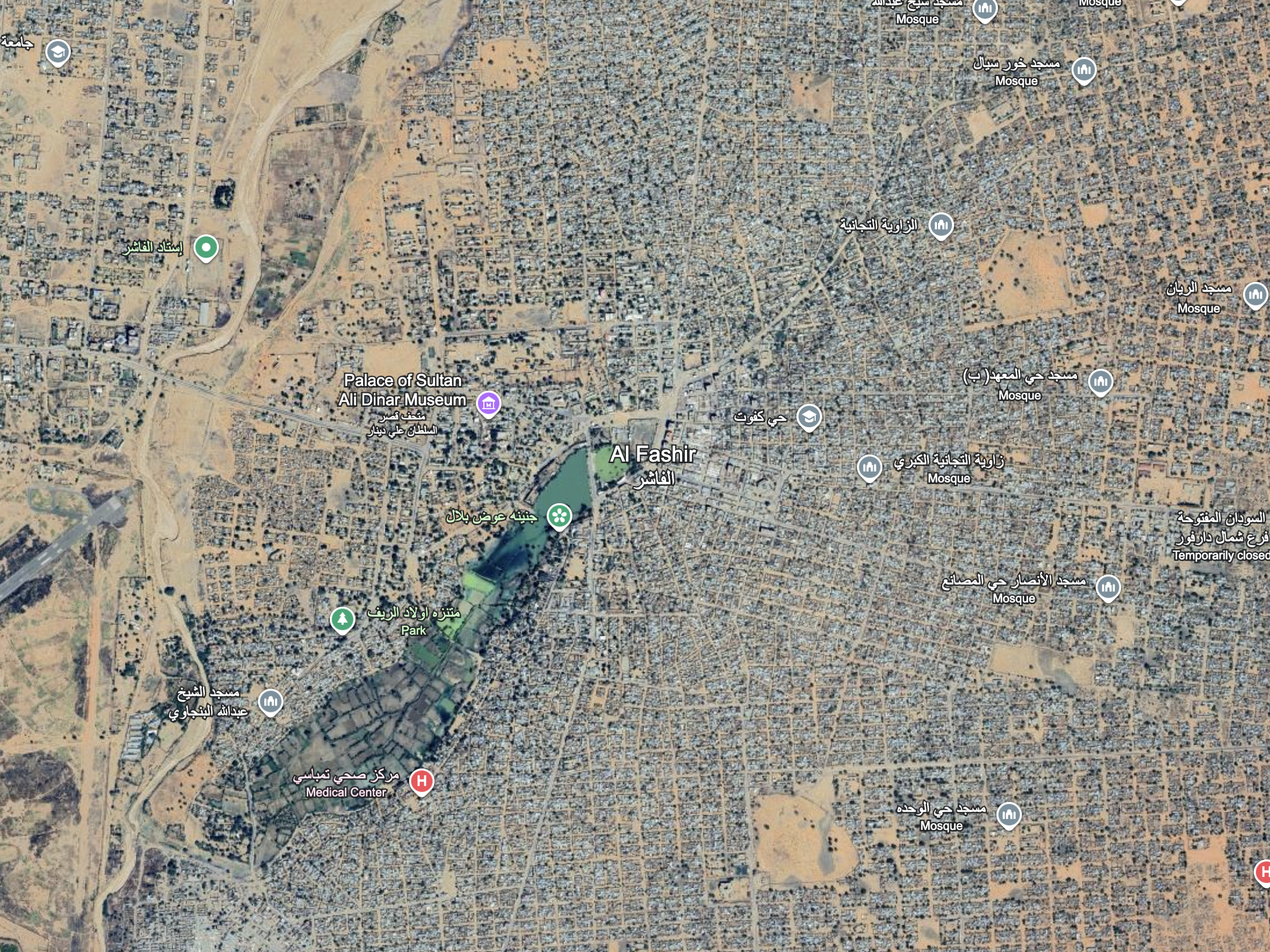
Researchers from Yale University have revealed alarming evidence of systematic mass killings in El-Fasher, Sudan, following the capture of the city by the Rapid Support Forces (RSF) in late October. The findings, released this week, draw upon satellite imagery analysis that identifies at least 150 clusters indicative of human remains in and around the city between October 26 and November 28, 2023.
The report by the Yale School of Public Health indicates that the RSF has conducted operations that are likely responsible for a significant number of civilian deaths. The researchers classified the clusters based on their size, timing, and proximity to ground discoloration consistent with blood oxidation. In several instances, RSF social media posts corroborated the locations where these remains were found.
Furthermore, the analysis documented 38 occurrences of reddish discoloration consistent with blood or other bodily fluids, alongside evidence suggesting ongoing efforts to destroy remains through burning and burial. The report concludes with high confidence that the RSF engaged in door-to-door killings in the Daraja Oula neighborhood, which was the last major refuge for civilians in El-Fasher. Those attempting to escape through barriers erected by the RSF were specifically targeted.
The Yale researchers stated, “
The evidence presented in this report cannot be used to estimate the number of people who have died, but it can be used to demonstrate that large-scale and systematic mass killing and body disposal has occurred and is occurring on a scale that has not ever been seen before in very high-resolution commercial satellite imagery analyzed by civilians.
”
Estimates regarding casualties in El-Fasher vary widely. According to Doctors Without Borders, only around 10,000 survivors have reached safety at nearby displacement camps, out of an estimated 260,000 people who were in El-Fasher before the RSF assault. This implies that a significant number of civilians may have been killed, died from other causes, or remain trapped in the city. The humanitarian organization characterized the situation as a “catastrophic scenario,” referencing the findings from Yale’s analysis.
By late November, satellite imagery showed that 38% of identified body clusters were no longer visible, indicating systematic disposal operations. The evidence further contributes to the growing documentation of atrocities in Sudan, which began in March 2023 when violent clashes erupted between the RSF and the Sudanese Armed Forces. The RSF has made significant territorial gains, advancing into the Kordofan region, while peace talks have stalled following the Sudanese Armed Forces’ rejection of a US-backed truce proposal in November. The RSF accepted the plan but has continued military operations.
The Yale researchers have called on the UN Security Council to secure immediate access to El-Fasher for humanitarian assistance and evidence collection. They emphasized the urgency, stating, “Time is of the essence for both those still living and for the evidence left by those who have died.” The international community is urged to act quickly to address the humanitarian crisis and ensure accountability for the atrocities committed.