





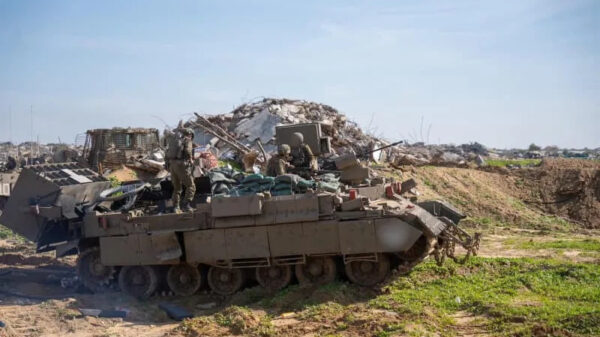






























Hamas has expressed a willingness to discuss options for “freezing or storing” its weapons, according to senior official Bassem Naim. This announcement comes as concerns rise regarding the viability of a ceasefire agreement between Israel and the militant group, which remains in its early stages. Speaking to the Associated Press in Qatar on March 3, 2024, Naim indicated that Hamas is “very open minded” about the management of its remaining armaments.
The ceasefire deal, which has been brokered by the United States, stipulates that Hamas must relinquish its arms under the supervision of independent monitors as part of a broader demilitarization process in Gaza. Disarmament is a critical element of the second phase of the 20-point ceasefire agreement. Naim elaborated, stating, “We can talk about freezing or storing or laying down, with the Palestinian guarantees, not to use it at all during this ceasefire time or truce.”
Israeli Prime Minister Benjamin Netanyahu commented on the situation, noting that Israel is “very close” to advancing to this second phase of the Gaza ceasefire deal. Nevertheless, significant uncertainties remain, particularly regarding the composition of an international security force that is expected to operate within Gaza, a crucial aspect of the agreement. Netanyahu reaffirmed Israel’s commitment to disarming Hamas and demilitarizing the region.
It remains uncertain whether Hamas’s proposal to “freeze or store” weapons would satisfy Israel’s demands for full disarmament as outlined in the ceasefire terms. Naim highlighted that any international force, even one operating under a UN Security Council resolution, would have limited authority in Gaza. He stated, “We are welcoming a UN force to be near the borders, supervising the ceasefire agreement, reporting about violations, preventing any kind of escalations. But we don’t accept that these forces have any kind of mandates authorizing them to do or to be implemented inside the Palestinian territories.”
Concerns regarding the ceasefire’s stability were echoed during the Doha Forum on March 2, where representatives from Qatar, Egypt, and Norway voiced their apprehension about the ongoing negotiations. Qatari Prime Minister Mohammed bin Abdulrahman Al-Thani remarked on the precarious situation, saying, “Now, we are at a critical moment of the Gaza ceasefire. It’s not yet there, so what we have just done is a pause.”
The situation remains fluid as discussions continue, with international stakeholders closely monitoring the developments. The potential for a successful ceasefire hinges not only on the disarmament of Hamas but also on the establishment of effective international oversight to ensure compliance and maintain peace in the region. As negotiations advance, the path forward remains uncertain, with both sides navigating complex political and security considerations.