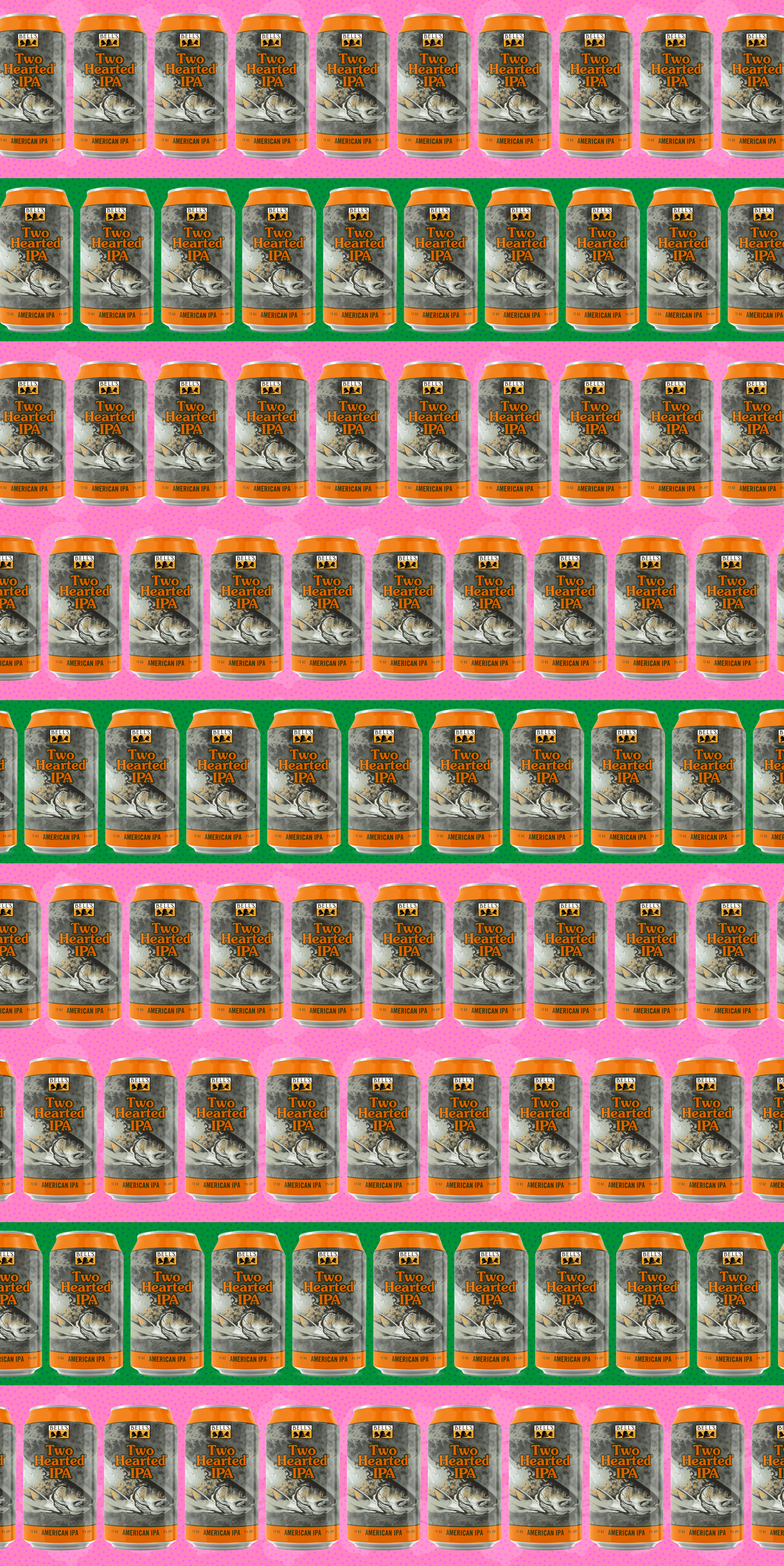
UPDATE: Bell’s Brewery, a titan of the craft beer movement, is facing a significant decline in sales, raising alarms about the future of craft brews in America. Recent data shows that Bell’s Two Hearted IPA has dropped 1.9 percent in dollar sales as of December 2025, highlighting a troubling trend in an industry that many believed was on the rise.
The Kalamazoo, Michigan-based brewery, known for its iconic Two Hearted IPA and Oberon, was sold in November 2021 to Lion, a subsidiary of the Japanese beverage giant Kirin. This acquisition has sparked debates among loyal fans and industry experts alike about the implications for craft beer quality and independence.
As the craft beer landscape evolves, the total number of breweries in the U.S. has surged from 1,468 in 2004 to an astounding 9,922 in 2024. However, the market is now experiencing a plateau, with more brewery closures than openings for the second consecutive year. This stark reality poses a challenge for larger craft producers like Bell’s, who must navigate rising production costs and shifting consumer preferences.
According to industry analyst Jeff Alworth, “The conversations about provenance and independence that used to dominate the discourse around craft beer have fallen by the wayside.” This sentiment is echoed by data from Circana, which reveals that brands owned by major corporations like AB InBev are thriving, while Bell’s struggles to maintain its previous success.
Fans have expressed concern over the brewery’s direction since the sale. Many feel that the quality of Bell’s products may have diminished, with some customers recalling a time when the brewery proudly declared its beers as “unfiltered.” The debate over the perceived changes in Bell’s offerings raises questions about the impact of corporate ownership on craft beer culture.
Despite the backlash, Bell’s remains a staple in bars and restaurants, with Two Hearted still recognized as a top choice among craft beer enthusiasts. However, as consumer interest wanes, the company faces tough decisions about brand extensions and product offerings—such as its new Big Hearted IPA, which has drawn mixed reviews.
In an industry where change is constant, Bell’s Brewery serves as both a success story and a cautionary tale. The brewery’s struggle to adapt illustrates a broader decline in traditional craft beer consumption, making it imperative for the company to innovate and reconnect with its core audience.
Looking ahead, industry experts are closely monitoring Bell’s trajectory. Will the brewery reclaim its status as a beloved craft beer brand, or will it succumb to the pressures of the corporate beer landscape? Consumers and industry insiders alike are eager to see what the future holds for this iconic Michigan brewery.
Stay tuned for breaking updates as this story develops.