Small pizzerias in New England are increasingly turning to artificial intelligence (AI) to manage customer orders and inquiries, a trend that is generating mixed reactions among patrons. While the technology aims to streamline operations and reduce costs, many customers express frustration with the lack of human interaction and the potential for errors.
Jillian Kent, a resident of Quincy, Massachusetts, experienced this firsthand after ordering a large pizza, fries, and a salad from Crush Pizza. When her delivery arrived without the salad, Kent found herself caught in an automated phone loop when trying to resolve the issue. Despite her familiarity with AI from her job as a systems analyst, she described the experience as “frustrating.”
According to Tony Naser, who operates two Crush Pizza locations and another restaurant, Mickey’s N.Y. Pizza in New Hampshire, the introduction of AI answering systems has been met with surprise and skepticism from some customers. Naser adopted this technology in 2024 through Loman AI, a startup based in Austin, Texas, which is part of a rapidly growing market for automated customer service, estimated to be worth billions. He noted that while initial complaints were common, they have decreased over time as customers adjust to the change.
“We can’t imagine going back to like a Friday night and answering the phones,” Naser said, highlighting the efficiency gains from AI. The system reportedly handles over a thousand calls each month at each of his restaurants, boasting a 98.6 percent accuracy rate, compared to a 94 percent accuracy rate for human receptionists, according to health care research.
Naser’s experience reflects a broader trend in the restaurant industry, where many establishments are embracing AI to boost productivity and respond to labor shortages. The Massachusetts Restaurant Association states that phone answering tools represent one of the most widely adopted forms of AI in the sector, particularly among neighborhood pizza shops.
Despite these advancements, customer preferences remain a significant factor. An October report from customer analytics platform Qualtrics XM revealed that nearly 20 percent of consumers felt that AI customer support tools offered no benefits. Many still prefer the personal touch of human interaction, particularly when ordering food.
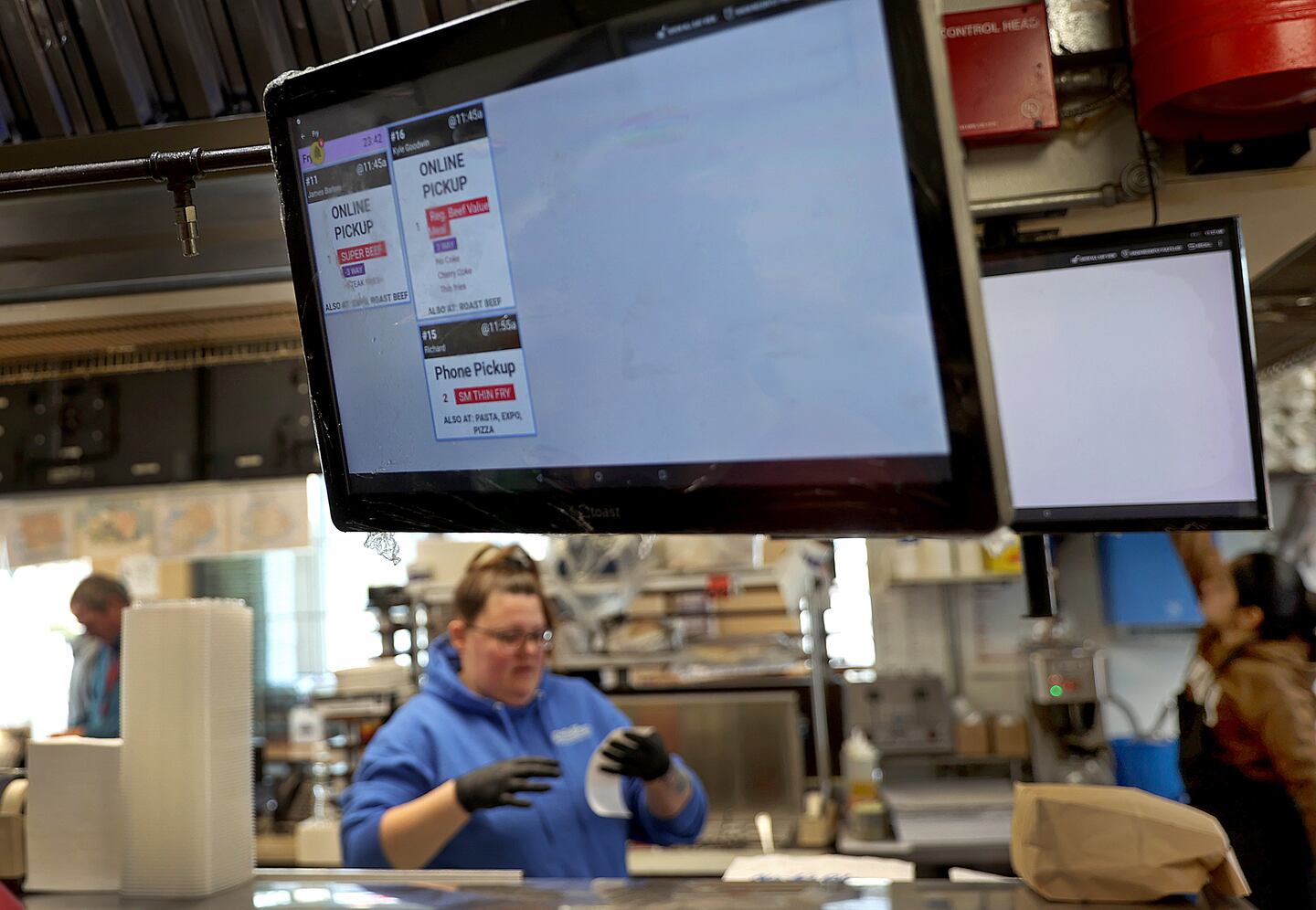
Costa Alexandrou, the owner of Nick’s Place, a family-owned pizza chain in New Hampshire, made the switch to AI in 2024 after noticing a decline in available staff due to high school graduates moving away. He and Naser both noted that their primary business now comes through online orders, reflecting a shift in consumer behavior towards mobile ordering and delivery apps.
Nonetheless, missed phone calls remain a significant source of lost revenue, especially for takeout-focused restaurants. Alexandrou shared his concerns regarding the difference in expectations between small businesses and larger chains, stating, “You can’t call a lot of these big fast food chains. So why do customers get upset when a smaller mom-and-pop shop wants to try to get a little technological advancement or be a little bit more efficient?”
As AI technologies become more prevalent in the restaurant industry, their impact on labor costs is notable. Loman AI’s data suggests that restaurants can save around $2,500 per store each month in labor costs. While some establishments reduce their workforce following AI adoption, many remain at the same staffing levels, citing improvements in efficiency.
Experts believe that as the technology evolves, customer acceptance will increase. Paul English, co-founder of travel search engine Kayak, pointed out that current complaints may stem from the limitations of existing AI systems. He predicts that as AI capabilities improve, consumers will become more comfortable with automated interactions.
For Naser and Alexandrou, the integration of AI has not only improved operational efficiency but also allowed them to repurpose their staff for other critical areas. While some critics argue that AI threatens jobs, Naser reported that his restaurant now employs more people than before the technology was implemented.
“AI is saving the day,” Alexandrou said, emphasizing the benefits that come with embracing new technology in a challenging business environment. As the restaurant landscape continues to evolve, the balance between automation and customer experience will likely remain a focal point for many establishments in New England and beyond.