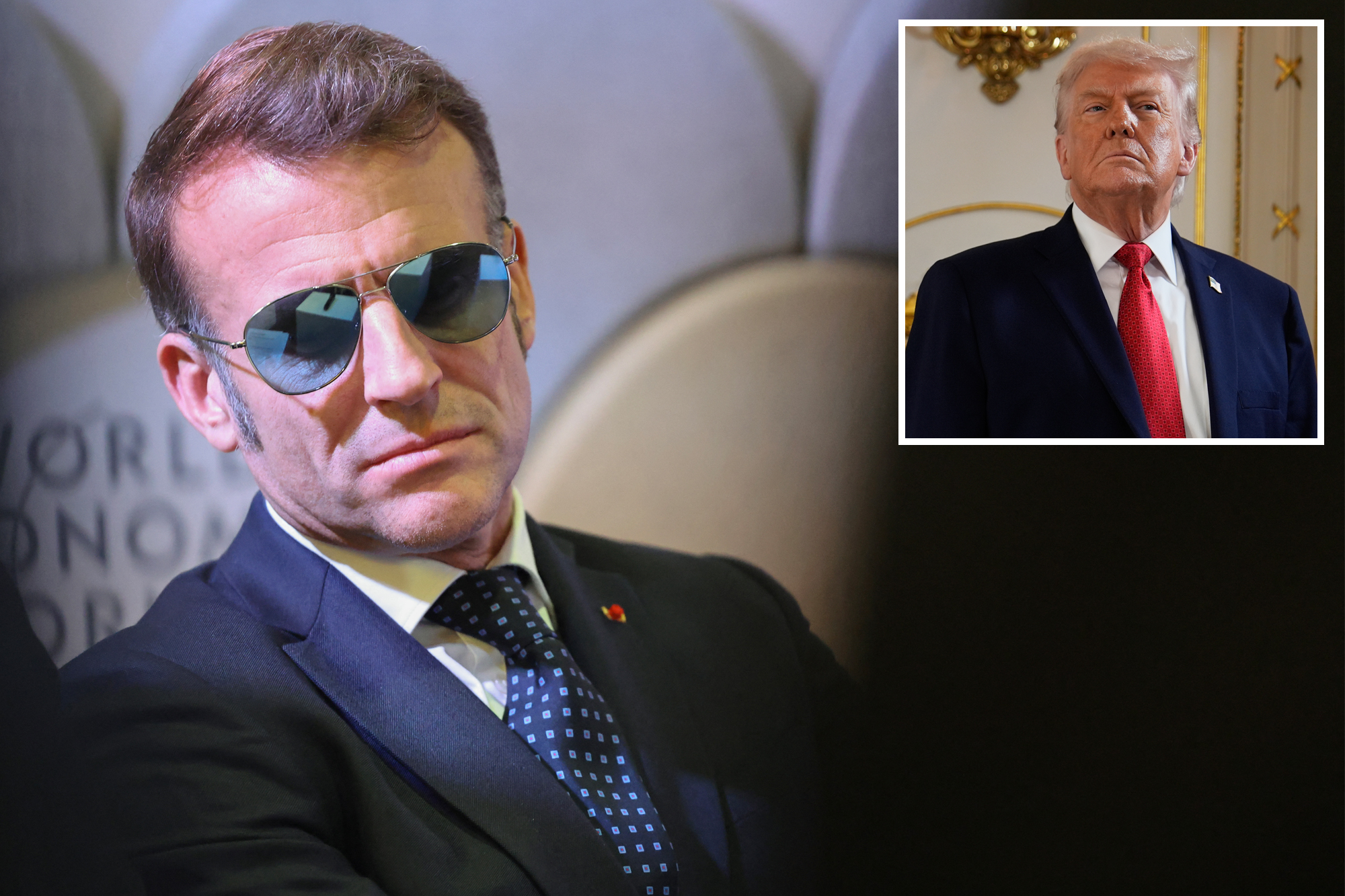
French President Emmanuel Macron appeared at the World Economic Forum in Davos, Switzerland, donning dark aviator glasses, which he attributed to a burst eye vessel. This unusual accessory drew attention as he delivered a pointed critique of U.S. President Donald Trump and his recent international actions.
During his address on March 15, 2024, Macron stated that Trump’s recent maneuvers on the world stage aim “to weaken and subordinate Europe.” He emphasized the importance of mutual respect among nations, saying, “We do prefer respect to bullies,” and stressed the significance of adhering to the rule of law instead of resorting to aggression.
The French leader’s remarks come amid escalating tensions between the U.S. and European leaders, particularly regarding Trump’s controversial proposal to purchase Greenland from Denmark. Macron condemned the U.S. administration’s “endless accumulation” of tariffs, calling it “fundamentally unacceptable,” particularly when used as leverage against the sovereignty of nations.
In response to Trump’s tariff threats, leaders of the European Union announced an emergency summit to be held in Brussels later this week to discuss the ongoing standoff. Macron urged the EU to consider implementing its Anti-Coercion Instrument, informally referred to as the “trade bazooka,” which could restrict trade with the U.S. for the first time in history.
As Macron spoke, he also addressed the speculation regarding his appearance. He explained the aviator glasses were a necessary choice to conceal his “unsightly” red and puffy eyes, a result of his eye condition. In a lighthearted moment, he referenced the famous song “Eye of the Tiger” by the band Survivor, describing the glasses as an “unintentional reference” to determination.
The convergence of serious political discourse and personal circumstances highlighted the complex dynamics at play during the World Economic Forum. Macron’s statements underscore the growing rift between Europe and the United States, particularly under Trump’s leadership, and reflect ongoing concerns regarding international trade and diplomatic relations.