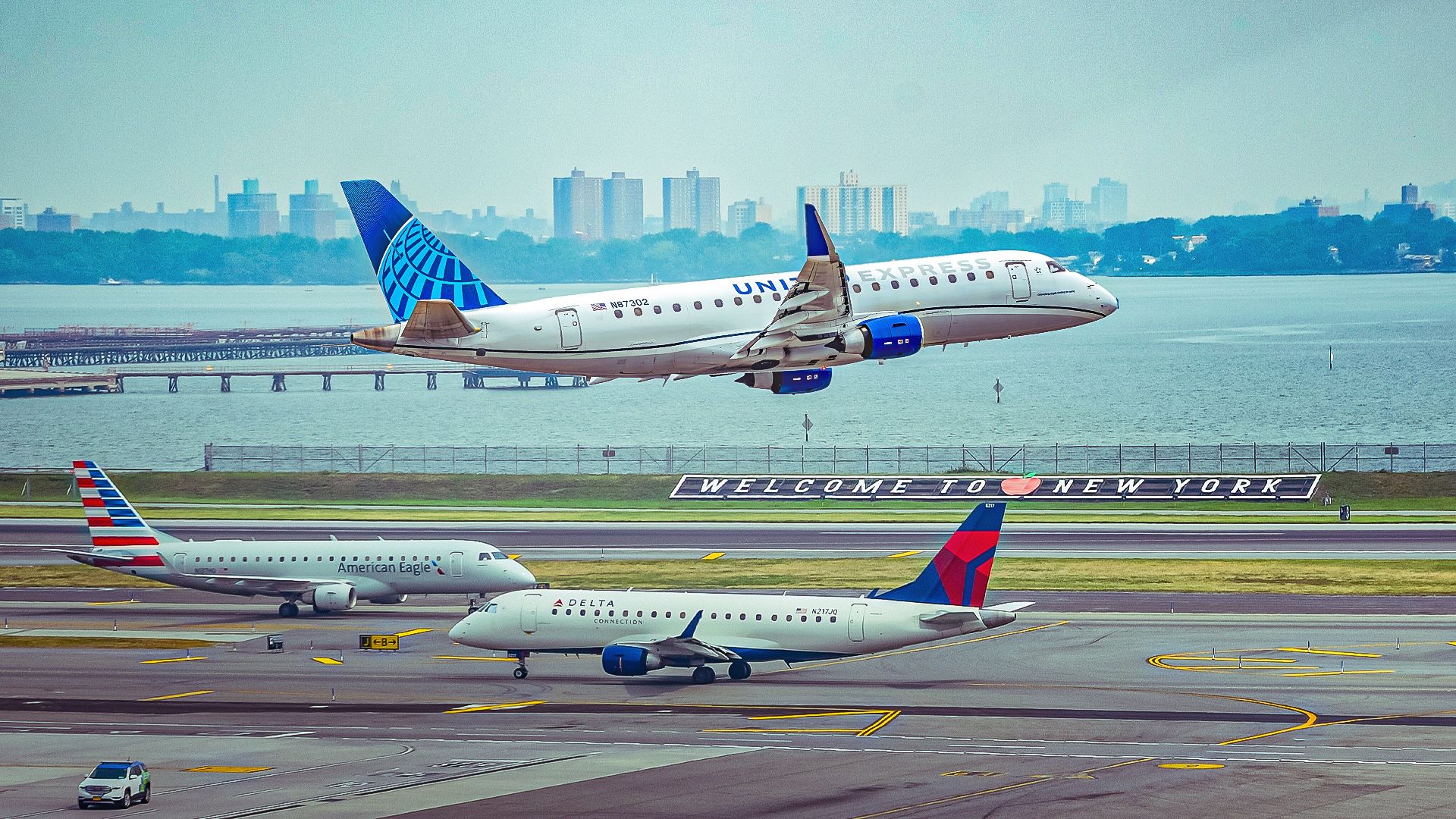
The competition among America’s major airlines is heating up as schedules for 2026 take shape. American Airlines, Delta Air Lines, and United Airlines are all positioning themselves to operate the most flights next year, with each carrier employing distinct strategies to capture market share. According to aviation analytics platform Cirium, American Airlines plans to lead with over 2.2 million departures, representing approximately 40% of total flights among the three airlines.
Each of these legacy carriers brings a unique approach to service, focusing on varying aspects of network strategy, fleet availability, and market demand. American Airlines emphasizes frequency in domestic connectivity through its hub system, while Delta Air Lines prioritizes operational reliability and premium services. United Airlines seeks to expand its reach in various markets, balancing short-haul frequencies with long-haul international services.
Analyzing the 2026 Flight Landscape
American Airlines is set to dominate the flight count with its extensive network. The carrier is projected to offer around 270 million seats in 2026, although it ranks third in overall capacity with 296 billion available seat miles (ASMs). This suggests shorter average flight lengths and a focus on connecting business travelers and local traffic.
Delta Air Lines plans to operate approximately 1.7 million flights and will provide around 237 million seats, generating 289 billion ASMs. Delta’s strategy highlights its reliance on Hartsfield-Jackson Atlanta International Airport (ATL) as a hub, where high-frequency services connect to various destinations, particularly in the Northeast.
In contrast, United Airlines aims to capture a different segment of the market. Also planning for around 1.7 million departures, United focuses on linking major hubs, such as Chicago-O’Hare International Airport (ORD) and Denver International Airport (DEN), with frequent connector flights and a mix of domestic trunk routes. This strategy enables United to generate the most ASMs among the three carriers, indicating a focus on long-haul travel.
Understanding Carrier Strategies and Market Roles
The three airlines serve as the backbone of the US aviation market, connecting numerous small and mid-sized cities to larger hubs and international destinations. While low-cost carriers often compete on price, legacy airlines like American, Delta, and United often win through their extensive schedules, diverse destinations, and consistent service reliability.
American Airlines has established Dallas/Fort Worth International Airport (DFW) as its primary hub, with high-frequency routes to cities like Austin and San Antonio. These connections are crucial for both business travelers and leisure customers. Similarly, Delta’s network emphasizes high-volume routes from Atlanta, with significant services to LaGuardia Airport (LGA) and Boston, reflecting strong demand.
United Airlines, on the other hand, has tailored its network to emphasize connectivity between major hubs. By maintaining frequent services between key cities and leveraging international routes, United aims to maximize profits while serving a mix of domestic and international travelers.
As the airlines prepare for 2026, factors such as aircraft delivery schedules, retirements, and seasonal adjustments will likely influence their final rankings in flight counts. The ability of these carriers to adapt to changing market conditions will play a critical role in determining their success.
In conclusion, while American Airlines is poised to lead in overall departures, Delta and United Airlines are strategically positioned to capitalize on different segments of the market. The competition will continue to evolve as each carrier seeks to carve out its niche in the dynamic landscape of American aviation.