






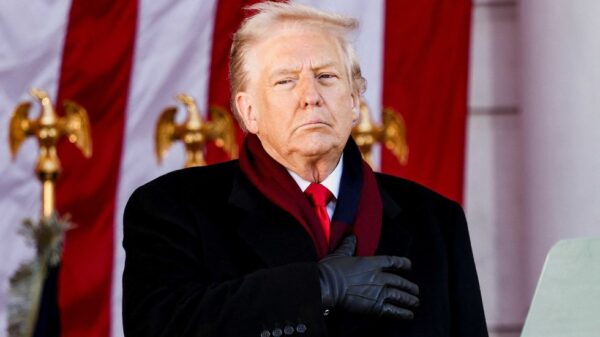










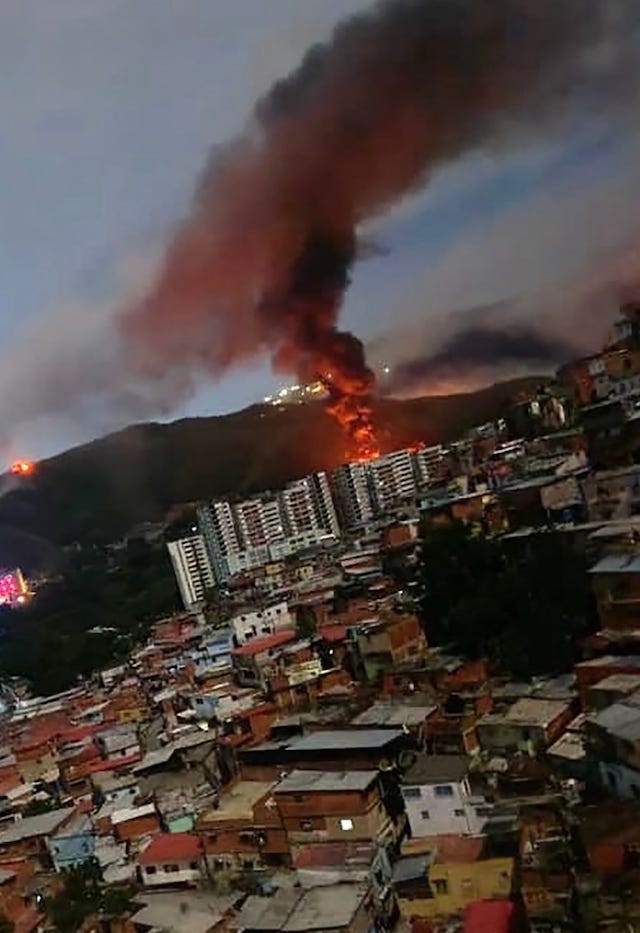
URGENT UPDATE: In a dramatic escalation, President Donald Trump announced that the US military may deploy troops to protect Venezuela’s vast oilfields following the military’s capture of the country’s leader overnight. This unprecedented move highlights the Trump administration’s focus on gaining access to Venezuela’s enormous oil reserves, which are among the largest in the world.
During a press conference at Mar-a-Lago on July 15, 2023, Trump stated, “We’re going to have a presence in Venezuela as it pertains to oil.” His comments come after the US military launched a high-stakes mission in Caracas, aiming to ensure justice following the indictment of Venezuela’s leader.
Military experts warn that securing Venezuela’s oil infrastructure is fraught with risks and challenges. The region’s political instability raises questions about potential resistance to US forces. Retired US Army Colonel Peter Mansoor emphasized, “When you put US troops into a foreign country, there is going to be some resistance unless they are invited.” He warned that a similar situation to the insurgency in Iraq could unfold, where energy infrastructure faced significant threats.
Venezuela’s oil production is in dire straits, complicated by its aging infrastructure and operational issues within the state-run PDVSA oil company. Only Chemron remains among US oil majors operating in the country. Analysts highlight that Venezuela’s heavy crude oil requires substantial investment to process and transport, making any military involvement even more contentious.
Ben Cahill, an energy analyst at the University of Texas at Austin, stated, “The Venezuelan oil sector presents particular challenges. The reserves are enormous, and under the right political transition, it is an opportunity that will be attractive to some companies.” However, the immediate need for a secure environment raises serious concerns about the feasibility of such an operation.
Trump’s assertion that US officials would be “running” Venezuela for a time adds another layer of complexity. Bryan Clark, a senior fellow at the Hudson Institute, questioned the nature of the US military’s role: “What’s unclear here is who is actually the opponent. Do we think we’re going to have to send troops to seize these oil fields rather than simply having the government of Venezuela change its model for managing them?”
The situation remains fluid, with potential implications for US foreign policy and regional stability. As Trump continues to push for military involvement, the international community watches closely, uncertain of the consequences.
As this story develops, stay tuned for more updates on the US’s potential military role in securing Venezuela’s oil resources.