



































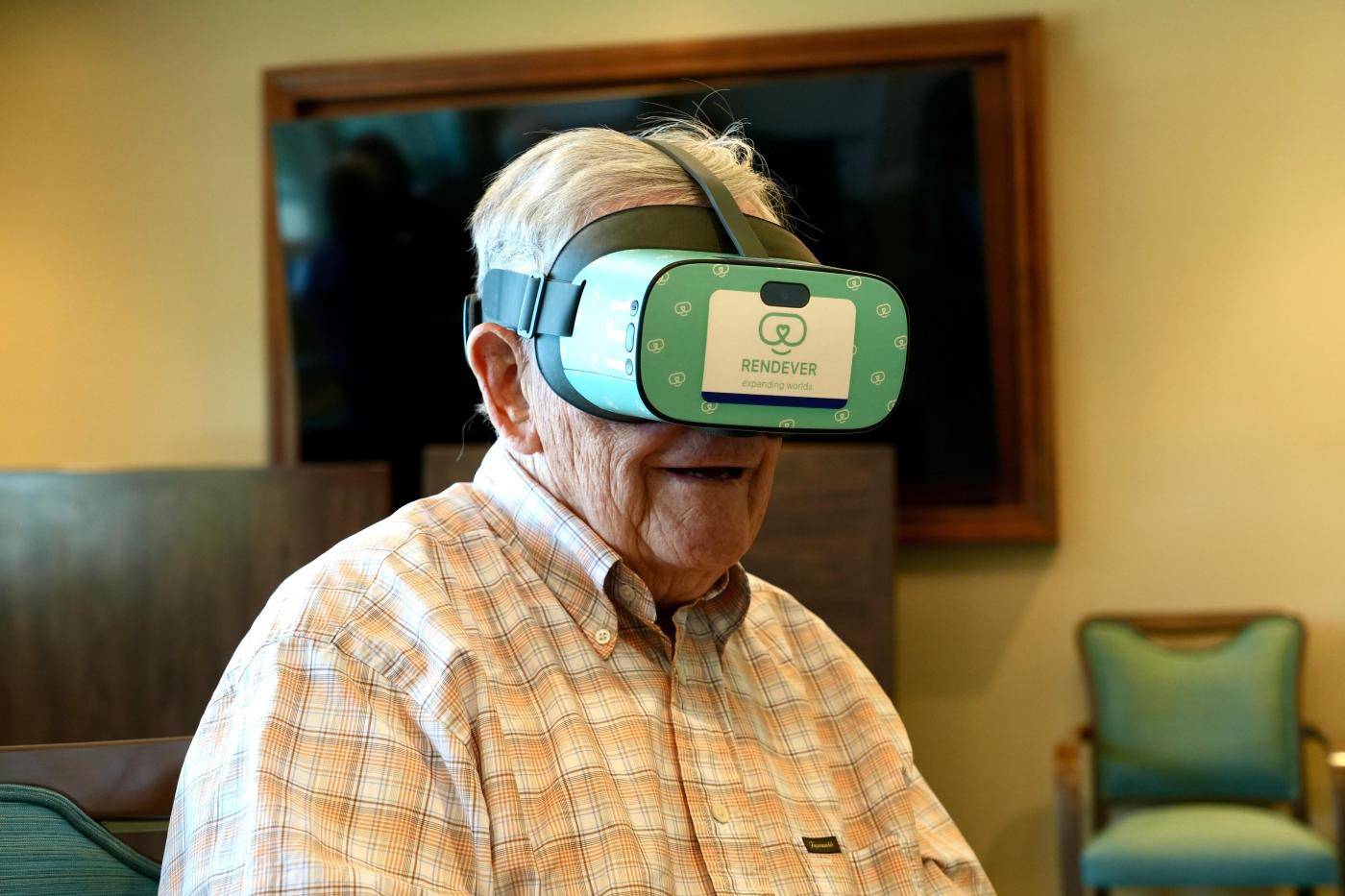
Residents at The Terraces, a retirement community in Los Gatos, California, are experiencing a unique form of engagement through virtual reality (VR). The technology allows seniors, many in their 80s and 90s, to explore new environments and rekindle memories while building social connections with fellow residents.
Each VR session offers a chance for participants to travel virtually to destinations such as Europe or dive into the ocean’s depths without leaving the comfort of their chairs. The programming is provided by Rendever, a company that specializes in using technology to enhance the quality of life for seniors. They currently operate in over 800 retirement communities across the United States and Canada.
During a recent VR session, residents were thrilled to swim with dolphins and take virtual hot-air balloon rides. “We got to go underwater and didn’t even have to hold our breath!” exclaimed Ginny Baird, 81, reflecting on her immersive experience. Such interactions not only stimulate excitement but also serve as conversation starters among residents, according to Adrian Marshall, The Terraces’ community life director.
“Once word spreads about the VR experience, more residents become curious and willing to try it,” Marshall noted. This curiosity often leads to new friendships, as residents bond over shared experiences.
The potential of VR technology extends beyond entertainment. It can transport older adults back to their childhood neighborhoods, allowing them to reconnect with their past. Sue Livingstone, 84, was particularly moved by a virtual trip to her hometown in Queens, New York. “It isn’t just about seeing it again, it’s about all the memories that it brings back,” she said.
Rendever’s efforts are bolstered by a recent $4.5 million grant from the National Institutes of Health. This funding aims to explore how VR can reduce social isolation among seniors, especially those living independently with caregivers. Research suggests that VR experiences can enhance cognitive function and foster social bonds.
Experts, like neuropsychologist Katherine “Kate” Dupuis, caution that while VR can be beneficial, it should complement, not replace, other activities. “There is always a risk of too much screen time,” she stated. Yet, when used meaningfully, VR can spark connections and provide a sense of wonder for older adults.
Another advantage of VR headsets is their user-friendliness. Pallabi Bhowmick, a researcher at the University of Illinois Urbana-Champaign, pointed out that older individuals often find navigating smartphones or other devices challenging. VR offers a simpler alternative, making technology more accessible.
As demand for VR solutions grows, companies like Rendever and Dallas-based Mynd Immersive are becoming key players in the senior living space. Both companies focus on creating programming that fosters social interaction and potentially mitigates the effects of dementia.
At another retirement community, the Forum, VR is being used to enhance the quality of life for residents with dementia. Bob Rogallo, who struggles with the condition, enjoyed a virtual hike through Glacier National Park, celebrating his 83rd birthday with his wife. “It made me wish I was 30 years younger so I could do it again,” said Sallie Rogallo, reflecting on their past visits to the park.
In another session, Almut Schultz, 93, delighted in a virtual classical music performance. Her laughter and joy during the experience highlight the positive impact of VR on seniors’ emotional well-being.
As technology continues to evolve, the integration of virtual reality into the lives of older adults at The Terraces and beyond illustrates its potential to enrich experiences, foster connections, and ultimately enhance the quality of life.