























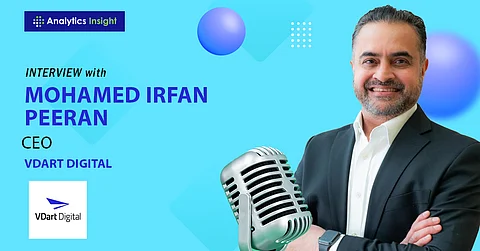















The landscape of enterprise artificial intelligence (AI) is rapidly evolving, transitioning from centralized cloud systems to more localized, efficient intelligence solutions. In a recent episode of the *Analytics Insight* podcast, host Priya Dialani engaged with Mohamed Irfan Peeran, CEO of VDart Digital, to discuss this significant shift and its implications for businesses worldwide.
Peeran emphasized that organizations are increasingly moving from traditional AI deployments toward hybrid models that merge cloud analytics with on-site intelligence. This approach not only facilitates faster decision-making but also enhances operational efficiency. The conversation highlighted a fundamental change in focus: rather than debating whether AI can deliver value, the emphasis is now on how it can foster innovation and competitive advantages across various sectors.
VDart Digital’s Innovations in AI
During the podcast, Peeran shared insights into VDart Digital, a global technology consulting firm dedicated to helping organizations confidently adopt and modernize their AI solutions. The firm specializes in areas such as AI, cloud engineering, cybersecurity, and enterprise platforms including Oracle and SAP. With a robust global presence, VDart Digital provides around-the-clock support to its clients, delivering strategies that lead to measurable business outcomes.
One of the standout products mentioned was LendSmart AI, a solution that streamlines lending processes in the banking sector. By reducing paperwork, LendSmart AI saves both time and costs, illustrating the tangible benefits of integrating AI into business operations.
Peeran’s Leadership Journey
Reflecting on his nearly three-decade career in technology, Peeran discussed his experience leading global teams and developing high-performing AI and digital engineering divisions. His leadership style focuses on building trust, empowering talent, and driving results that create substantive business impacts. Peeran’s hands-on approach involves close collaboration with clients and teams to ensure successful outcomes.
The podcast also delved into the concept of hybrid AI, where complex analytics are managed in the cloud, while Edge AI provides real-time responses at the operational level. Peeran cited practical applications of this technology, such as in smart districts and connected vehicles, where hybrid AI delivers seamless operations and personalized user experiences without heavy reliance on network connectivity.
Looking ahead, Peeran expressed optimism about the transformative role of AI. He envisions a future where Edge AI and hybrid intelligence converge to create smarter, more reliable systems. By strategically planning and integrating the best AI methodologies, organizations can not only enhance efficiency but also drive innovation in their respective industries.
Through this insightful discussion, it becomes clear that the future of enterprise AI is not just about technology but also about strategic implementation that fosters growth and adaptability in a rapidly changing landscape.