







































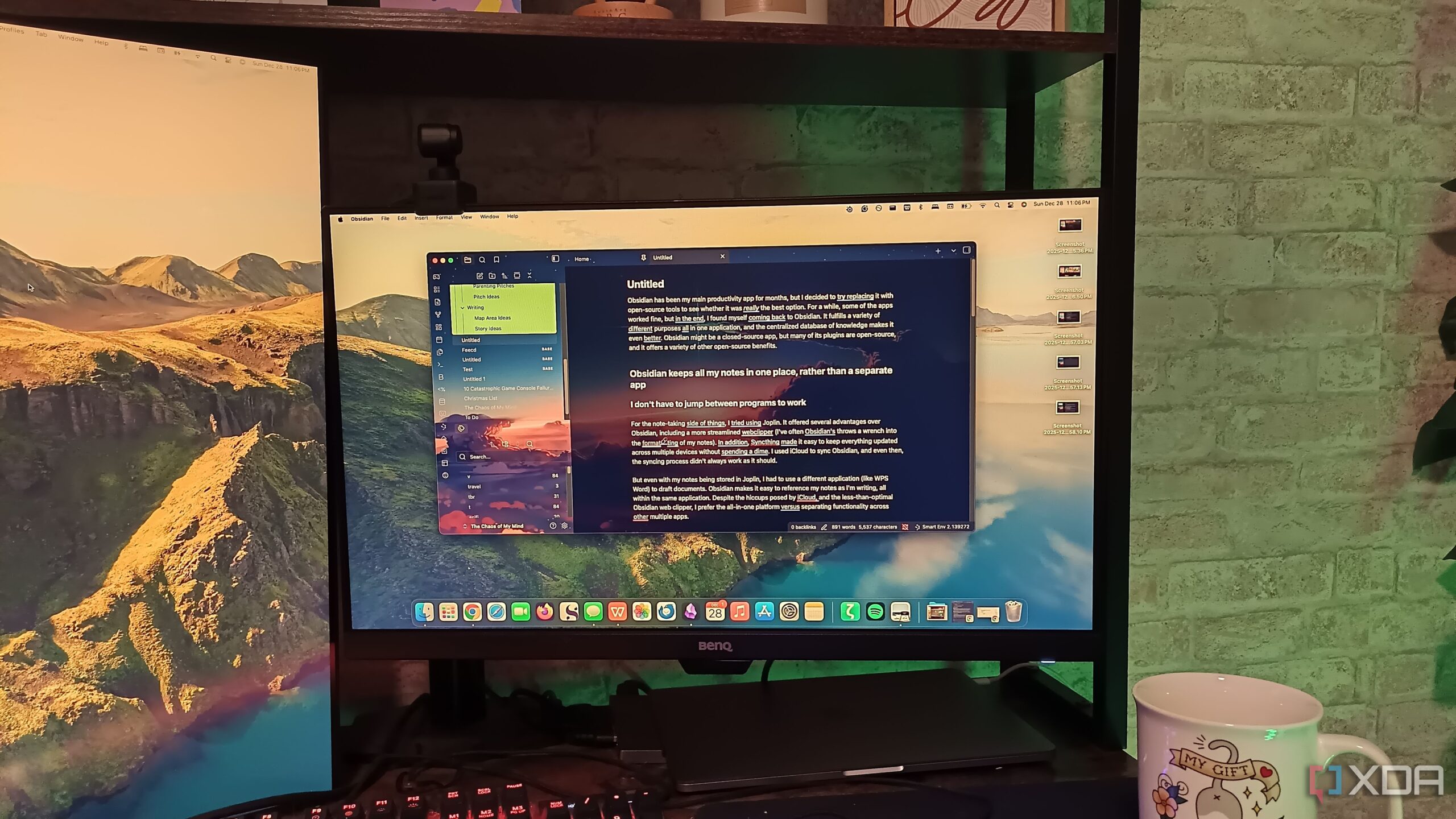
After months of using Obsidian as the primary productivity tool, a user recently explored the possibility of replacing it with open-source applications. Despite testing various alternatives, including Joplin, the individual ultimately returned to Obsidian, citing its comprehensive features and centralized knowledge database as key advantages.
Obsidian’s unique structure allows users to store and link notes seamlessly. While Joplin offered some benefits, such as a better web clipper and cost-effective syncing through Syncthing, the user found that it fell short in functionality. Notably, Obsidian keeps all notes within one application, simplifying the writing process. The user noted the challenges faced with iCloud syncing, which occasionally failed to operate correctly.
Benefits of Obsidian’s Plugin Ecosystem
One of the standout features of Obsidian is its extensive plugin ecosystem, boasting over 2,700 plugins. This variety enables users to customize their workflow significantly. For example, while Joplin integrates well with Zotero for academic writing, Obsidian also supports Zotero through community plugins. This capability allows users to run Dataview queries or create a base from references, which enhances productivity in ways other applications cannot match.
The user appreciated how Obsidian’s interlinking features foster creativity. By connecting disparate notes, they discovered new ideas and potential connections that might have otherwise gone unnoticed. The use of plugins like Virtual Linker/Glossary highlights existing notes, promoting a deeper exploration of topics. Joplin’s more hierarchical approach, in contrast, limited the spontaneous discovery of insights.
Open-Source vs. Closed-Source Considerations
While Obsidian is often mistakenly categorized as open-source, its core code is closed, which may deter some users who prioritize transparency. Open-source tools like Joplin allow full access to the underlying code, enabling users to audit and understand all processes. Although Obsidian stores files in markdown format, allowing for future access, its obfuscated background processes do not meet the transparency expectations of all users.
Despite the allure of open-source software, the user concluded that practicality outweighs the importance of being truly open-source. They expressed appreciation for the FOSS (Free and Open Source Software) community’s focus on transparency and data privacy. However, the user acknowledged that Obsidian’s efficiency and ability to consolidate various tasks into a single platform significantly enhance productivity.
In a landscape where many applications compete for attention, the user emphasized the effectiveness of Obsidian in streamlining their workflow. They continue to seek opportunities to integrate Obsidian into their daily routine, demonstrating that for some users, the functionality of an application holds greater importance than its underlying code structure.