








































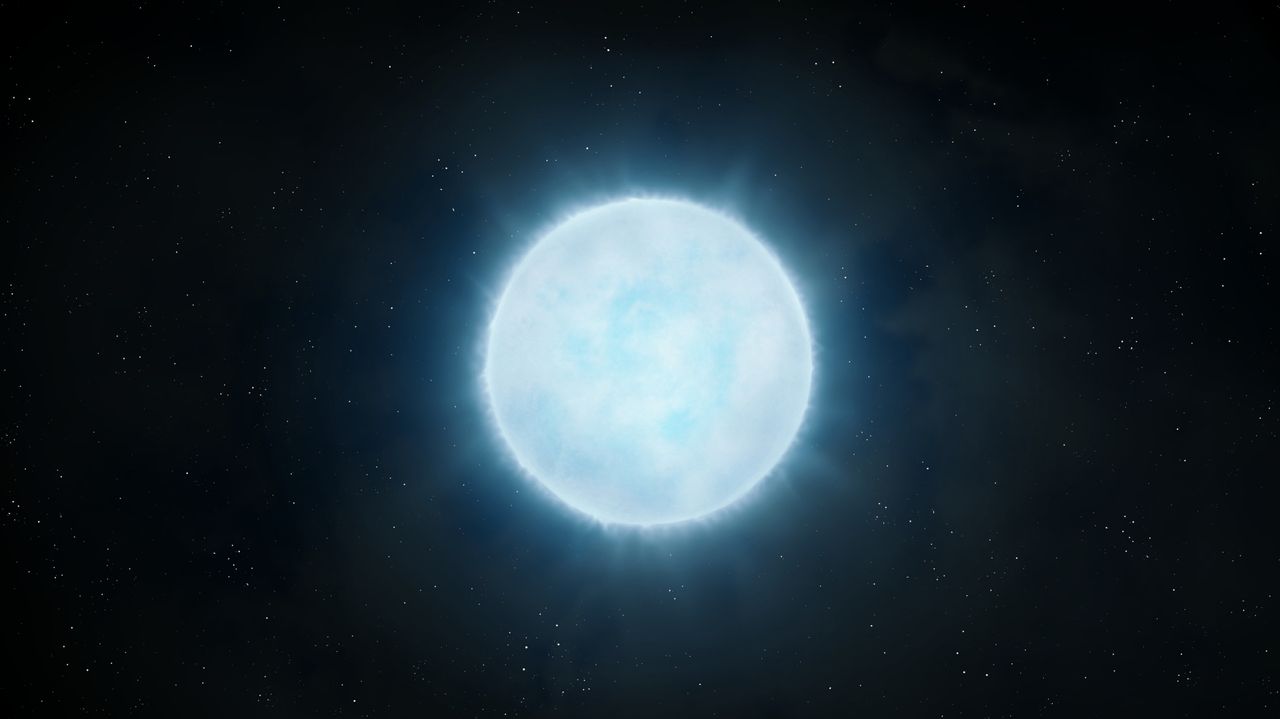
A team of astronomers has turned to ancient celestial remnants to investigate the elusive axion, a theoretical particle proposed decades ago as a potential explanation for dark matter. Their innovative approach utilizes data from the Hubble Space Telescope to explore the cooling rates of white dwarfs, dense cores left behind by dying stars. This research seeks to determine whether axions could be contributing to the energy loss of these stellar remnants, thereby offering insight into the nature of dark matter.
Understanding Axions and White Dwarfs
The axion was initially introduced to address challenges related to the strong nuclear force. Despite initial attempts to detect these particles using particle colliders yielding no results, renewed interest emerged as researchers began to speculate about their role in the universe. Theoretical models suggest that axions might exist in abundance throughout the cosmos, yet remain undetected due to their weak interaction with normal matter.
White dwarfs serve as an ideal target for this investigation. These celestial objects are remarkably dense, containing a mass equivalent to the sun compressed into a volume smaller than Earth. They maintain stability through a phenomenon known as electron degeneracy pressure, where a sea of free electrons prevents collapse. The rapid movement of these electrons, often near the speed of light, is crucial as it provides a potential mechanism for axion production.
According to researchers, if electrons in a white dwarf move quickly enough, they could generate axions. This process would result in the emission of axions from the star, leading to a decrease in energy and, consequently, a faster cooling rate. The implications of this cooling process have prompted scientists to delve deeper into the relationship between white dwarfs and axions.
Research Findings and Implications
A pre-print paper published in November 2025 on the open-access server arXiv details the methodology used by the research team. They employed sophisticated simulations to model how white dwarfs evolve in temperature and brightness over time, considering the effects of axion cooling. The team then analyzed archival data from the globular cluster 47 Tucanae, where all white dwarfs formed around the same period, providing a large sample for study.
Despite their rigorous analysis, the researchers found no evidence supporting axion cooling within the white dwarf population. However, their findings did establish new constraints on the efficiency of axion production by electrons, indicating that such interactions occur at a rate no greater than one in a trillion. This outcome does not entirely dismiss the existence of axions but suggests that direct interactions between electrons and axions are unlikely.
As scientists continue their quest to uncover the mysteries of dark matter, these results emphasize the need for innovative approaches in axion research. While the study did not yield the anticipated evidence, it has refined the understanding of potential axion behavior, paving the way for future explorations in the field.
The search for dark matter remains one of the most pressing challenges in modern astrophysics, and as researchers refine their methods, the hope is that these invisible particles will one day be detected, shedding light on the universe’s most profound mysteries.