










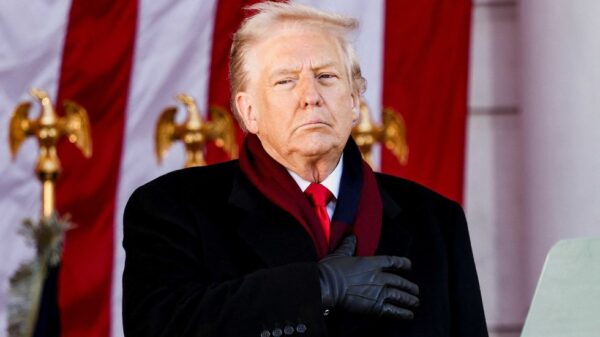




























US President Donald Trump has issued fresh warnings regarding potential military action against Iran, emphasizing that the United States could conduct another significant strike if evidence emerges of Tehran rebuilding its ballistic missile or nuclear weapons programs. This statement came during a press conference at Mar-a-Lago alongside Israeli Prime Minister Benjamin Netanyahu, where they discussed recent developments in the region and the implications for global energy markets.
Trump’s comments reflect heightened concerns following intelligence reports suggesting that Iran may be attempting to reconstitute its weapons capabilities at undisclosed locations after a major US military strike in June 2023. He indicated that the US is closely monitoring Iranian activity and warned that any escalation would not be tolerated, which could significantly impact oil markets due to Iran’s role in regional energy stability.
Geopolitical Implications for Oil Markets
Iran remains a crucial oil producer and a pivotal player in global energy dynamics, particularly given its proximity to vital shipping routes, including the Strait of Hormuz. Any renewed military actions or heightened threats from the US could lead to tighter supply expectations, increasing the risk premium across crude oil markets. Analysts suggest that even without immediate supply disruptions, the possibility of renewed conflict involving Iran could support crude prices and reinforce a persistent Middle East risk premium extending into 2026.
In June, Iran was involved in a brief but intense conflict with Israel, which raised regional tensions. Recently, Iranian officials announced new missile exercises, further alarming both Washington and Tel Aviv. Trump’s remarks highlight a dual focus on both Iran’s military capabilities and the ongoing situation in Gaza.
Pressure on Hamas and Gaza Ceasefire
Turning his attention to Gaza, Trump called for progress toward the second phase of a ceasefire agreement established last year, which proposes the introduction of international peacekeeping forces and a transition away from active conflict. However, tensions persist as Hamas has refused to disarm, prompting Trump to accuse the group of undermining the ceasefire agreement. He cautioned that Israel could resume military operations if disarmament does not materialize, creating an atmosphere of uncertainty in the region.
The current geopolitical landscape, marked by Trump’s warnings to Iran and pressures on Hamas, keeps the risk of conflict alive, which in turn has implications for oil prices. Market analysts are closely watching developments, as the interplay of military tensions and diplomatic efforts could significantly influence energy-linked assets.
As the situation develops, the international community remains vigilant, aware that any escalation in either Iran or Gaza could have far-reaching consequences not only for the Middle East but also for global energy markets.