








































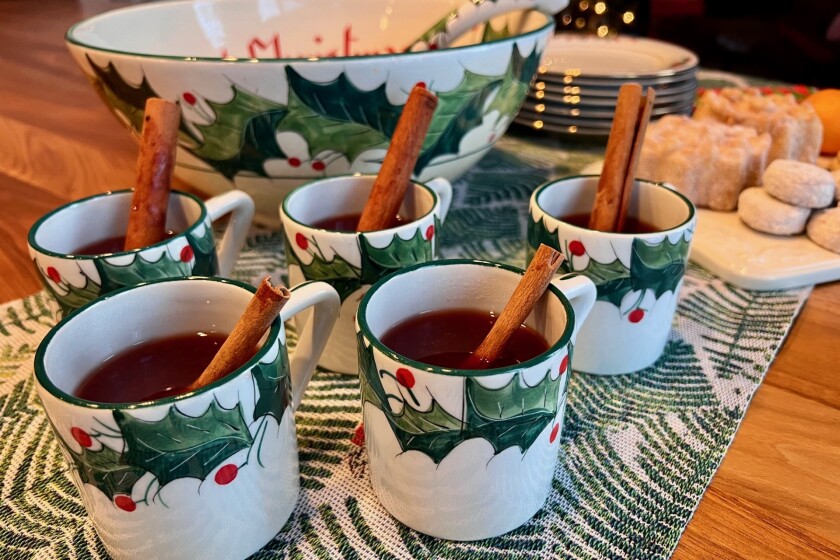
As the colder months settle in, the quest for comforting beverages often leads to traditional recipes that evoke warmth and cheer. This holiday season, a delightful drink known as “wassail” is making waves, promising to enhance festive gatherings. Originating from a 1985 cookbook titled “The Joy of Sharing,” compiled by the Oak Valley American Lutheran Women of Velva, North Dakota, this spiced apple cider concoction is both easy to prepare and deliciously inviting.
The recipe, attributed to Mabel Olson, begins with a simple process of simmering apple cider with sugar and an array of spices, including cinnamon sticks, whole allspice, and cloves. After allowing the mixture to infuse for approximately 15 minutes, the spices are removed, and additional fruit juices—cranberry, orange, and fresh lemon—are blended in. One noteworthy variation includes substituting cranberry juice with pomegranate juice, lending a deep magenta hue and a tart kick to the drink.
After another 10 minutes of simmering, the warm beverage is ready to serve. Each cup can be garnished with a cinnamon stick for an added festive touch. Although Olson’s original recipe suggests preparation on the stovetop, it can also be made in an electric percolator, which is efficient for larger gatherings. This allows for easy self-service, ensuring guests can refill their cups throughout the evening.
For those who enjoy hosting, this wassail recipe can accommodate larger groups, yielding up to 16 cups. Utilizing a preheated slow cooker keeps the drink warm, perfect for long holiday celebrations. In fact, many families have made this recipe a tradition, with one user preparing a second batch just days after the first.
The term “wassail” carries a rich history that adds to its charm. According to the Oxford English Dictionary, the word originated from Old English and Old Norse salutations that wished others good health. By the 12th century, it had evolved into a festive greeting associated with spiced beverages shared among guests. The tradition of wassailing, particularly during Christmas and New Year’s celebrations, involved toasting health and goodwill with a spiced drink, reinforcing its social significance.
The Christmas Encyclopedia highlights the practice of English carolers in the 18th century, who would carry decorated wassail bowls and toast the health of their neighbors. Variations of the drink often included eggs, milk, and roasted apples, leading to alternative names like “lamb’s wool,” referencing the floating bread or apples that resembled fleece.
As cocktail historian David Wondrich notes in his book “Punch: The Delights and Dangers of the Flowing Bowl,” punch-like beverages, such as wassail, are designed for communal enjoyment. They blend spices, citrus, and spirits, promoting fellowship and celebration. Although Olson’s recipe does not specify the addition of alcohol, many variations do. Other cookbooks, such as “Joy of Cooking,” suggest adding hard cider and brandy, while Rosie Schaap includes beer and Madeira in her rendition featured in the “New York Times Essential Book of Cocktails.”
Ultimately, wassail embodies the spirit of togetherness during the holidays. It is a drink meant to be shared, enhancing the joy of gathering with family and friends. Its rich flavor and warm aroma create a perfect atmosphere for celebrating the season, making it an essential recipe for holiday hosts everywhere. As the festive spirit fills the air, consider bringing this traditional drink to your next gathering, ensuring warmth and cheer for all.