
























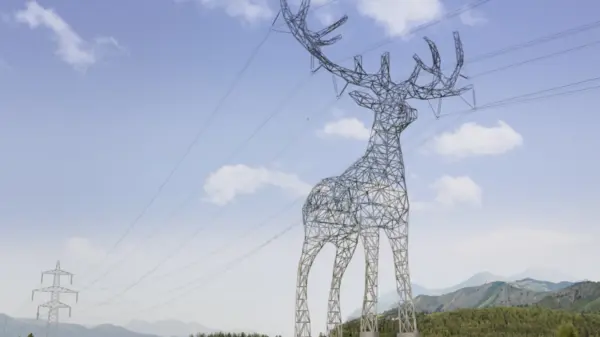













The Midwest power grid is poised for significant investment through the newly established 45Z tax credit, which aims to boost American fuel production. Following the passage of the “One Big Beautiful Bill” on July 4, Congress and President Trump created a framework intended to channel billions of dollars into rural communities and their energy infrastructure.
The 45Z tax credit incentivizes fuel producers to utilize clean energy sources such as nuclear, hydro, or solar power, potentially generating additional revenue for Midwest power plants. This initiative not only aims to enhance power generation but also seeks to provide financial support to the linemen who maintain and operate the energy systems critical to these rural areas.
The relationship between fuel production and electrical power may not seem obvious at first. However, fuel producers need reliable electricity to operate, and by utilizing clean energy, they can qualify for a larger 45Z tax credit. The structure of this credit is designed to encourage private investment in the Midwest’s rural grid, which has been underfunded in recent years.
The Mechanism Behind 45Z Tax Credit
To qualify for the 45Z tax credit, fuel producers must document their inputs, including crops and electricity. They enter into contracts with power plants to obtain energy attribute certificates (EACs), which provide detailed energy data necessary for supporting their claims. This data is maintained on a public ledger, akin to blockchain technology, ensuring transparency and traceability.
Midwest power plants stand to benefit significantly by selling these data-backed electricity contracts. As fuel producers purchase EACs to enhance their tax credit eligibility, this arrangement could lead to billions in new private investments into the rural power grid. Such investments could create jobs for linemen, boost raw power generation, and strengthen transmission systems—all while lowering energy costs for farmers and working families.
Rural electric cooperatives, which play a vital role in the energy supply chain, are expected to gain the most from this initiative. They will have access to new resources and increased capital, enhancing their ability to serve local communities. Nevertheless, the realization of these benefits hinges on the U.S. Treasury’s finalization of the 45Z tax credit rules.
Ensuring Fairness in Implementation
The potential of the 45Z tax credit to transform the Midwest communities is substantial, but its success depends on careful implementation. If the U.S. Treasury fails to properly finalize the rules, rural America could miss out on billions of dollars in essential infrastructure investment. Stakeholders advocate for a framework that prioritizes EACs sourced from the same grid region that powers the farms and refineries.
A coalition known as Farmers for a Fair Deal is actively working to ensure that the 45Z tax credit is structured to benefit local communities. Their efforts emphasize the importance of a fair approach to the tax credit’s implementation, which would allow rural areas to capitalize on the financial opportunities presented by this new policy.
For more information on the coalition’s initiatives, interested parties can visit their website at www.farmersforafairdeal.com. The collaboration of farmers, energy producers, and local communities is crucial in realizing the full potential of the 45Z tax credit and ensuring that the Midwest power grid receives the investment it rightfully deserves.