








































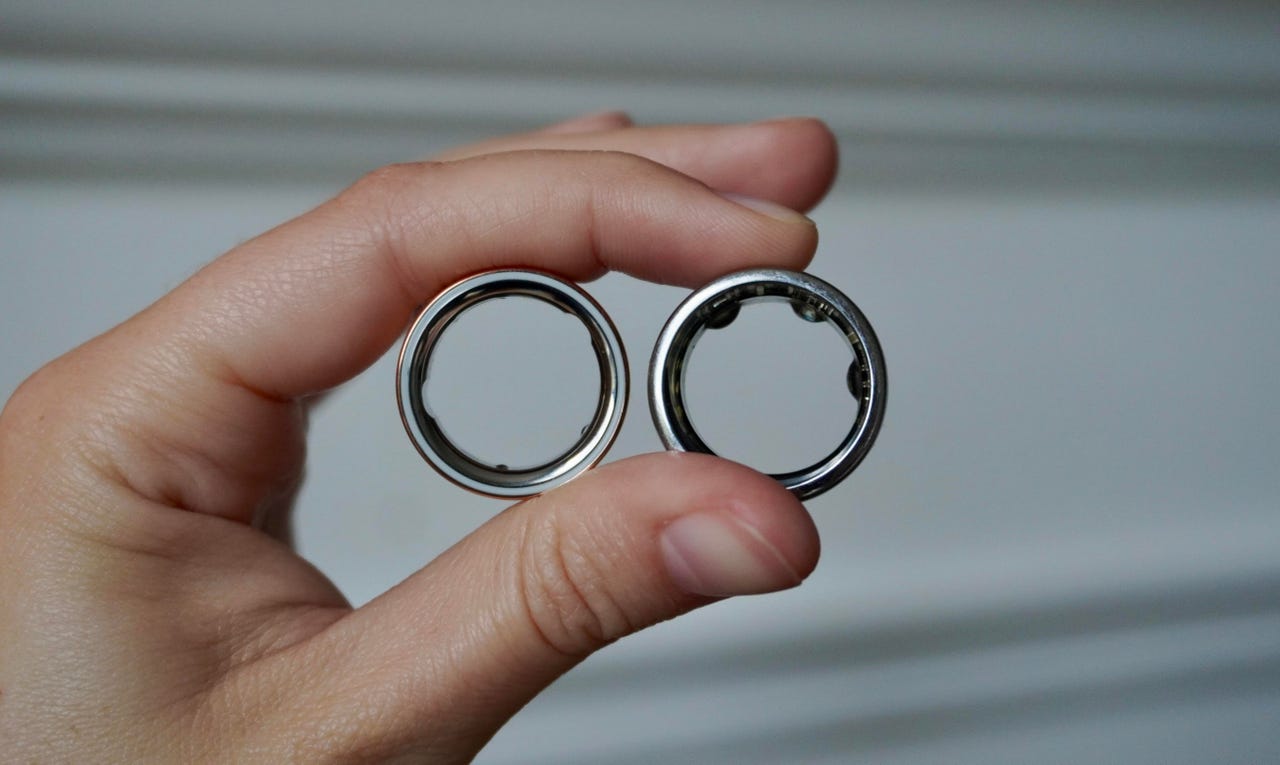
The competition between the Oura Ring 3 and Oura Ring 4 continues to ignite interest among health and technology enthusiasts. With the Oura Ring 3 currently available at a reduced price of up to $200, potential buyers are weighing their options. This analysis explores the differences between the two generations of smart rings, particularly focusing on their features, comfort, and pricing.
Key Features and Comfort Comparison
The most significant upgrade in the Oura Ring 4 is its advanced smart sensing technology. The newer model employs 18 signal pathways to capture health data more accurately than the Oura Ring 3, which utilizes only eight. This enhancement not only improves data collection but also contributes to a more comfortable wearing experience.
Unlike the Oura Ring 3, which has raised sensor domes that can create discomfort, the Oura Ring 4 features receded sensors, allowing for a flatter interior design. Users who have worn the Oura Ring 3 for extended periods often report discomfort from the raised domes, which can leave indentations on the skin. In contrast, the Oura Ring 4’s improved design aims to eliminate such issues, making it a better choice for those sensitive to wearables.
Both rings offer impressive battery life, with the Oura Ring 3 capable of lasting up to seven days, while the Oura Ring 4 extends that to eight days. During personal testing, the Oura Ring 4 averaged around 5.5 days of use, making it a practical option for users who prefer less frequent charging.
Size Options and Pricing
Another notable change in the Oura Ring 4 is the expanded sizing options. The Oura Ring 3 is available in sizes six through 13, whereas the Oura Ring 4 accommodates sizes four through 15. This broader range allows more individuals to find a suitable fit, making the new model appealing for those who previously struggled with the sizing of the earlier version.
Currently, the Oura Ring 3 can be purchased for as low as $200, while the starting price for the Oura Ring 4 is $350, plus a $6 monthly subscription for full access to the accompanying app’s features. If budget constraints are a consideration, the Oura Ring 3 remains an attractive option.
For users who already own the Oura Ring 3 and are comfortable with its design, there may be little incentive to upgrade. Most of the software enhancements introduced with the Oura Ring 4, including automatic heart rate monitoring during workouts and a redesigned app, are also available on the earlier version.
Alternatives in the Market
In addition to the Oura offerings, consumers can consider alternatives like the Samsung Galaxy Ring, which integrates seamlessly with the Samsung Health app and provides a sleek design, as well as the Ultrahuman Ring Air, which is a subscription-free option compatible with both Android and iOS devices. These alternatives cater to various user preferences and may offer features that align with specific needs.
Ultimately, the choice between the Oura Ring 3 and Oura Ring 4 hinges on individual priorities. For those who value comfort and the latest technology, the Oura Ring 4 stands out as the superior option. Conversely, if cost is a primary concern and the existing features of the Oura Ring 3 meet a user’s needs, sticking with the third-generation ring may be the best decision.
























