









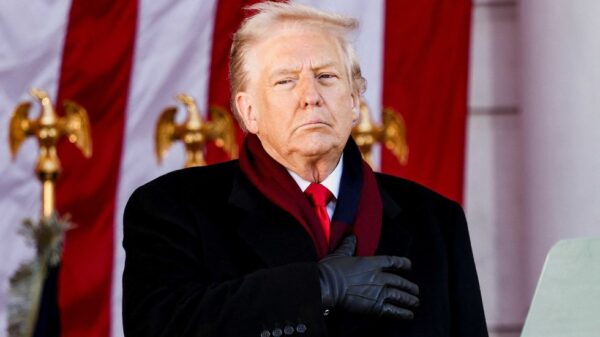






















The recent raid in Caracas that resulted in the capture of Venezuelan President Nicolás Maduro has created a significant shift in the geopolitical landscape, prompting Iranian officials to reevaluate their strategic options. The U.S. intervention, ordered by President Donald Trump, marks a critical moment that could alter Iran’s calculations regarding its influence in the region.
This unexpected development comes at a time when tensions between the U.S. and Iran are already high. The capture of Maduro not only destabilizes Venezuela but also challenges Iran’s support for the regime, which has been a key ally in South America. Analysts suggest that Tehran must now consider a broader range of risks, including potential repercussions for its own regional ambitions.
Implications for Iran’s Foreign Policy
Iran’s foreign policy has long focused on maintaining alliances with regimes that oppose U.S. interests. Maduro’s capture may signal a weakening of that alliance, forcing Tehran to reevaluate its support for Venezuela. The Iranian leadership might worry about the U.S. expanding its influence in Latin America, which could further isolate Iran on the global stage.
Iran has invested significant resources in its relationship with Venezuela, including military training and economic support. The loss of a key ally could lead to a reassessment of Iran’s strategies in both Latin America and the broader international arena. Tehran may also need to explore new partnerships to counterbalance U.S. actions and maintain its foothold in the region.
The U.S. government has indicated that it will take a more aggressive stance towards regimes that are perceived as threats to its interests. This could lead to increased pressure on Iran as it navigates its relationships with not only Venezuela but also other nations in Latin America that have aligned with Tehran.
Potential Responses from Tehran
In response to the unfolding situation, Iranian officials might consider a range of options. These could include strengthening ties with other leftist governments in Latin America, increasing support for anti-U.S. movements, or enhancing military capabilities to deter further U.S. interventions.
Tehran could also leverage its connections with organizations such as Hezbollah and other regional allies to counterbalance U.S. influence. By doing so, Iran aims to maintain its credibility and demonstrate that it can still exert influence despite setbacks.
Moreover, the Iranian leadership may feel compelled to project strength domestically. This could manifest in increased rhetoric against the U.S. and calls for national unity in the face of external threats. Such measures may serve to rally public support and reaffirm the regime’s legitimacy amid mounting pressures.
The situation remains fluid, and the full implications of Maduro’s capture will likely unfold over the coming weeks. Iran’s strategic response will not only impact its own geopolitical standing but could also influence broader regional dynamics as global powers reassess their stances.
As the world watches, the potential for further escalation in U.S.-Iran relations looms large, with each decision carrying significant weight in the evolving landscape of international politics.