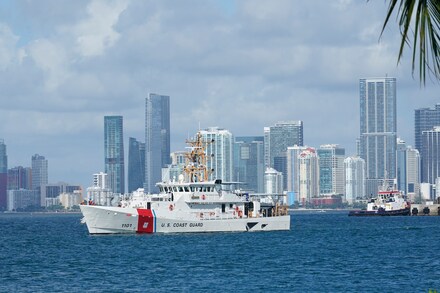
The United States has intercepted another vessel as part of its intensified effort to enforce a “complete blockade” on oil tankers associated with Venezuela. This move follows an announcement by President Donald Trump on September 29, 2020, aimed at increasing pressure on the government led by Nicolás Maduro. The U.S. Department of Justice stated that this action is part of a broader strategy to curb the Maduro administration’s oil exports, which are vital to the country’s economy.
In recent days, U.S. authorities have ramped up maritime surveillance in the Caribbean Sea. The blockade primarily targets vessels that are believed to be transporting oil to or from Venezuela, a nation facing severe economic challenges and international sanctions. This latest interception underscores the administration’s commitment to disrupting the operations of the National Oil Company of Venezuela (PDVSA) and its affiliates.
The U.S. has long accused the Maduro government of corruption and mismanagement, which have contributed to the country’s economic collapse. With oil revenues plummeting, the blockade aims to further isolate Venezuela from the global oil market. According to reports, Venezuela’s oil exports have already fallen to their lowest levels in decades, with only 250,000 barrels per day being shipped in recent months, down from 1.5 million barrels per day in 2018.
Impact on Venezuela’s Economy
The blockade has significant implications for Venezuela’s economy, which relies heavily on oil exports. The U.S. government claims that the blockade will deprive the Maduro regime of crucial revenue, potentially exacerbating the humanitarian crisis in the country. Basic necessities such as food and medicine have become increasingly scarce, leading to widespread suffering among the Venezuelan population.
The economic sanctions and blockade have drawn criticism from some international observers. They argue that the measures disproportionately affect ordinary citizens rather than the government. In response, the Maduro administration has characterized the U.S. actions as an act of aggression and has sought support from allies, including Russia and China.
International Reactions and Future Developments
International reactions to the U.S. blockade have varied, with some countries expressing support for the U.S. stance while others condemn it. For instance, nations in Latin America have voiced concerns about the potential for increased instability in the region due to the ongoing crisis in Venezuela.
The impact of the blockade on global oil prices is also a point of interest. Analysts suggest that while the blockade may limit Venezuelan oil from reaching markets, it could lead to fluctuations in oil prices as other suppliers attempt to fill the gap.
As the situation develops, further interceptions and enforcement actions are anticipated. The U.S. government has indicated that it will continue to pursue measures to ensure that vessels illegally transporting oil from Venezuela are held accountable.
The blockade represents a significant escalation in the U.S. strategy against the Maduro government, with the potential to reshape the geopolitical landscape in South America. With Venezuela’s oil industry already in decline, the effects of these measures could ripple through the economy for years to come.