







































In recent years, the ideology of White Christian nationalism has sparked intense debate in the United States. Its roots can be traced back to the early 20th century, specifically to a former Methodist minister named William J. Simmons. In 1915, Simmons claimed to have witnessed a vision of “airborne horsemen” that inspired him to form a religious organization aimed at restoring what he believed was America’s lost Christian heritage. This movement capitalized on the fears of a nation undergoing demographic and political changes, as waves of immigrants arrived and traditional values appeared to be under attack.
By the 1920s, Simmons’ group had grown to over 5 million members, influencing political landscapes and contributing to the enactment of racially discriminatory laws. The connection to the Ku Klux Klan is particularly noteworthy; while the Klan is no longer a powerful political force, its ideology continues to influence contemporary movements. Historian Kelly J. Baker asserts that the Klan’s emphasis on “100 percent Americanism” reflects an early manifestation of what is now termed White Christian nationalism.
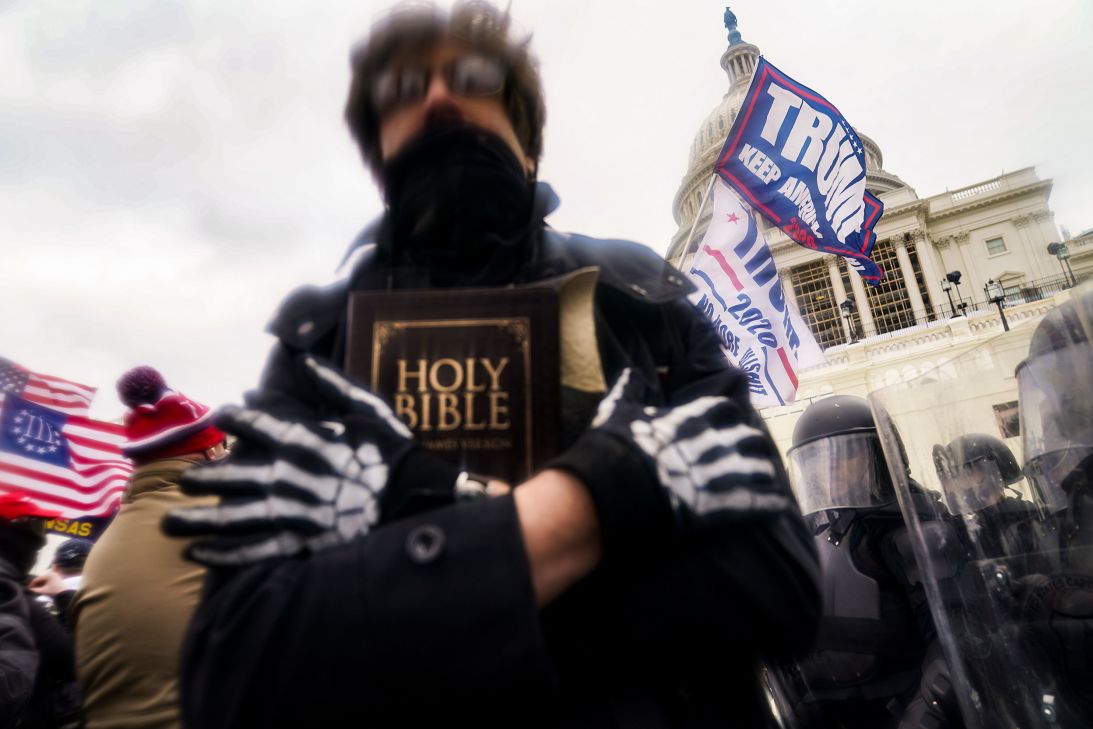
A pivotal moment for this ideology came on January 6, 2021, when supporters of then-President Donald Trump stormed the United States Capitol. Many of these individuals displayed religious symbols, prompting widespread discussion about the role of White Christian nationalism in American politics. Critics argue that it represents an “imposter Christianity” that distorts the nation’s founding principles. Others contend that the term has been weaponized to dismiss any form of conservative Christian political expression.
One prevalent misconception is that White Christian nationalism is a recent phenomenon. In fact, its various iterations have emerged throughout American history, often during times of crisis. This ideology is not confined to a single demographic; it resonates beyond conservative White individuals and is present among some non-White groups as well. Notably, there are Christian nationalists who identify as Democrats or independents, illustrating the diversity within this belief system.
Despite significant media coverage, many Americans remain largely unaware of what White Christian nationalism entails. A survey by the Pew Research Center in March 2024 revealed that 54% of US adults had heard little to nothing about the ideology. Yet, its proponents advocate for a nation governed by principles rooted in Scripture, envisioning laws based on the Ten Commandments and promoting a vision of America that prioritizes Christian supremacy. Some leaders go as far as to suggest repealing the 19th Amendment, which grants women the right to vote.
The historical context of White Christian nationalism is equally significant. Its earlier forms contributed to the conquest and near-eradication of Native American populations, justified slavery, and supported Jim Crow laws. Historian Randall Balmer notes that during the Civil War, efforts were made to designate the United States as a Christian nation, despite the Constitution’s lack of religious references. The Confederate States of America highlighted their Christian identity, further entrenching the notion of a racially defined Christian nation.
Current polls indicate that 81% of White Christian nationalists believe immigrants are “invading” the country, reinforcing a belief in racial hierarchies. This perspective often intertwines with a sense of victimhood among White Christian men, who see societal changes as a threat to their status.
The discourse surrounding White Christian nationalism also raises critical questions about the nature of American democracy. Historian Philip Gorski argues that this ideology poses a serious threat to democratic principles by defining “we the people” in a way that excludes significant portions of the population. The Founding Fathers, who intentionally separated church and state, would likely oppose the notion of a singular Christian nation. Balmer points to the 1797 Treaty of Tripoli, which affirmed that the United States was not founded on Christian principles, as evidence of the secular intentions of the nation’s founders.
As White Christian nationalism continues to evolve, it faces challenges not only from historical scrutiny but also from a growing public desire for greater ethnic, religious, and racial diversity. A majority of Americans support a vision of the country that embraces pluralism rather than homogeneity. This divergence raises fundamental questions about the compatibility of a Christian nation with democratic ideals.
In conclusion, understanding the complexities of White Christian nationalism requires examining its historical roots, current manifestations, and the broader implications for American society. As this ideology persists in various forms, it remains a contentious and deeply influential force within the political landscape.