
























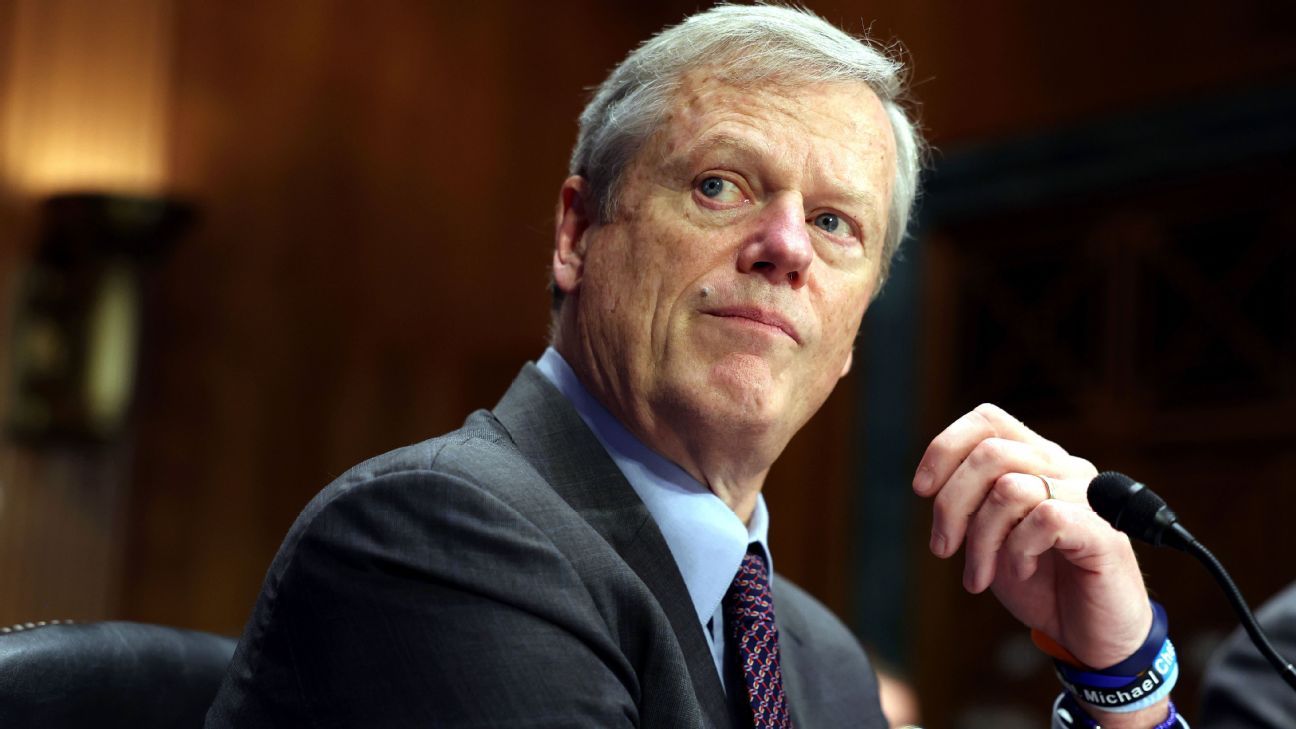
UPDATE: NCAA President Charlie Baker has just clarified the organization’s strict stance on college player eligibility, particularly impacting players with NBA experience. This announcement follows Baylor’s recent signing of former NBA draft pick James Nnaji, stirring controversy in the college basketball community.
Baker emphasized that the NCAA will not grant eligibility to any student-athletes who have signed NBA contracts, including two-way contracts. “The NCAA has not and will not grant eligibility to any prospective or returning student-athletes who have signed an NBA contract,” Baker stated in a press release. This clarification comes as many schools increasingly recruit athletes with international league backgrounds, raising questions about fair competition.
The backdrop of this announcement is significant. Nnaji, picked 31st overall in the 2023 NBA Draft, signed with Baylor after spending five years in the FC Barcelona organization without playing in the NBA. Despite his professional experience, the NCAA cleared him for college play just last week, allowing him to potentially debut for the Bears as early as this weekend.
Baker’s statement highlights a growing tension in college basketball, particularly as Trentyn Flowers, a current NBA player with the Chicago Bulls, is reportedly exploring college eligibility. Flowers, a former top-50 high school recruit, recently signed a two-way contract but is considering a return to college basketball, further complicating the eligibility landscape.
Amid these developments, Baker expressed concern over recent court decisions that challenge the NCAA’s longstanding eligibility rules. “These misguided attempts to destroy this American institution are wildly destabilizing,” he noted, underscoring the urgency of maintaining traditional rules in collegiate sports.
College basketball coaches are reacting strongly to these changes. Arkansas coach John Calipari criticized the situation, stating, “The rules be the rules. If you put your name in the [NBA draft], you can’t play college basketball.” Similarly, Gonzaga coach Mark Few remarked on the chaotic state of the sport, highlighting a lack of leadership and clear regulations.
As this situation evolves, it raises critical questions about the future of college basketball and how the NCAA will navigate challenges to its eligibility rules. The implications for both current and aspiring players are profound, impacting their opportunities for education and professional development.
What happens next is key. With players like Flowers looking to bridge the gap between professional and collegiate play, the NCAA may face additional scrutiny and potential legal challenges regarding its eligibility framework. College basketball fans and stakeholders should stay tuned as these developments unfold, affecting the landscape of the sport in the months to come.
The urgency of Baker’s clarifications and the reactions from prominent coaches signal a pivotal moment in college basketball, one that could reshape the rules governing how players transition between professional and collegiate levels.