




































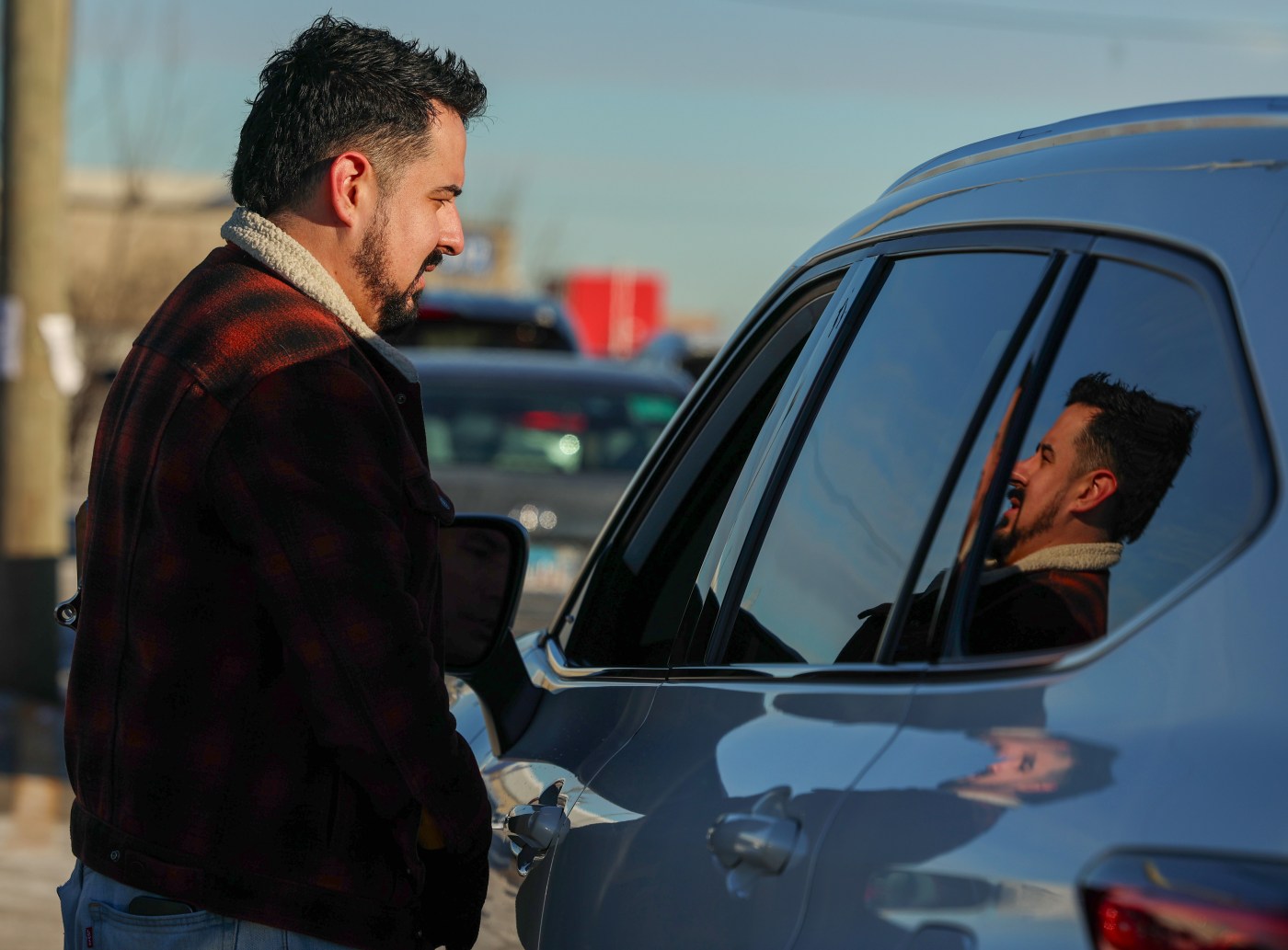
An estimated 100,000 rideshare drivers in Illinois may gain the right to join a union if new legislation is introduced in Springfield this month. This initiative follows similar efforts in California and Massachusetts aimed at enhancing the rights of gig economy workers.
Currently, rideshare drivers like those working for Uber and Lyft are classified as independent contractors, which limits their ability to unionize under federal labor law. Despite a significant constitutional amendment passed by Illinois voters in 2022 that guarantees the “fundamental right” to collective bargaining for “employees,” this protection does not extend to all workers. The forthcoming legislation would not alter drivers’ employment status but would empower them to negotiate industrywide over wages and working conditions if sufficient drivers choose to affiliate with a union.
State Senator Ram Villivalam and State Representative Yolonda Morris, both Democrats from Chicago, are set to sponsor this pivotal legislation. The proposed model resembles that adopted in Massachusetts where rideshare drivers became the first in the nation to secure bargaining rights as independent contractors in 2024. A similar arrangement was established in California last fall.
The unions supporting the Massachusetts initiative, particularly the Service Employees International Union (SEIU) and the International Association of Machinists (IAM), are also backing the Illinois proposal. This legislation follows a labor peace agreement reached between Uber and the Illinois Drivers Alliance, a coalition working towards organizing drivers, which allowed the company to refrain from opposing legislation that facilitates driver organization.
An Uber spokesperson, Josh Gold, expressed optimism about supporting the new legislation but noted the need for thorough review, stating, “The devil’s in the details.” Meanwhile, Lyft has not responded to multiple inquiries regarding the matter.
Supporters of the legislation argue it would enable drivers to negotiate for better wages and working conditions. As Jim Weber, a rideshare driver, put it, “I support it because we have no recourse when we get screwed. Unions are our only hope.”
The strategy of allowing independent contractors to unionize is not without controversy. Critics within the labor movement argue that it could undermine efforts to reclassify gig drivers as employees, which would provide them with benefits such as workers’ compensation and paid leave. Nonetheless, advocates maintain that this approach is the most feasible path to securing bargaining rights at this time.
An earlier survey of around 500 gig drivers in the Chicago area revealed a split on the issue of employment classification: 54% believed drivers should be reclassified as employees, while 46% preferred to remain independent contractors. Significantly, 91% of respondents affirmed that app-based drivers should have the right to unionize.
Bob Bruno, a co-author of the survey and director of the labor studies program at the University of Illinois, believes that the optimal situation for drivers would involve both employee classification and bargaining rights. However, he acknowledges that the current political climate necessitates the Illinois strategy as “the politics of what’s possible.”
Sharon Block, a professor at Harvard Law School and executive director of its Center for Labor and a Just Economy, emphasizes the strength of the argument for reclassification. She acknowledged that “there is zero chance” the National Labor Relations Board will extend collective bargaining rights to gig drivers under current leadership, making the Illinois approach the only viable option for now.
Should the legislation pass, it may ignite significant organizing efforts among local unions. The International Union of Operating Engineers Local 150 has also been actively organizing rideshare drivers and claimed to have secured a labor peace agreement from Uber. Marc Poulos of the Operating Engineers stated that while they are intrigued by the SEIU and IAM-backed legislation, they will withhold an official position until they have studied the bill.
The proposed law would allow a labor organization to access rideshare drivers’ contact information upon demonstrating a baseline level of support at 10%. To be recognized as the bargaining representative, the organization would need the backing of at least 30% of drivers. Additionally, the legislation would not encompass drivers for food delivery services like Instacart or DoorDash.
A new surcharge on rideshare fares is anticipated to fund the enforcement of the law and assist in covering bargaining representation costs. Villivalam’s office described this surcharge as “small,” although specific details remain undisclosed. The bill would also include protections against retaliation for organizing efforts.
The Illinois AFL-CIO, an umbrella organization for labor, expressed its commitment to supporting unorganized workers but is still evaluating the proposal. Drivers have long voiced grievances regarding “unfair” deactivations, where they face bans from apps without adequate explanation or recourse to appeal.
As Jeremy Saxon, an Uber driver, articulated, “Veteran drivers of many years are being deprived of their income overnight.” One of the primary goals of the union effort is to establish a formalized process for addressing deactivations.
Drivers also report a lack of support in dealing with safety incidents during rides. Saxon recounted a distressing experience where he was forced to cancel a ride due to a physical altercation between passengers, resulting in lost earnings.
Many drivers are also advocating for improved pay, highlighting the disparity between ride costs and driver compensation. As Mark Balentine, an Uber driver, noted, “They’re going to charge you $65 for a ride, but give me $22, or $21.”
Balentine, whose family history includes union representation, emphasized the importance of unionization for rideshare drivers: “Nothing moves without Uber and Lyft drivers. We move this city, and it’s time that we start getting some support and some respect.”
If successful, the legislation could mark a significant turning point for rideshare drivers in Illinois, offering them a pathway to collective bargaining and potentially improving their working conditions and pay.