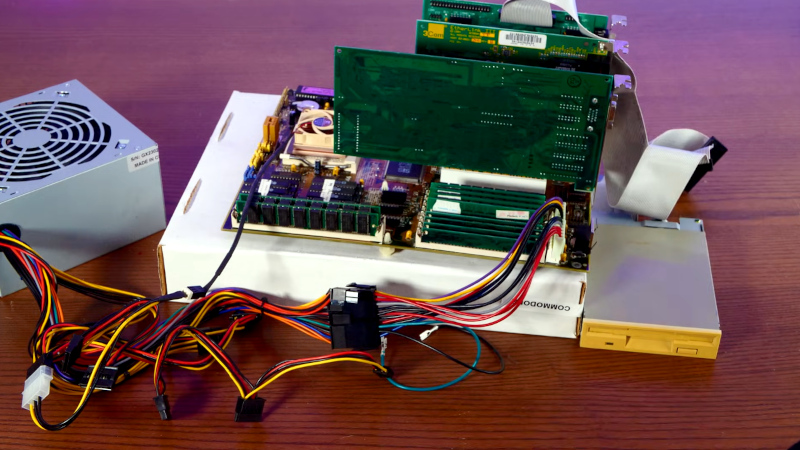
The revival of Linux on floppy disks has emerged as a curious challenge in 2025, highlighting both the nostalgia and technical hurdles associated with early computing. A recent exploration by the YouTube channel Action Retro reveals the attempts to compile a modern Linux kernel, specifically version 6.14, using minimal options and the essential BusyBox utility on a classic 486 computer setup.
In the early days of Linux, various floppy disk distributions served as practical tools for system recovery and experimentation. These distributions often included a surprising array of functionalities, making them popular among enthusiasts. Today, the landscape has changed significantly, and the task of running Linux on a floppy disk is more of a novelty than a practical solution.
Action Retro provided a comprehensive tutorial based on a guide sourced from GitHub. The project required not only technical expertise but also considerable tinkering. The video demonstrates the process of booting the compiled kernel on a minimalist setup, showcasing the challenges of dependency management within the constraints of floppy disk storage.
Despite the simplicity of the 486 architecture, the process is fraught with difficulties. The floppy disk drives and media themselves are outdated, often requiring multiple attempts to find functional equipment. Over the course of the project, Action Retro encountered various errors, underscoring the limitations of operating within such a constrained environment.
While the outcome offers a glimpse into retro computing, it is evident that this endeavor is less about creating a viable distribution and more about testing the boundaries of technology. As Action Retro commented, the exploration is more of a nostalgic exercise than a practical application of Linux in 2025. Although floppy Linux was a source of excitement in the late 1990s, its relevance has diminished significantly in the current digital era.
Reflecting on the journey through floppy Linux, it becomes clear that this exploration serves as a reminder of the rapid advancements in technology. The floppy drivers within the Linux ecosystem are now largely considered orphaned, and the exercise shines a light on the evolution of operating systems.
As the community continues to celebrate the history of Linux and its early days, this project by Action Retro highlights the charm and challenges of retro computing. Future episodes promise to delve deeper into this nostalgic journey, but for now, it stands as a testament to the creativity and resourcefulness of the tech community in navigating the remnants of an earlier computing age.