








































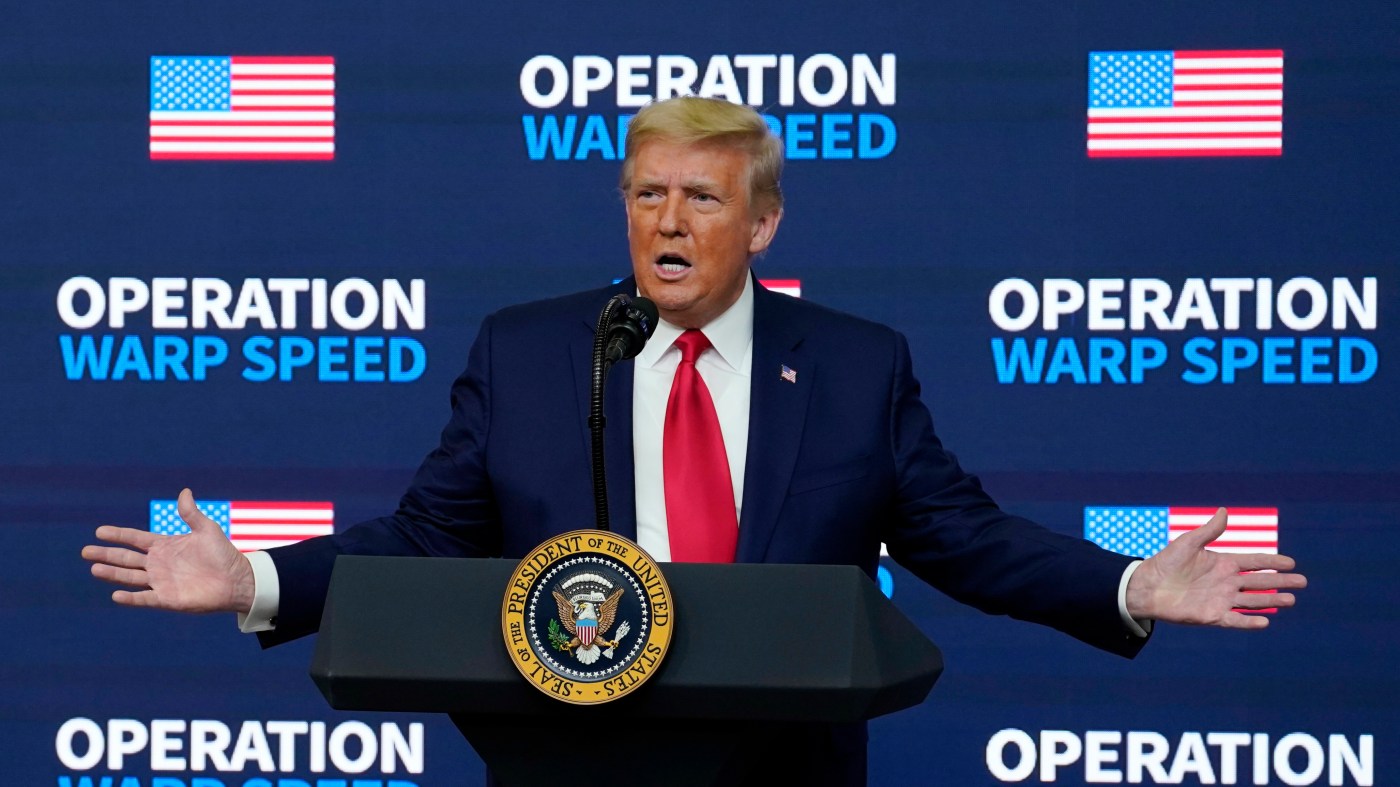
Recent research indicates that the mRNA technology developed under President Donald Trump‘s Operation Warp Speed may hold significant promise for cancer treatment. A study from the MD Anderson Cancer Center and the University of Florida found that lung and skin cancer patients who received mRNA COVID-19 vaccines alongside standard immunotherapy lived nearly twice as long as those receiving immunotherapy alone. This finding suggests that the vaccines may help “retrain” the immune system to better recognize and attack tumors.
Researchers are now considering this development as a potential first step toward a universal cancer vaccine. If successful, such a vaccine could revolutionize cancer treatment and prevention. The groundwork for this innovation is attributed to Operation Warp Speed, which facilitated the rapid development of mRNA vaccines during the COVID-19 pandemic, saving millions of lives and substantially reducing healthcare costs.
The initiative demonstrated the effectiveness of government collaboration with industry, enabling breakthroughs to occur at an unprecedented pace. Historically, mRNA technology had been a focus of research for decades, yet it struggled to attract significant investment. Following the success of Operation Warp Speed, private capital began to flow into mRNA research, leading to the initiation of over 120 clinical trials exploring its application in various cancers.
Early results from these trials are promising, indicating that mRNA vaccines could reduce relapse rates in melanoma patients and even shrink pancreatic tumors. This shift from a pandemic response to a potential medical revolution highlights the expansive capabilities of mRNA technology.
Despite these advancements, the future of mRNA research faces challenges, particularly due to recent policy changes. The administration of President Joe Biden pledged to “end cancer as we know it” through the Cancer Moonshot initiative. However, critics argue that certain policies, such as the Inflation Reduction Act, have imposed government price controls on drugs, potentially hindering investment in new cancer treatments. These controls could discourage the long-term risk-taking necessary for developing new cures, especially in an area like cancer research, where development timelines can exceed a decade.
Since the Inflation Reduction Act was implemented, industry data has indicated a notable decline in post-approval clinical trials for new cancer treatment uses. Companies may be shelving projects deemed financially unviable under the new pricing structure.
In a striking development, Health and Human Services Secretary Robert F. Kennedy Jr. recently announced cuts of nearly $500 million in contracts for mRNA vaccine research. This decision comes at a critical moment when the potential for mRNA technology in cancer treatment is becoming clearer.
Looking forward, a second Trump administration could capitalize on the successes of the first by increasing funding for mRNA research and streamlining the drug approval process. Such measures would enable American companies to expedite the development of the next generation of treatments and cures for cancer, fostering innovation in a field that affects millions worldwide.
The intersection of politics, research funding, and healthcare policy will continue to shape the landscape of cancer treatment. As mRNA technology advances, its implications for medicine could be profound, potentially transforming how society approaches one of its most pressing health challenges.