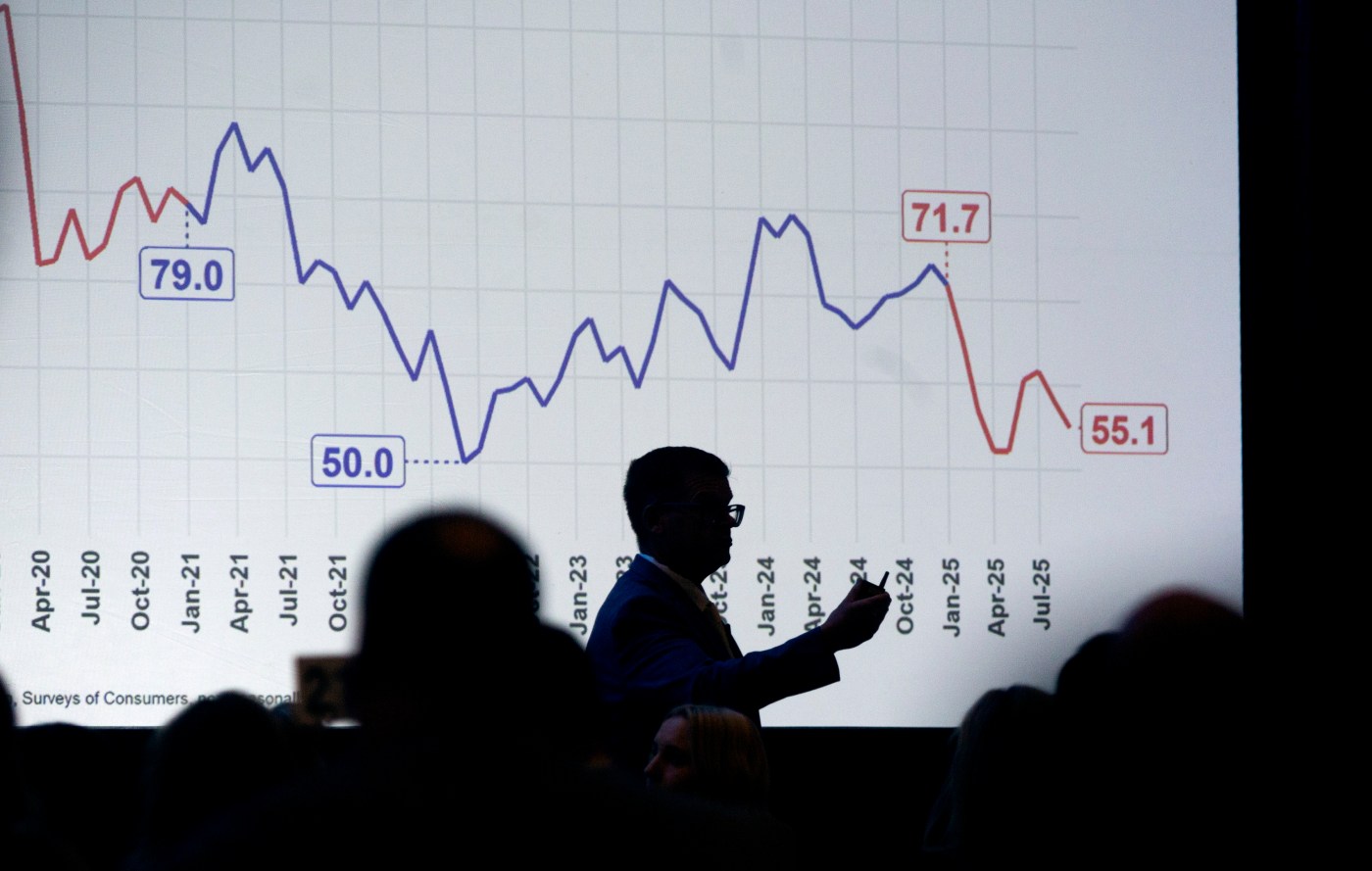
The latest State of the Commonwealth report reveals a challenging economic landscape for Virginia. Released by the Dragas Center for Economic Analysis and Policy at Old Dominion University, the report highlights a significant slowdown in job growth and raises concerns about the Commonwealth’s economic prospects for 2026.
The report’s findings were complicated by a 43-day lapse in federal appropriations from October 1 to November 15, which hindered the collection and release of crucial economic data. Consumers in Virginia are feeling the impact of rising living costs, as indicated by the University of Michigan survey, which recorded the lowest value in its current economic conditions index since it began in 1960. Although there was a slight improvement in the index measuring economic expectations in December, it remained 25% lower than the same month in 2024.
Inflation trends further illustrate the economic pressures faced by Virginians. While the overall inflation rate has decreased since the peaks of 2022, it still registered at 3% in September 2025. This indicates that prices are still rising, albeit at a slower pace, creating ongoing financial strain for consumers. Between January 2019 and September 2025, the average prices across the United States increased by 28.4%, with essential sectors like insurance, healthcare, education, and housing seeing even steeper rises.
Job market data paints a sobering picture as well. According to figures from ADP, private sector job additions fell sharply in 2025. After adding 1 million jobs in 2023 and 1.4 million in 2024, the national economy only managed to create 384,000 jobs from January to November of 2025, with declines noted in four of the last six months. In Virginia, job growth also faltered, with only 28,200 jobs added from September 2024 to September 2025, a sharp decline from the 62,800 jobs added during the previous year.
The report attributes some job losses to shifts in federal policy. Virginia saw a decline of 8,700 federal civilian jobs, alongside reductions of 10,800 jobs in professional and business services and 5,600 jobs in manufacturing during the same period. As federal workers face uncertainty regarding their employment status, these figures may worsen, especially with many set to resign on October 1, 2025.
The state’s civilian labor force has also experienced troubling trends. After consistent growth throughout 2024, the labor force has declined every month in 2025 except for January. By September 2025, there were nearly 52,000 fewer Virginians in the workforce compared to the previous year, leading to a rise in unemployment figures, which increased from 133,691 in September 2024 to 160,199 the following year. The slight decrease in the unemployment rate was primarily due to individuals leaving the labor force, rather than job creation.
Despite the federal government’s increased tariff collections, these tariffs ultimately burden American consumers and businesses without addressing the federal deficit’s trajectory. The Port of Virginia has also seen a decline in both imports and exports throughout 2025 when compared to the previous year. Analysts estimate that households may incur additional costs ranging from $1,000 to $1,700 due to higher tariffs in 2025 and even more in 2026.
Looking ahead, the new governor and General Assembly face significant challenges in reviving economic growth while tackling the rising cost of living and adapting to changing federal policies. The report offers a cautious forecast, suggesting that Virginia’s economy may grow by 1.5% in 2026 under the best circumstances. However, in a more pessimistic scenario, the state could slip into recession.
With increasing risks on the horizon, it is crucial for leaders to act with prudence. Strategies such as investing in education and infrastructure, increasing housing availability, and maintaining fiscal responsibility will be essential. Collaborative efforts across partisan lines will be vital in forging a path forward for Virginia’s economy in 2026 and beyond.
The complete 2025 State of the Commonwealth report is available online at ceapodu.com.