




































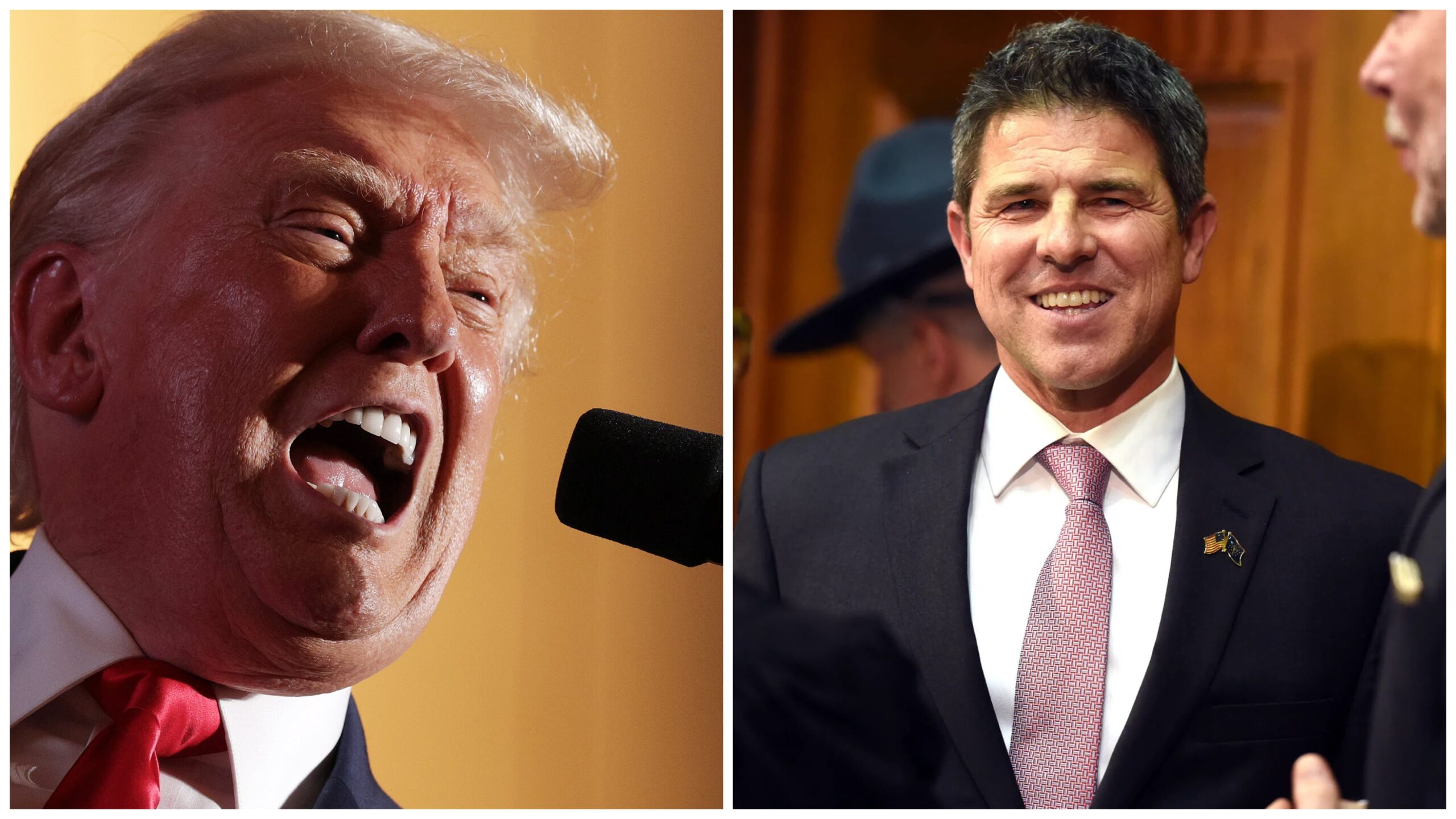
Former President Donald Trump has publicly criticized Indiana State Senate President Pro Tem Rodric Bray following the Senate’s rejection of a proposed congressional redistricting map. This map aimed to eliminate the two Democratic congressional districts in Indiana, potentially allowing Republicans to secure all nine of the state’s congressional seats in the upcoming 2026 midterm elections. The Senate voted 31-19 against the plan, prompting Trump’s ire.
On Saturday at 12:52 a.m., Trump expressed his disappointment through a post on Truth Social, stating, “Republicans in the Indiana State Senate, who voted against a Majority in the U.S. House of Representatives, should be ashamed of themselves.” He specifically addressed Bray, calling him a “total loser” and threatened that those who opposed the map should be targeted in primary elections. Trump added, “I will be there to help!” highlighting his intention to support challengers to those Republican senators who voted against the redistricting plan.
The proposed map would have closely mirrored efforts in states like Texas and Ohio, where Republican-led legislatures have drawn congressional lines to favor their party. However, Indiana’s Senate Republicans opted not to follow suit. Bray had previously indicated that the necessary votes were not there to pass the redistricting, and he declined to reconvene the Senate for a December vote on the issue.
After Trump’s criticism, House Speaker Mike Johnson intervened, which led Bray to reconsider and bring the issue to a vote. Ultimately, despite requiring only a simple majority to pass, 21 Republicans, including Bray, joined Democrats in rejecting the proposal. Several senators cited concerns over Trump’s rhetoric and the potential for political violence as factors in their decision.
Republican State Senator Greg Walker, who opposed the redistricting effort, stated, “I refuse to be intimidated. I made a choice.” Walker, among those who faced intimidation tactics such as “swatting” and bomb threats, emphasized that he would not allow fear to dictate legislative outcomes.
Despite his harsh criticism of Bray, Trump displayed confusion when discussing the senator during a press briefing in the Oval Office. He struggled to recall Bray’s name and remarked, “There’s a man named Bray, as a, I guess, head of the Senate. Was that Bray? Is that the name? Bray?” Trump expressed confidence that Bray would face a challenging primary in the future, asserting his support for any challengers.
As tensions rise within the Republican Party, the fallout from this incident may signal deeper divisions as Trump seeks to maintain his influence and reshape the GOP ahead of the crucial midterm elections. The rejection of the redistricting plan could have significant implications for both state and national politics as the party navigates its direction going forward.