






































A tragic series of violent incidents unfolded across the globe last weekend, highlighting ongoing debates surrounding gun control. On Saturday, a mass shooting at Brown University in Providence, Rhode Island, left two students dead and injured nine others. The assailant, armed with a common 9-mm handgun, opened fire during a study session, firing more than 40 rounds before fleeing the scene.
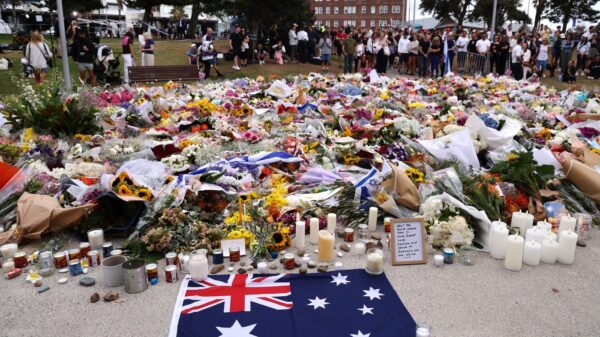
Just a day later, in a shocking attack at Bondi Beach, Australia, a father-son duo killed 15 individuals and injured 40 others during a Hanukkah celebration. Eyewitness footage captured the harrowing moments before police arrived, showing the attackers firing their weapons without interruption. This incident marked Australia’s first mass shooting since the implementation of the National Firearms Agreement (NFA) in 1996, designed to prevent such tragedies following a previous massacre that claimed 35 lives.
The response to these events has reignited the contentious debate over gun control laws, particularly in the United States. Advocates for stricter regulations quickly seized upon the Bondi Beach shooting to bolster their arguments, calling for a reassessment of America’s approach to firearms. They point to Australia’s NFA as a model for reducing gun violence, contrasting it with the ongoing gun violence in the U.S.
While the NFA has been credited with significant reductions in gun-related deaths in Australia, critics argue that it is not a foolproof system. The law effectively banned semi-automatic rifles and shotguns and initiated a mandatory buyback program that successfully removed nearly 700,000 weapons from circulation. Yet, loopholes remain, particularly concerning licensing. The Bondi Beach shooters were reportedly licensed gun owners, with one having ties to an ISIS group.
Despite the NFA’s intent, there are now approximately 4 million licensed gun owners in Australia—an increase of 800,000 since the law’s enactment. This reality raises questions about the efficacy of Australia’s gun control measures. Notably, a significant portion of the registered firearms is concentrated in urban areas, with some individuals owning multiple weapons, including one person with nearly 400 guns.
Comparatively, the United States has a vastly different landscape when it comes to firearms. With estimates of between 400 million and 500 million guns in civilian hands, critics assert that any attempt to enforce strict gun control would be met with substantial resistance. The sheer volume of firearms and the cultural significance of gun ownership make comprehensive regulation a formidable challenge.
Additionally, while Australia has seen a decline in gun deaths—currently averaging fewer than 300 homicides annually—the majority of these cases involve knives rather than firearms. In contrast, the U.S. grapples with approximately 18,000 gun-related homicides each year, underscoring a significant disparity in gun violence between the two nations.
In the wake of the Bondi Beach attack, the argument for stronger gun control in the U.S. faces renewed scrutiny. Opponents of stricter regulations argue that Australia’s experience underscores the limitations of such measures. They contend that a focus on the broader issue of violence, rather than solely on firearms, is essential.
The tragic events of last weekend have laid bare the complexities of gun control laws and their effectiveness. As the conversation continues, it remains clear that the path toward addressing gun violence is fraught with challenges and differing perspectives. The debate is likely to persist as both countries grapple with the implications of these devastating incidents.