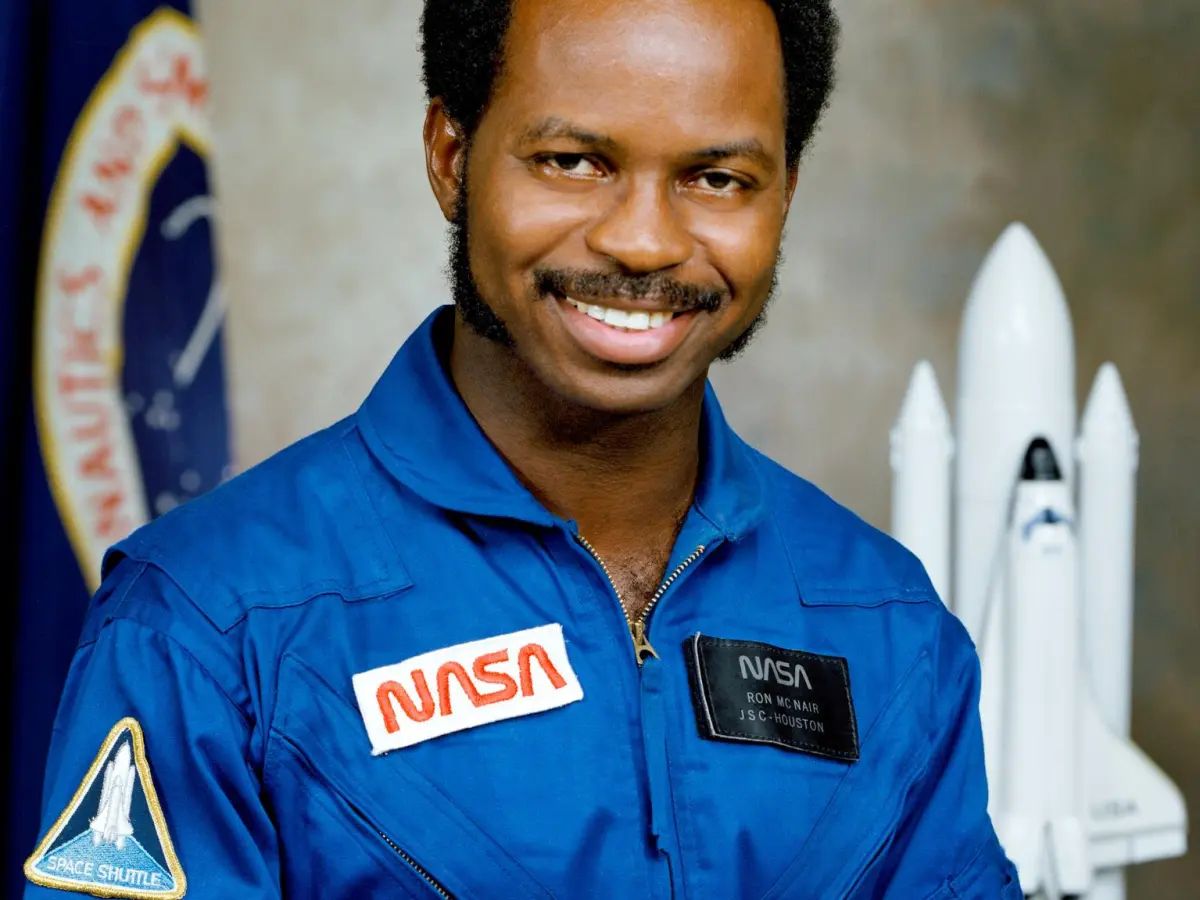
Ronald McNair, an accomplished astronaut and physicist, is remembered this week as the world reflects on the tragic events of the Space Shuttle Challenger disaster. On January 28, 1986, millions watched in disbelief as the shuttle exploded just 73 seconds after launch, claiming the lives of all seven crew members, including McNair, who was just 35 years old.
In a poignant conversation with the nonprofit StoryCorps in 2013, McNair’s older brother shared insights into their family’s perspective on his brother’s aspirations. While many viewed McNair’s ambitions as mere fantasy, he approached his dreams with determination, seeing them as “science possibility.” Selected by NASA in 1978, McNair became one of the first Black astronauts, paving the way for future generations.
Legacy of Inspiration and Achievement
McNair’s journey into space began with his historic flight in 1984, making him the second Black man to travel beyond Earth. His mission aboard the Challenger was particularly notable not only for its scientific goals but also for its cultural significance. McNair’s life was a tapestry woven with diverse passions, including his love for jazz music and martial arts, specifically karate.
The atmosphere in which McNair grew up in South Carolina played a crucial role in shaping his character. He excelled academically, earning a Ph.D. in physics from the Massachusetts Institute of Technology (MIT). His achievements inspired countless individuals in the Black community and beyond, as he broke barriers in a predominantly white field.
Reflecting on McNair’s impact, it is evident that he transcended the role of a typical astronaut. He was a symbol of resilience, courage, and the relentless pursuit of knowledge. His life and tragic death serve as a reminder of the sacrifices made in the name of exploration and scientific advancement.
Commemoration and Continuing Influence
As the 40th anniversary of the Challenger tragedy approaches, tributes honoring McNair and his fellow astronauts have emerged across various platforms. Educational initiatives, including STEM programs, aim to inspire young minds to pursue careers in science, technology, engineering, and mathematics, echoing McNair’s legacy of possibility.
In the years following the tragedy, McNair has been honored through numerous memorials and honors, including schools and scholarships named in his memory. These tributes continue to promote his vision of a world where everyone has the opportunity to reach for the stars, regardless of their background.
The story of Ronald McNair is not just one of tragedy but of triumph and inspiration. As we remember the events of January 28, 1986, we also celebrate a life dedicated to pushing the boundaries of what is possible and inspiring future generations to do the same.